In the world of industrial automation and smart electronics, the need for reliable, non-contact detection is paramount. Among the various technologies available, the capacitive proximity sensor, particularly in the PNP configuration, stands out for its versatility and precision. This guide delves into the workings, applications, and advantages of the capacitive proximity sensor PNP, a cornerstone component for engineers and system integrators.
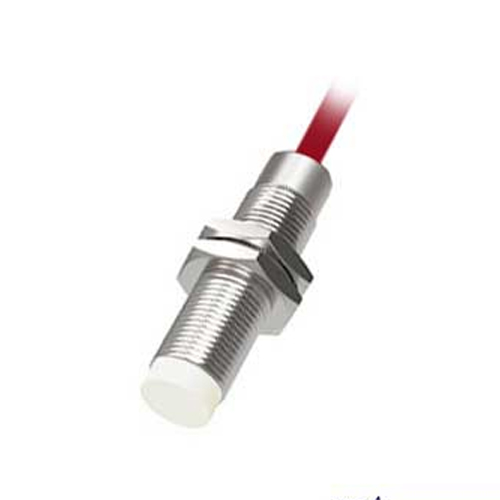
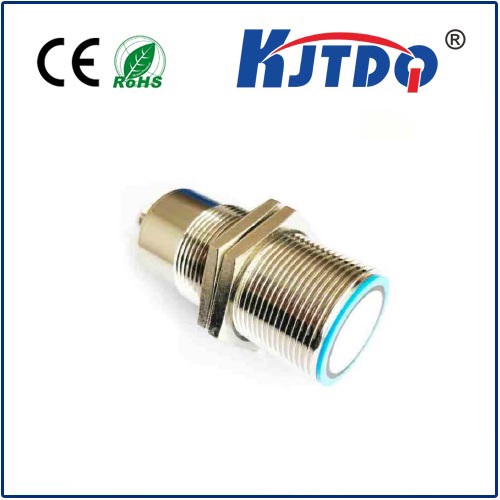
At its core, a capacitive proximity sensor operates by generating an electrostatic field. Unlike inductive sensors that detect only metals, capacitive sensors can detect a wide range of materials, including liquids, plastics, glass, wood, and granular substances. This is achieved by measuring the change in capacitance. The sensor forms one plate of a capacitor, and the target object forms the other. When the object enters the sensing field, it alters the dielectric constant, causing a change in the sensor's oscillation amplitude. This change is then processed by the internal circuitry to trigger an output signal.
The "PNP" designation refers to the type of output transistor used. In a PNP sensor, also commonly known as a "sourcing" sensor, the output wire switches the positive voltage to the load. When the sensor is activated (detects an object), it connects the load to the positive supply voltage. This is in contrast to an NPN (sinking) sensor, which switches the negative or ground side. The choice between PNP and NPN often depends on the prevailing control system standards in a region; PNP is widely used in Europe and many other parts of the world.
So, what makes the capacitive proximity sensor PNP a preferred choice in so many scenarios? Its primary strength is material versatility. From monitoring fluid levels in non-metallic tanks to detecting the presence of plastic bottles on a conveyor belt, its ability to "see" through non-conductive materials is unparalleled. Furthermore, many models allow for sensitivity adjustment. This enables engineers to fine-tune the sensing range and ignore background interference, such as a container wall, making it ideal for level detection applications.
The applications are vast and span numerous industries. In packaging, these sensors verify the presence of products, whether they are made of cardboard, plastic, or foil. In the food and beverage industry, they are indispensable for liquid level control in tanks and bottles. The woodworking industry uses them to detect wood panels, while the automotive sector employs them for non-metal part presence verification. Their robustness also makes them suitable for harsh environments, often featuring housing materials resistant to chemicals and dust.
When integrating a capacitive PNP sensor, several best practices ensure optimal performance. First, consider the sensing distance. The nominal sensing range is typically specified for a metal target. For other materials like plastic or paper, the effective range is reduced. Always refer to the sensor's datasheet for reduction factors. Second, pay attention to the installation environment. Avoid mounting the sensor flush against a conductive material, as this can dampen the electrostatic field and reduce the sensing range. A non-conductive bracket is often recommended. Lastly, ensure proper wiring. The PNP output (usually the brown wire for +V, blue for 0V/common, and black for the switched output) must be connected correctly to the PLC or controller input module designed for a sourcing signal.
In comparison to other sensor types, capacitive PNP sensors fill a unique niche. While photoelectric sensors offer long ranges, they can be fooled by color or transparency. Inductive sensors are extremely robust for metal detection but are blind to all other materials. Ultrasonic sensors are great for distance measurement but can be more expensive and complex. The capacitive sensor provides a cost-effective, reliable, and material-agnostic solution for short to medium-range detection tasks.
Looking ahead, the evolution of capacitive sensing technology continues. Modern sensors are becoming smarter, with integrated IO-Link communication for digital parameter setting, diagnostics, and process data exchange. This allows for predictive maintenance and easier integration into Industry 4.0 frameworks. Their miniaturization also opens new doors for applications in consumer electronics and compact machinery.
In conclusion, the capacitive proximity sensor with a PNP output is a fundamental and highly adaptable tool in automation. Its ability to detect virtually any material, coupled with the straightforward integration of the PNP sourcing output, makes it a reliable workhorse for countless detection and control tasks. By understanding its operating principle, key advantages, and application guidelines, engineers can leverage this technology to build more efficient, reliable, and intelligent systems.