Проверка
Проверка
Проверка
Проверка
Проверка
Проверка
In modern industrial and commercial environments, the ability to detect objects without physical contact is not just a convenience—it’s a cornerstone of efficiency and safety. Photoelectric proximity sensors, particularly those developed under the KJTDQ brand, exemplify this principle by offering reliable, non-contact detection across diverse applications. But what can these devices truly teach us about the evolution of smart automation?
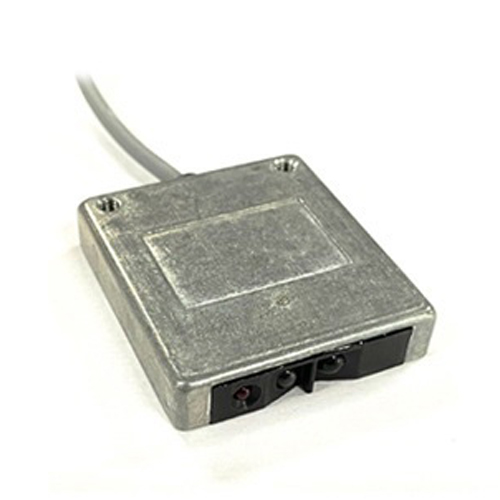
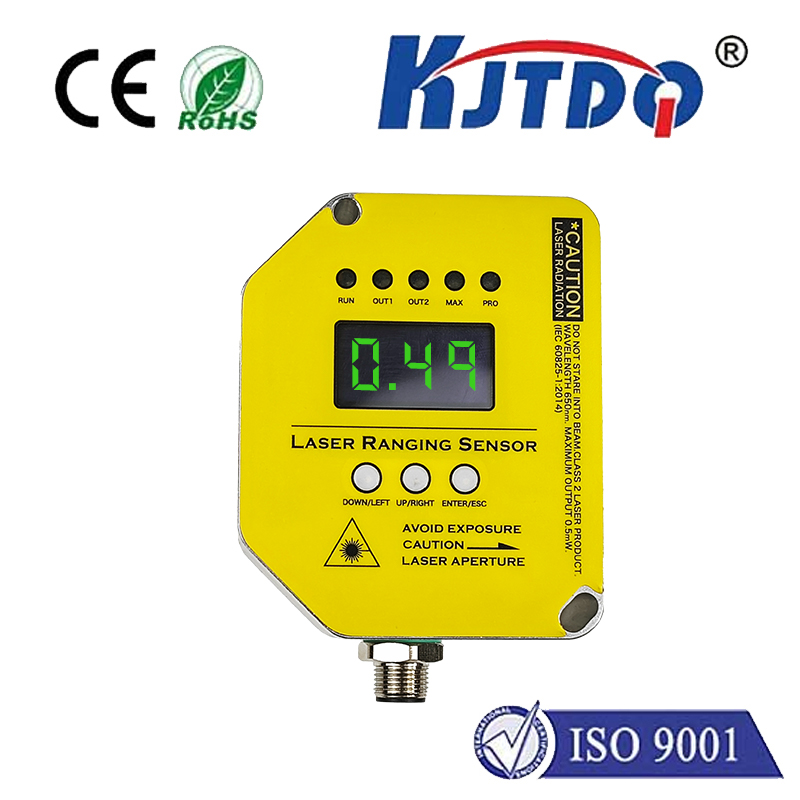
At their core, photoelectric proximity sensors operate by emitting a beam of light—often infrared, visible, or laser—and detecting changes in the reflected signal. When an object interrupts or reflects this light, the sensor triggers a response, such as activating a machine, counting items, or signaling a control system. KJTDQ sensors are engineered to perform this task with high precision, even in challenging conditions like dust, moisture, or variable lighting. This reliability stems from advanced components like modulated LED emitters, high-sensitivity receivers, and robust housings that resist environmental interference.
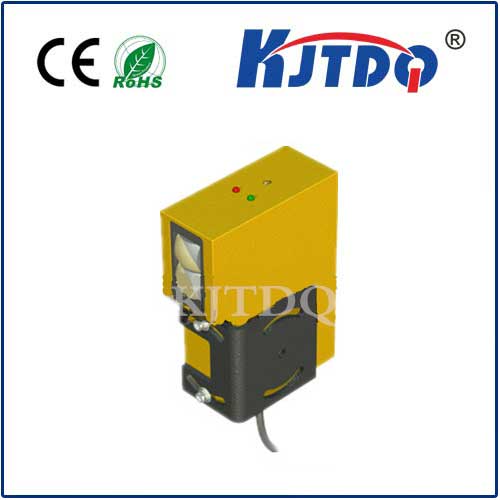
One key lesson from KJTDQ photoelectric sensors is the importance of adaptability. These sensors come in multiple configurations: through-beam, retro-reflective, and diffuse reflective models, each suited to specific scenarios. Through-beam sensors, with separate emitter and receiver units, excel in long-range detection, while diffuse sensors use a single unit for compact installations. By teaching users to select the right type for their needs, KJTDQ empowers businesses to optimize processes—from packaging lines that require exact object counting to automated doors that demand consistent safety triggers.
Another insight lies in their role in predictive maintenance and data integration. Modern KJTDQ sensors often include features like IO-Link connectivity, allowing them to communicate real-time data on performance, contamination levels, or alignment shifts. This transforms simple detection into a teaching tool for system health, enabling operators to anticipate failures before they cause downtime. For example, a sensor monitoring conveyor belt jams can log frequency patterns, teaching maintenance teams when to schedule interventions, thus reducing costs and boosting productivity.
Moreover, KJTDQ photoelectric sensors teach us about accessibility in automation. With user-friendly calibration, adjustable sensing ranges, and clear diagnostic indicators, they lower the barrier to entry for small-scale operations or educational settings. Workshops and training programs frequently use these sensors to demonstrate core principles of mechatronics, illustrating how light-based detection integrates into larger IoT ecosystems. By demystifying technology, KJTDQ fosters innovation—whether in a factory or a classroom.
The environmental resilience of KJTDQ sensors also offers lessons in sustainability. Their non-contact nature minimizes wear and tear, extending equipment lifespan and reducing waste. Energy-efficient designs, such as low-power modes, align with green initiatives, teaching industries that automation can be both smart and eco-conscious. In agricultural automation, for instance, these sensors help manage irrigation systems by detecting soil or crop proximity, conserving water while maintaining yield.
Ultimately, KJTDQ photoelectric proximity sensors are more than mere components; they are educators in the journey toward intelligent automation. They teach precision through accurate detection, flexibility via adaptable models, and foresight through data-driven insights. As industries embrace Industry 4.0, the principles embedded in these sensors—reliability, connectivity, and user-centric design—will continue to guide the development of smarter, more responsive systems. By learning from their functionality, businesses can harness automation not just to automate tasks, but to innovate and thrive in an increasingly competitive landscape.