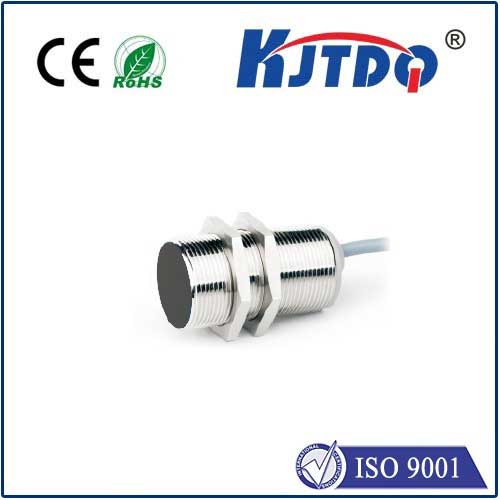
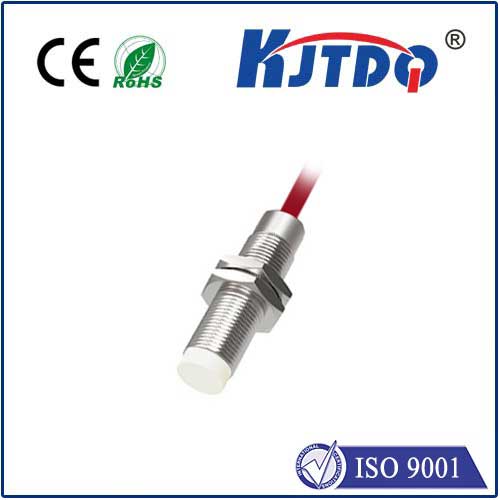
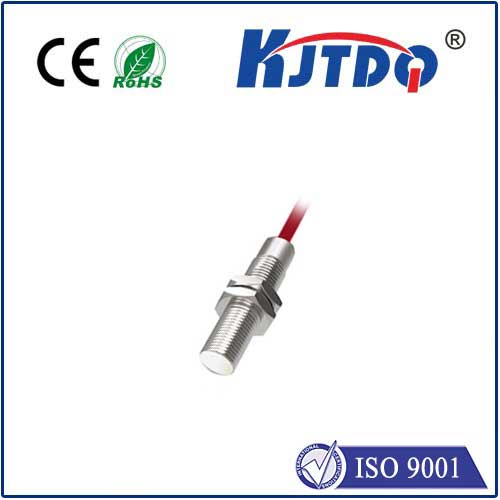
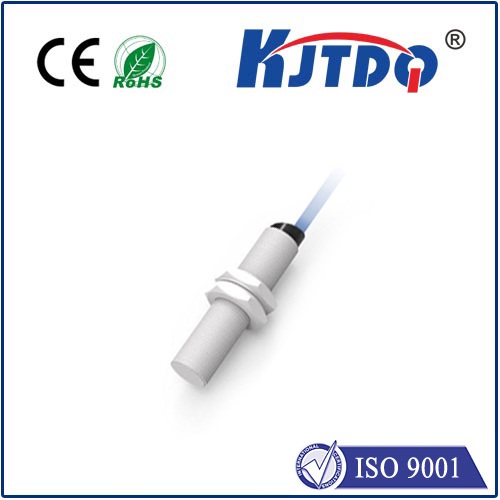
In the bustling heart of modern manufacturing, where precision and reliability are non-negotiable, a silent sentinel operates tirelessly. The cylindrical inductive proximity sensor, a staple in industrial automation, performs its duty without fanfare, detecting metallic objects with unwavering accuracy. This robust device, often encased in a durable metal shell, is engineered to thrive in harsh environments where dust, moisture, and mechanical stress are constant challenges. Its fundamental principle relies on electromagnetic induction. An oscillator generates a high-frequency electromagnetic field at the sensor's active face. When a ferrous or non-ferrous metal target enters this field, eddy currents are induced within the target, causing a change in the oscillation amplitude. This shift is detected by the sensor's circuitry, triggering a solid-state output signal to the control system. The beauty of this technology lies in its non-contact nature. Unlike mechanical limit switches, there is no physical wear from repeated actuation, leading to dramatically extended service life and reduced maintenance costs. The cylindrical form factor, typically ranging from M8 to M30 diameters, allows for easy installation in standard mounting holes, making it a versatile choice for countless applications. From conveyor line monitoring and robotic arm positioning to detecting the presence of parts in machining centers, these sensors provide the critical data that keeps production flowing smoothly. Modern cylindrical inductive sensors offer advanced features like weld-field immunity, which prevents false triggering in environments with strong electromagnetic interference from welding equipment. Some variants come with embedded IO-Link communication, enabling not just simple on/off detection but also the transmission of diagnostic data like operating temperature and signal strength for predictive maintenance. Choosing the right sensor involves considering factors such as sensing distance, which is typically a fraction of the sensor's diameter, the type of metal being detected, and the required output configuration (PNP or NPN). Proper installation is also crucial; ensuring the correct mounting and maintaining adequate clearance from surrounding metal objects guarantees optimal performance. As Industry 4.0 continues to evolve, the humble cylindrical inductive proximity sensor remains a foundational component. Its proven reliability, simplicity, and adaptability ensure it will continue to be the unseen guardian, providing the essential feedback that drives efficiency, safety, and productivity in automated systems worldwide. From automotive assembly plants to food packaging lines, its role is indispensable, making complex automation possible one detection at a time.