Проверка
Проверка
Проверка
Проверка
Проверка
Проверка
In the dynamic landscape of industrial automation, where efficiency and safety are paramount, the inductive proximity sensor stands as a cornerstone technology. These robust, non-contact devices are engineered to detect the presence or absence of metallic objects with exceptional accuracy and speed, making them indispensable across countless applications. Unlike mechanical switches that wear out or optical sensors that can be fooled by environmental factors, inductive sensors offer a reliable, maintenance-free solution for harsh industrial environments.
The fundamental principle behind an inductive proximity sensor is elegantly simple yet highly effective. The sensor contains a coil wound around a ferrite core, which generates a high-frequency electromagnetic field at its active face. When a metallic object enters this oscillating field, eddy currents are induced on the surface of the target. This causes a measurable change in the oscillation amplitude within the sensor's circuit. An integrated evaluation circuit detects this change and triggers a solid-state output signal, switching the sensor's state without any physical contact. This contactless operation is the key to their longevity, eliminating mechanical wear and tear.
One of the most significant advantages of inductive sensors is their resilience. They are typically housed in rugged, sealed casings made of materials like nickel-plated brass, stainless steel, or PBT plastic, offering high degrees of protection against dust, moisture, oils, and coolants (often rated IP67 or higher). This makes them perfectly suited for challenging settings such as machine tools, assembly lines, material handling systems, and automotive manufacturing plants. They are unaffected by ambient light, dirt accumulation (unless metallic), and can operate reliably in conditions where other sensor types might fail.
The applications for inductive proximity sensors are vast and varied. They are commonly used for precise position detection, such as confirming the presence of a metal part on a conveyor belt, verifying the end position of a cylinder, or counting metallic objects. In automated machinery, they serve as limit switches to prevent over-travel, ensuring operational safety. They play a critical role in rotational speed monitoring by detecting gear teeth or keyways. Furthermore, their ability to detect only metallic objects makes them ideal for security applications or in processes where distinguishing between metal and other materials is necessary.
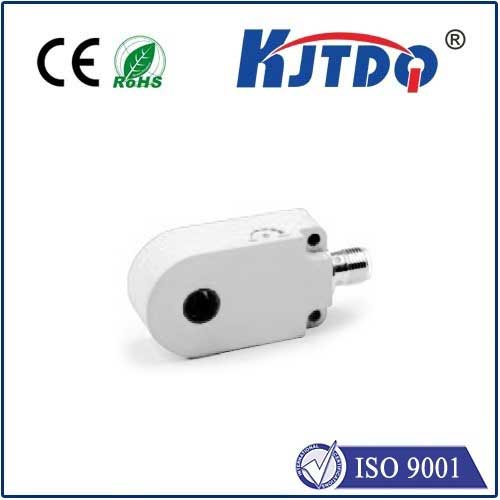
When selecting an inductive proximity sensor for a specific task, several key specifications must be considered. The sensing range, typically from 1 to 60 millimeters, must be appropriate for the application, with a safety margin factored in. The target material also influences performance; while ferrous metals like steel provide the longest sensing distance, non-ferrous metals like aluminum or copper have a reduced range. The sensor's housing shape—cylindrical, rectangular, or ring-shaped—must fit the mechanical installation requirements. Output configuration (PNP/NPN, NO/NC) must be compatible with the control system's PLC. Modern sensors also offer advanced features like analog outputs for distance measurement, weld-field immunity for use near welding equipment, and IO-Link connectivity for smart factory integration and diagnostic data.
The integration of inductive sensors into the framework of Industry 4.0 and the Industrial Internet of Things (IIoT) is expanding their role. Smart sensors with communication protocols can provide not just a simple on/off signal but also diagnostic information about their health, operating temperature, and signal strength. This predictive maintenance capability allows plant managers to address potential issues before they cause downtime, transitioning from reactive to proactive asset management.
In conclusion, the inductive proximity sensor is far more than a simple switch. It is a sophisticated, durable, and highly reliable component that forms the sensory backbone of modern industrial automation. Its non-contact detection principle ensures long service life and consistent performance in demanding conditions. From basic object detection to enabling complex, data-driven manufacturing processes, these sensors are a fundamental element in driving productivity, enhancing safety, and ensuring the seamless operation of automated systems worldwide. For engineers and system integrators, understanding and correctly applying this versatile technology is essential for building robust and future-proof automation solutions.