Проверка
Проверка
Проверка
Проверка
Проверка
Проверка
In the rapidly evolving landscape of industrial automation and smart device integration, the demand for reliable, precise, and durable sensing solutions has never been higher. Among the myriad of components that form the backbone of modern machinery and electronics, proximity sensors stand out for their critical role in non-contact detection. The M10 Proximity Sensor emerges as a standout solution in this category, engineered to deliver exceptional performance across diverse and demanding applications. This guide delves into the core technology, operational principles, and practical benefits of the M10 sensor, providing a comprehensive overview for engineers, procurement specialists, and technology integrators.
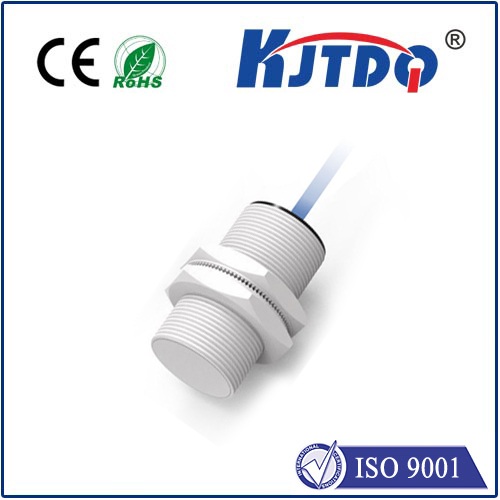
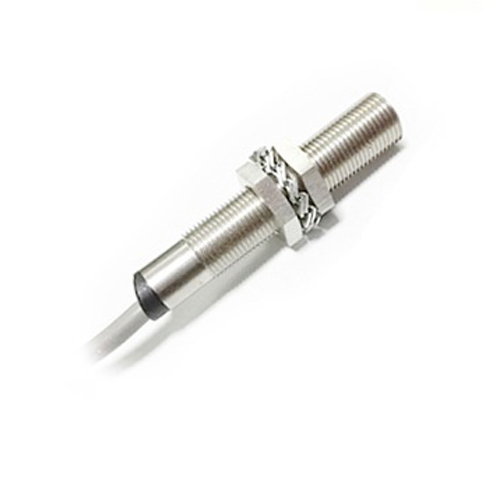
At its heart, the M10 Proximity Sensor is an inductive sensor designed to detect the presence or absence of metallic objects without any physical contact. The "M10" designation typically refers to its compact cylindrical housing with an 18mm diameter, a form factor that offers an ideal balance between sensing performance and space-saving design. This sensor operates on the principle of electromagnetic induction. It generates a high-frequency oscillating electromagnetic field from its active face. When a metallic target enters this field, eddy currents are induced on the target's surface. This causes a change in the oscillation amplitude within the sensor's internal LC circuit. The sensor's sophisticated electronics detect this damping effect and trigger a solid-state switching signal, indicating the object's presence. This entire process occurs within milliseconds, enabling real-time, high-speed detection crucial for automation processes.
The technical specifications of the M10 Proximity Sensor underscore its robustness. It commonly features a sensing range tailored for its size, such as 5mm or 8mm for ferrous metals, with reduced ranges for non-ferrous metals like aluminum or copper. Built to withstand harsh industrial environments, standard models offer an IP67 or higher ingress protection rating, making them resistant to dust and temporary immersion in water. They are designed to operate reliably across a wide temperature range and are shielded against electrical noise and short-circuit protection, ensuring stable performance alongside motors, solenoids, and other electrically noisy equipment. The output is typically a 3-wire DC configuration (PNP or NPN), providing compatibility with most programmable logic controllers (PLCs) and control systems.
The real-world applications for the M10 Proximity Sensor are vast and varied. On factory assembly lines, they are indispensable for tasks like part positioning, verifying the presence of components in a fixture, or counting products on a conveyor belt. In packaging machinery, they ensure precise control for filling and capping operations. Beyond heavy industry, these sensors find use in elevator systems for floor-level detection, in automated doors for safety reversal, and even within consumer electronics for innovative features. Their non-contact nature eliminates mechanical wear and tear, leading to significantly longer service life and reduced maintenance costs compared to mechanical limit switches. This reliability translates directly into increased machine uptime and overall equipment effectiveness (OEE).
Selecting the right M10 sensor requires careful consideration of several parameters. The first is the target material; inductive sensors are specifically for metals. The required sensing distance and the installation constraints of the application are paramount. Engineers must also specify the correct electrical characteristics: the operating voltage (e.g., 10-30V DC), output type (sourcing PNP or sinking NPN), and connection method (pre-wired cable or quick-disconnect). For challenging environments, factors like chemical resistance, extreme temperatures, or strong magnetic fields may necessitate specialized housing materials or extra shielding. Consulting detailed datasheets and, when in doubt, engaging with technical support from reputable suppliers like KJTDQ is essential for optimal integration.
Installation and maintenance, while straightforward, demand attention to detail for peak performance. The sensor should be mounted securely to prevent vibration-induced errors. It is critical to maintain the recommended clearance around the sensing face to avoid false triggers from the mounting bracket or adjacent metal structures—a common specification known as the "non-flush" or "flush-mountable" design. For flush-mounted models, they can be installed embedded in metal without issue. Regular checks should involve cleaning the sensing face of debris and verifying the electrical connections. A simple diagnostic is to observe the sensor's indicator LED while introducing a target; consistent triggering confirms proper operation.
As Industry 4.0 and the Internet of Things (IoT) reshape manufacturing, the role of foundational components like the M10 Proximity Sensor becomes even more strategic. They are the primary data points for machine state and process flow. When integrated into a networked system, the binary data they provide—object present or absent—feeds into larger data analytics platforms, enabling predictive maintenance, process optimization, and real-time production monitoring. The reliability and accuracy of these sensors directly impact the quality and intelligence of the data collected.
In conclusion, the M10 Proximity Sensor represents a mature yet vital technology in automation. Its simplicity, ruggedness, and precision make it an unsung hero in countless applications, from the simplest machine guarding to the most complex robotic cell. For professionals seeking a dependable detection solution, understanding the capabilities and selection criteria for the M10 sensor is a fundamental step toward building more efficient, reliable, and intelligent systems. Partnering with a trusted manufacturer ensures access to high-quality sensors, comprehensive technical data, and support, safeguarding the integrity of your automation investments.