In the complex and often unforgiving environment of modern industrial automation, the reliability of every component is paramount. A single sensor failure can lead to costly downtime, production errors, or even safety incidents. For applications involving high-pressure systems, the demands on sensing technology are exceptionally rigorous. The BHS B135V-PSD25-S04-003, also known by its alternative part number BHS005U, represents a specialized solution engineered to meet these challenges head-on. This high-pressure proximity sensor is designed to deliver unwavering performance where it matters most.
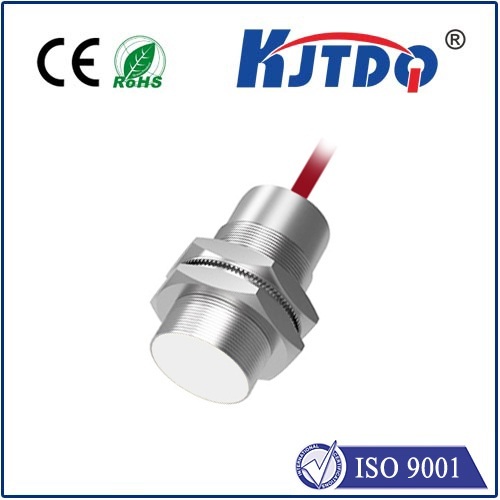
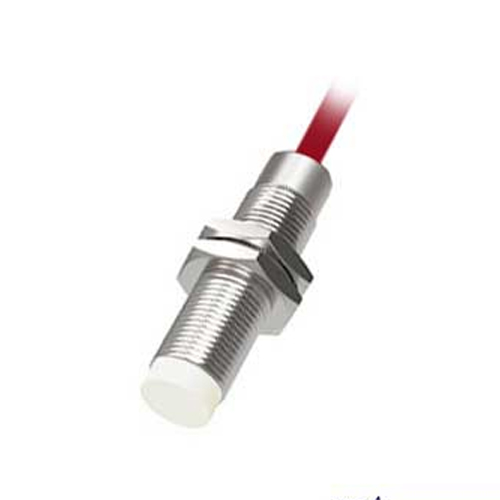
The core function of the BHS B135V-PSD25-S04-003 is precise, non-contact detection of metallic objects in environments where elevated pressure is a constant factor. Unlike standard inductive proximity sensors, this model is constructed with a reinforced housing and sealed to withstand the physical stresses and potential media ingress associated with hydraulic systems, high-pressure piping, die-casting machines, and heavy-duty press applications. Its robust design ensures that internal electronics are completely isolated from external pressure fluctuations, guaranteeing signal stability and longevity.
Key to its performance is the sensor's sensing technology. Utilizing a high-frequency oscillation principle, it generates an electromagnetic field at its active face. When a ferrous or non-ferrous metal target enters this field, eddy currents are induced, causing a change in oscillation amplitude. This change is detected by the sensor's circuitry, triggering a solid-state switching signal. The "PSD" in its model number often indicates a particular sensing characteristic, such as an extended sensing range or a specific form factor, making it suitable for installations where space is constrained around high-pressure components.
The technical specifications of the BHS005U sensor are tailored for resilience. It typically features a high IP rating (such as IP67 or higher), signifying complete protection against dust and temporary immersion in water. This is crucial for washdown environments or areas with significant airborne particulates. The operating temperature range is broad, allowing functionality in both hot industrial settings and cold storage or outdoor applications. Furthermore, its electrical output, often a PNP or NPN configuration, provides seamless integration with standard programmable logic controllers (PLCs) and industrial control systems without the need for additional signal converters.
Installation and maintenance are streamlined for efficiency. The sensor body is usually threaded, allowing for easy mounting directly into a tapped port on a manifold, cylinder, or pressure vessel. Correct alignment is critical for optimal performance, and the sensor's design often includes visual indicators, like an LED status light, for immediate feedback on its operational state—simplifying commissioning and troubleshooting. Regular maintenance primarily involves ensuring the sensing face remains clean and free of debris, magnetic particles, or thick buildup that could attenuate the sensing field.
Consider a practical application within a hydraulic press used for metal forming. Cylinder position confirmation under extreme pressure is vital for controlling the press cycle and ensuring part quality. A standard sensor might fail due to seal degradation or housing deformation. The BHS B135V-PSD25-S04-003, with its pressure-resistant design, provides reliable end-position detection of the piston, enabling precise control and preventing over-travel that could damage the tooling. Similarly, in offshore equipment or chemical processing plants, where systems operate under high pressure and in corrosive atmospheres, this sensor's durability ensures continuous monitoring of valve positions or component presence, contributing to overall system safety and automation integrity.
Selecting the right sensor involves more than just matching a part number. Engineers must evaluate the specific pressure rating required, the target material, the required sensing distance, the electrical interface, and the environmental conditions. The BHS B135V-PSD25-S04-003 (BHS005U) is not a generic component; it is a specialized tool for a specific set of challenging conditions. Its value lies in its ability to perform consistently where other sensors would falter, thereby protecting capital investment, enhancing process reliability, and supporting the seamless operation of automated high-pressure systems. For system integrators and maintenance engineers, understanding the capabilities and proper application of this sensor is key to building robust and fault-resistant industrial automation solutions.