In the demanding world of industrial automation, where machinery operates under extreme conditions, the failure of a single component can lead to catastrophic downtime and significant financial loss. This is where the precision and robustness of specialized sensors become non-negotiable. The EOIR20M-BS18-6X-H1141 High Pressure Proximity Sensor stands out as a critical component engineered specifically for environments where standard sensors would falter. This guide delves into the technical specifications, operational benefits, and ideal applications of this high-performance device, providing a comprehensive overview for engineers and procurement specialists.
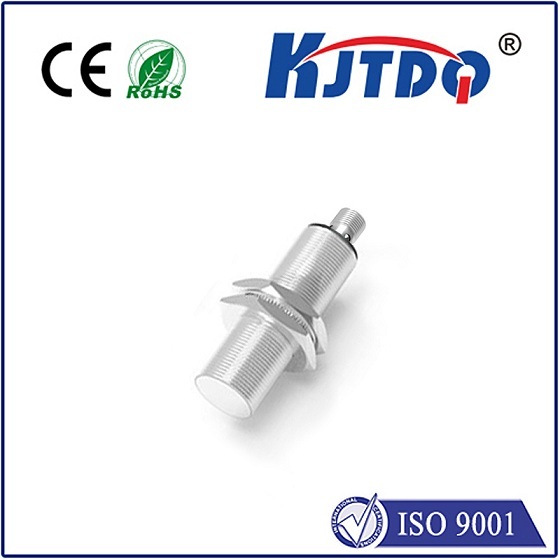
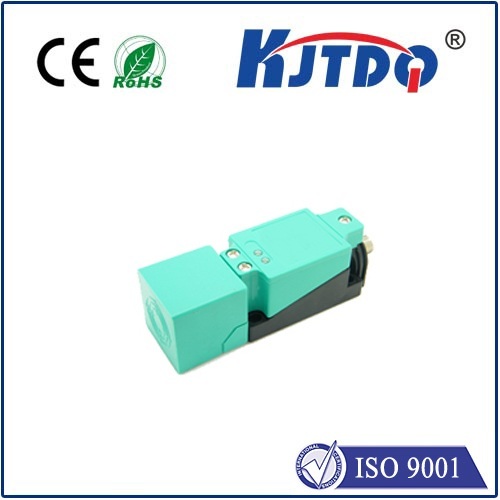
At its core, the EOIR20M-BS18-6X-H1141 is an inductive proximity sensor designed to detect metallic objects without physical contact. What distinguishes it from conventional models is its exceptional resilience to high-pressure environments. The housing, typically constructed from high-grade stainless steel (like the BS18 designation suggests), is engineered to withstand not only mechanical stress but also the intense pressures found in hydraulic systems, die-casting machines, and heavy-duty press applications. The “H1141” suffix often relates to specific electrical characteristics or connector types, ensuring compatibility with industrial control systems. This sensor operates on the principle of generating an electromagnetic field. When a metallic target enters this field, it induces eddy currents, causing a change in the field's oscillation. The sensor's internal circuitry detects this change and triggers a solid-state switching signal. This non-contact method eliminates wear and tear, guaranteeing a long operational life even in the presence of constant vibration or pulsating pressures.
The primary advantage of the EOIR20M-BS18-6X-H1141 is its unwavering reliability under duress. In high-pressure washing systems or fluid power applications, ingress and pressure spikes are constant threats. This sensor's hermetic sealing and robust design prevent fluid penetration, ensuring stable performance. For instance, in plastic injection molding, the sensor can reliably monitor the position of the mold clamp under tremendous tonnage, providing the precise feedback necessary for cycle control and safety interlocks. Its high switching frequency allows for the detection of fast-moving parts on assembly lines, while its immunity to electromagnetic interference ensures signal integrity in electrically noisy plant environments. This translates directly to reduced maintenance intervals, fewer false triggers, and enhanced overall equipment effectiveness (OEE).
Selecting the correct sensor is paramount. The EOIR20M-BS18-6X-H1141 is particularly suited for heavy industries. Common applications include monitoring piston position in hydraulic cylinders, detecting metal blanks in forging presses, ensuring proper positioning in machine tools, and providing end-of-travel verification in automated material handling systems subject to high loads. When integrating this sensor, engineers must consider factors such as the target material (ferrous metals like iron and steel are ideal), the required sensing distance, the operating voltage (commonly 10-30V DC), and the output type (PNP or NPN). Proper mounting, away from other metal surfaces that could cause interference, and using shielded cables in areas with high EMI are standard best practices to maximize performance.
Ultimately, the EOIR20M-BS18-6X-H1141 High Pressure Proximity Sensor is more than just a component; it is a strategic investment in operational continuity. Its specialized design addresses the pain points of high-pressure industrial applications, offering a blend of durability, precision, and dependability. By ensuring accurate detection in the most challenging conditions, it safeguards processes, protects costly machinery, and contributes to a leaner, more predictable production workflow. For operations where pressure is a constant factor, choosing a sensor built to endure it is the only logical choice.