Проверка
Проверка
Проверка
Проверка
Проверка
Проверка
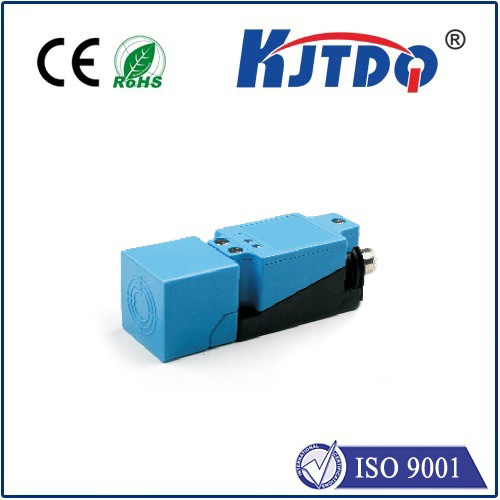
In the rigorous world of industrial automation and process control, the ability to reliably detect objects or monitor positions under extreme conditions is paramount. This is where specialized components like the NJ40+U1+E2 and NJ40-U1-E2 series of high-pressure proximity sensors come into play. These sensors are engineered to deliver consistent, accurate performance in environments where standard sensors would fail, making them indispensable for sectors such as hydraulic systems, die-casting machinery, plastic injection molding, and high-pressure testing equipment.
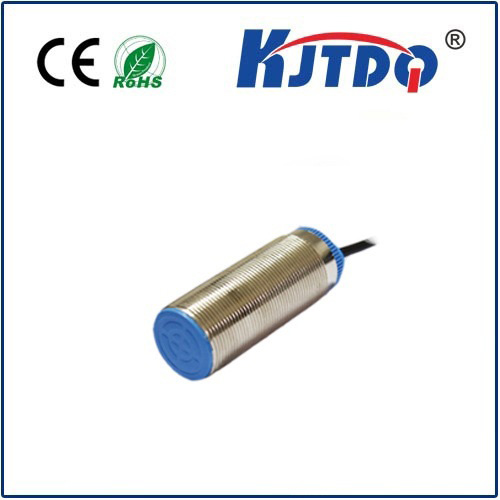
The core challenge in high-pressure applications is not just the pressure itself, but the combination of forces, potential fluid ingress, and mechanical stress. The NJ40 series is specifically designed to withstand these harsh conditions. The designation often indicates key specifications: typically, these are inductive proximity sensors built with a robust stainless steel housing. The "NJ40" refers to the model family, while suffixes like "+U1+E2" or "-U1-E2" detail specific electrical connections, output configurations (like PNP or NPN), and cable or connector types. This precise coding ensures engineers select the exact sensor variant compatible with their control system's voltage and input requirements.
What truly sets the NJ40+U1+E2 and similar models apart is their exceptional resilience. They are frequently rated for operating pressures up to several hundred bar, capable of withstanding the intense forces found inside hydraulic cylinders or pressurized chambers. The sensing face is designed to be flush-mountable, allowing it to be installed directly into a machine cavity without creating a recess that could trap debris or weaken the structure. This flush mounting is critical for maintaining the integrity of the pressure vessel or hydraulic wall. The hermetically sealed construction prevents oil, coolant, or other process fluids from penetrating the sensor electronics, ensuring long-term reliability and preventing downtime due to sensor failure.
The sensing technology employed is typically inductive, meaning it detects the presence of metallic targets without physical contact. When a metal object enters the sensor's electromagnetic field, it causes a change in the field, which the sensor's oscillator circuit detects, triggering a solid-state switch. This non-contact operation is vital in high-pressure environments as it eliminates wear and tear associated with mechanical switches. The NJ40 sensors offer a precise switching point, providing repeatable detection of piston positions, valve states, or end-of-stroke limits with millimeter accuracy.
Application scenarios vividly illustrate their value. In a hydraulic press, an NJ40-U1-E2 sensor might be embedded in the cylinder wall to precisely signal when the piston has reached its retracted position, initiating the next press cycle. Within a die-casting machine, these sensors monitor the position of the injection piston under extreme heat and pressure, ensuring the molten metal is injected at the correct speed and force. In automated high-pressure cleaning systems, they can verify the position of valves or actuators, ensuring system safety and sequence correctness.
Choosing between variants like NJ40+U1+E2 and NJ40-U1-E2 often comes down to the electrical interface needed to seamlessly integrate with the existing programmable logic controller (PLC) or control circuitry. Factors such as supply voltage (commonly 10-30V DC), output type (sourcing or sinking), and connection method (pre-wired cable or quick-disconnect) are determined by these suffixes. Consulting the manufacturer's detailed datasheet is essential for matching the sensor to the specific electrical and environmental demands of the application.
Installation and maintenance, while straightforward, require attention to detail. Ensuring the sensor is properly torqued into its threaded housing is crucial to maintain its pressure rating and seal. The target material, size, and approach direction must align with the sensor's specifications for optimal performance. Regular checks for physical damage, buildup of metallic swarf on the sensing face, and verification of output signals are part of a proactive maintenance routine that maximizes sensor lifespan.
Ultimately, the NJ40+U1+E2 and NJ40-U1-E2 high-pressure proximity sensors represent a critical fusion of durability and precision. They act as the reliable eyes and touchpoints within machinery operating under forces that would compromise lesser components. By providing unwavering signal integrity in punishing conditions, they contribute directly to enhanced machine safety, optimized production cycles, reduced maintenance costs, and overall operational efficiency. For engineers designing or maintaining systems where pressure is a constant factor, specifying these robust sensors is a strategic decision for achieving reliable and continuous operation.