Проверка
Проверка
Проверка
Проверка
Проверка
Проверка
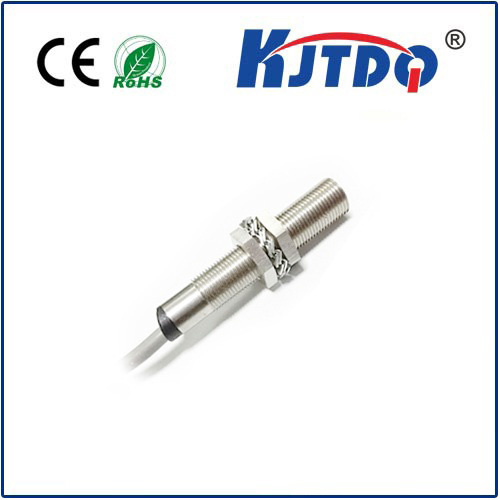
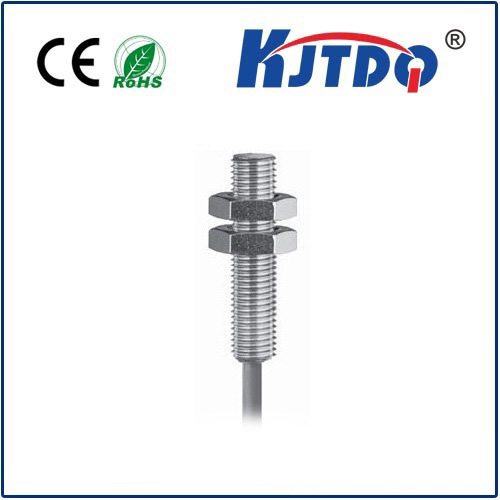
In industrial automation and heavy machinery applications, the ability to detect objects or monitor positions under extreme conditions is not just a convenience—it's a critical requirement for safety, efficiency, and process integrity. This is where specialized components like the KGG13L2KU High Pressure Proximity Sensor prove their indispensable value. Designed to operate reliably where standard sensors would fail, this device represents a significant advancement in sensing technology for challenging environments.
The core challenge in high-pressure settings, such as hydraulic systems, die-casting machines, or deep-sea equipment, is the immense force exerted on all components. A standard inductive or capacitive proximity sensor might have its housing compromised, its sensing face deformed, or its internal electronics damaged by constant or peak pressure. The KGG13L2KU is engineered from the ground up to withstand these forces. Its robust housing, typically crafted from high-grade stainless steel, is hermetically sealed to prevent pressure ingress. This construction ensures that the sensor's sensitive internal components—the oscillator, trigger circuit, and output switching device—remain fully functional even when the external housing is subjected to pressures that could reach several hundred bar. This resilience directly translates to reduced downtime and maintenance costs, as the sensor does not need frequent replacement or recalibration.
Beyond mere pressure resistance, the KGG13L2KU excels in its fundamental sensing performance. Utilizing a high-frequency oscillation principle, it generates an electromagnetic field at its active face. When a metallic target enters this field, eddy currents are induced, causing a change in the oscillation amplitude. This change is detected by the sensor's circuitry, which then triggers a solid-state output switch. The "KU" variant often indicates a particular output type or connector style, such as a quick-disconnect M12 connector, which simplifies installation and wiring in crowded control panels. Its sensing range is precise and repeatable, ensuring that a machine part or piston is detected at the exact same position every cycle, which is vital for synchronized automation processes.
One of the most critical features for operation in volatile or wet high-pressure environments is the sensor's ingress protection rating. Models like the KGG13L2KU typically boast an IP67, IP68, or even IP69K rating. This means they are completely protected against dust ingress and can withstand prolonged immersion in water under specified pressure and temperature conditions. This makes them ideal not only for pressurized interior lines but also for applications involving high-pressure washdowns in food and beverage processing or exposure to weather and contaminants in mining and construction equipment.
The application spectrum for the KGG13L2KU is remarkably broad. In plastic injection molding machines, it monitors the position of the injection screw under extreme clamp pressure. Within hydraulic press brakes, it provides end-position detection for the ram, ensuring precise bending angles. In offshore oil and gas systems, it functions as a limit switch on subsea valves and actuators, where it must resist both immense water pressure and corrosive elements. Furthermore, in automated high-pressure die-casting, it confirms the presence of molds or ejected parts, contributing to a safe and efficient cycle.
Selecting and installing this sensor requires attention to detail. Key specifications to verify include the nominal sensing distance, the type of target material (usually ferrous metals like steel and iron are standard), the supply voltage range (commonly 10-30V DC), the output configuration (PNP or NPN, normally open or normally closed), and its pressure rating, which should exceed the maximum expected operating pressure of the system. Proper mounting is crucial; the sensor should be flush-mounted in its fixture without over-torquing, and the sensing face must be kept free of debris, paint, or buildup that could attenuate the sensing field. For applications involving extreme pressure spikes or pulsations, consulting the manufacturer's datasheet for dynamic pressure resistance ratings is essential.
In conclusion, the KGG13L2KU High Pressure Proximity Sensor is far more than just a switch. It is a robust, intelligent interface between the physical world of powerful machinery and the digital world of control systems. Its design philosophy prioritizes unwavering reliability under duress, making it a cornerstone component for engineers designing systems that must perform day-in and day-out in the most demanding industrial landscapes. By ensuring accurate detection where it matters most, it safeguards equipment, optimizes processes, and ultimately contributes to the bottom line through enhanced operational continuity.