In the relentless world of industrial automation, where machinery operates under extreme pressures and within tight tolerances, the reliability of every component is non-negotiable. Sensor failure in a high-pressure environment isn't just an inconvenience; it can lead to catastrophic downtime, safety hazards, and significant financial loss. This is where precision engineering meets rugged durability, embodied in solutions like the KGG20H42NC High Pressure Proximity Sensor. Designed to perform where others falter, this sensor represents a critical advancement for applications involving hydraulic systems, die-casting machines, plastic injection molding, and heavy-duty press operations.
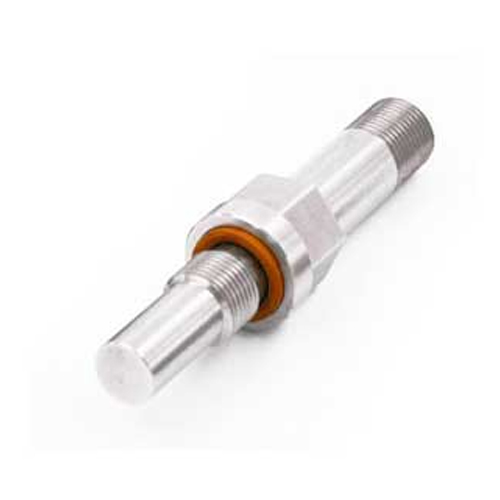
The core challenge in high-pressure environments is the immense physical stress exerted on equipment. Standard inductive proximity sensors often lack the robust housing and internal design to withstand sustained pressure, leading to seal failure, housing deformation, and inaccurate readings. The KGG20H42NC is engineered from the ground up to conquer this challenge. Its defining feature is a specially reinforced stainless-steel housing, capable of withstanding immersion and continuous operation in fluids at pressures that would compromise conventional sensors. This isn't merely a protective shell; it's an integral part of the sensor's functionality, ensuring that the sensitive electronic components within remain completely isolated from the external hostile environment. The hermetic seal is not an afterthought but a fundamental design principle, guaranteeing long-term integrity and signal stability.
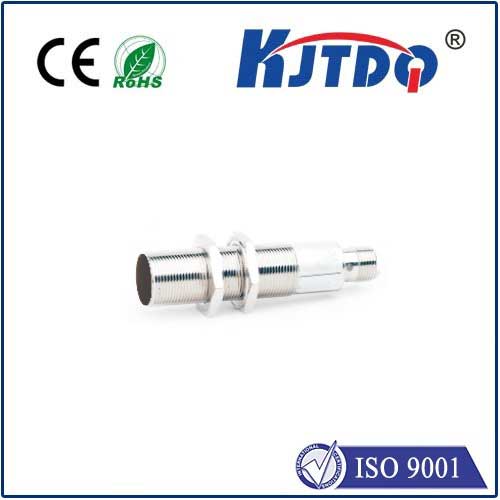
Beyond its exceptional pressure resistance, the KGG20H42NC excels in delivering consistent and accurate detection. Utilizing a high-frequency oscillation principle, it can reliably detect the presence or absence of metallic targets—whether steel, iron, or non-ferrous metals like aluminum or copper—with a high degree of repeatability. This accuracy is paramount in processes like monitoring piston position in a hydraulic cylinder or confirming mold closure in an injection press, where a few millimeters of error can ruin a production cycle. The sensor's compact, cylindrical design allows for easy integration into tight spaces, a common constraint in complex machinery. Its installation is straightforward, often requiring just a simple bracket, and it connects seamlessly with standard industrial control systems via its pre-wired cable or connector variants, simplifying maintenance and replacement.
Operational longevity is a key metric for any industrial component. The KGG20H42NC is built for endurance. Its construction materials are chosen for their resistance not only to pressure but also to corrosion from oils, coolants, and other industrial fluids. The integrated electronics are protected against common issues like short-circuits, reverse polarity, and voltage spikes, which are frequent in electrically noisy plant environments. This resilience translates directly into reduced maintenance intervals, fewer unplanned stoppages, and a lower total cost of ownership over the sensor's extended lifecycle. For plant managers and maintenance engineers, this reliability means one less point of failure to worry about, contributing to overall equipment effectiveness (OEE).
The applications for such a robust sensor are vast and critical. In hydraulic power units, it provides fail-safe position feedback for cylinders. Within die-casting machines, it ensures precise mold positioning under tremendous clamping force. For plastic injection molding, it verifies ejector plate movement. In automated stamping and pressing lines, it monitors tooling position to prevent collisions. Each of these scenarios demands a sensor that doesn't just sense but survives. Implementing the KGG20H42NC into these systems is a proactive step toward enhancing operational safety, improving product quality through consistent process control, and safeguarding valuable capital equipment from damage due to positional errors.
Selecting the right sensor for high-pressure duties requires careful consideration of specifications. Key parameters for the KGG20H42NC include its specific pressure rating, which should exceed the maximum operating pressure of the application with a safety margin, its sensing distance, output type (typically PNP or NPN), and operating temperature range. Consulting technical datasheets and, when necessary, application engineers is crucial to ensure perfect compatibility. Proper installation is equally important; ensuring the sensor body is not subjected to undue mechanical stress from piping or mounting and that electrical connections are secure and protected.
In conclusion, navigating the demands of modern industrial automation requires components that are equal parts precise and indestructible. The KGG20H42NC High Pressure Proximity Sensor stands as a testament to this philosophy. It moves beyond basic detection to offer a resilient, dependable solution that thrives under pressure—literally. By ensuring accurate positional feedback in the most challenging conditions, it becomes an unsung hero on the factory floor, enabling smoother operations, enhanced safety, and ultimately, a stronger bottom line. For engineers seeking to fortify their systems against the rigors of high-pressure environments, this sensor offers a definitive answer.