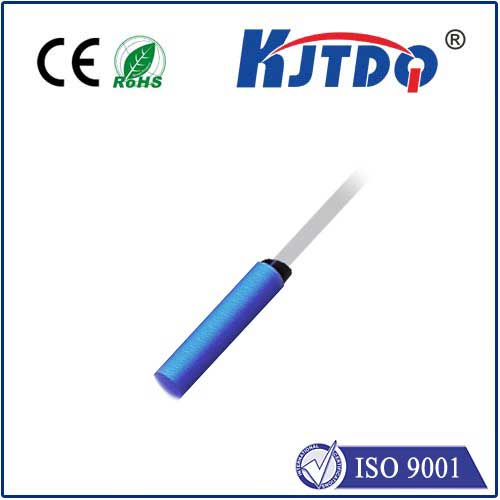
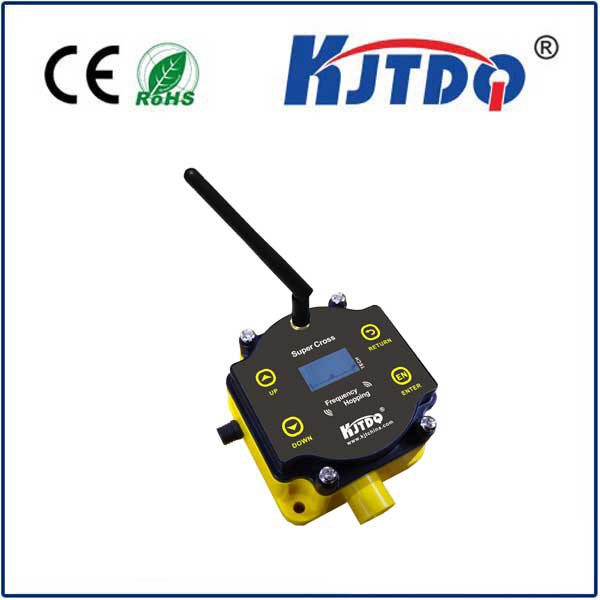
In the demanding world of industrial automation, the reliability of every component is paramount. The OBE20M-R101-S-IO-L photoelectric switch stands out as a critical sensor designed to deliver consistent, high-performance object detection in challenging environments. This device exemplifies the precision engineering required for modern manufacturing, logistics, and packaging systems, where downtime is not an option.
The OBE20M-R101-S-IO-L is a through-beam photoelectric sensor. This operating principle involves a separate transmitter and receiver unit. The transmitter emits a focused beam of light, which is then received by the opposing unit. When an object passes between the two, it interrupts this beam, triggering a switching signal. This method is renowned for its long sensing ranges, high excess gain, and exceptional reliability, as it is largely immune to the color, reflectivity, or surface finish of the target object. It can detect virtually any material that breaks the light path, from transparent glass bottles to dark, irregularly shaped packages.
A key feature of this model is its integrated IO-Link communication capability, denoted by the "-IO-L" suffix. IO-Link is a point-to-point serial communication protocol that transforms a standard binary sensor into a smart, data-rich device. Beyond simply sending an on/off signal, the OBE20M-R101-S-IO-L can transmit detailed parameter data and diagnostic information to the control system. This includes operating hours, internal temperature, signal strength, and lens contamination warnings. This data enables predictive maintenance, allowing technicians to service the sensor before a failure occurs, thus preventing unplanned production stops. Parameters like switching hysteresis or response time can also be remotely configured and stored, simplifying device replacement and system adjustments.
The robust construction of the OBE20M-R101-S-IO-L is tailored for industrial rigor. It typically features a metal or high-grade plastic housing with an IP67 or higher protection rating, making it resistant to dust ingress and capable of withstanding temporary immersion in water. This ensures reliable operation in washdown areas common in food and beverage or pharmaceutical production. The sensor is also built to endure significant vibration and shock, maintaining alignment and accuracy in dynamic machinery. Its design often includes bright LED status indicators for easy visual confirmation of power, signal output, and communication activity, facilitating quick troubleshooting on the factory floor.
The applications for this photoelectric switch are vast and varied. In conveyor belt systems, it is used for precise object counting, presence verification, and positioning control. In automated storage and retrieval systems (AS/RS), it ensures the accurate positioning of shuttles and confirms the presence of pallets. Within packaging machinery, it detects product positions for filling, capping, and labeling operations. The through-beam design is particularly effective in scenarios requiring detection over distances of several meters or in environments with airborne dust or steam that might scatter light, as the focused beam is less susceptible to interference compared to diffuse-reflective sensors.
Integrating the OBE20M-R101-S-IO-L into a control system is streamlined thanks to its IO-Link functionality. It connects to an IO-Link master module using a standard, unshielded 3-wire cable, carrying both power, the standard switching signal (PNP or NPN), and the bidirectional digital communication. This reduces wiring complexity and cost compared to analog sensors or devices requiring separate diagnostic cables. Configuration can be performed via the PLC software, a handheld configurator, or directly from the IO-Link master's interface, offering unparalleled flexibility.
When selecting a photoelectric switch for a critical application, factors such as sensing range, environmental durability, response speed, and output type are crucial. The OBE20M-R101-S-IO-L addresses these needs with its proven through-beam reliability, rugged build, and the advanced intelligence of IO-Link. It moves beyond basic detection to become a source of valuable process data, supporting the shift towards Industry 4.0 and data-driven manufacturing. For engineers and system integrators seeking a dependable, future-proof sensing solution that enhances both operational reliability and maintenance efficiency, this photoelectric switch represents a strategic investment in continuous and optimized production.