In the world of industrial automation, precision and reliability are not just desired; they are demanded. The GD18-S and GV18-S series of 115/120 photoelectric switches stand as a testament to this principle, offering robust performance for a myriad of sensing applications. These compact yet powerful devices are engineered to deliver consistent, long-term operation in challenging environments, making them a cornerstone for engineers and system integrators seeking to enhance efficiency and reduce downtime.
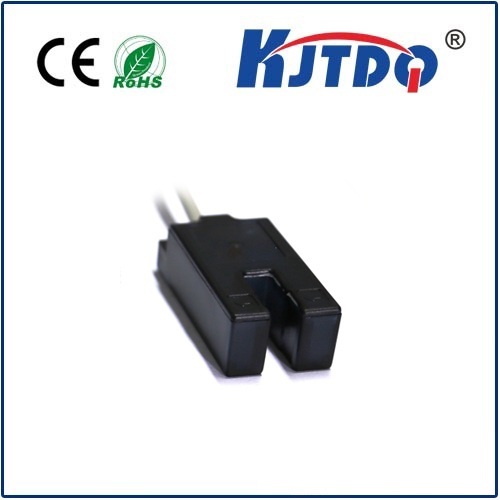
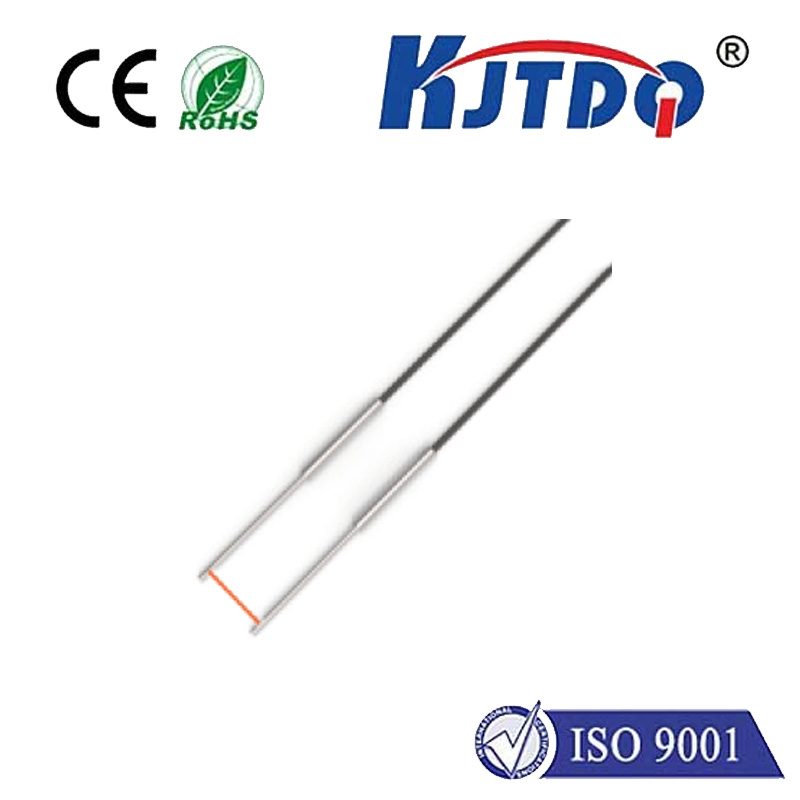
At their core, photoelectric switches operate by emitting a beam of light (infrared, red, or laser) and detecting its presence or absence. The GD18-S and GV18-S models utilize this fundamental technology with advanced refinements. The key distinction lies in their sensing modes: the GD18-S is typically a through-beam (opposed) sensor, where the emitter and receiver are separate units. An object is detected when it interrupts the light beam traveling from the emitter to the receiver. This configuration offers the longest sensing range and highest reliability for detection, as it is less susceptible to the object's color, texture, or surface angle. It is ideal for precise positioning, counting, and safety curtain applications.
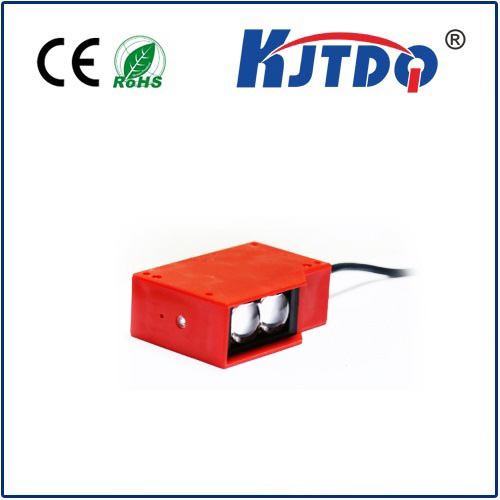
Conversely, the GV18-S is designed as a retro-reflective sensor. Here, a single unit houses both the emitter and receiver. It projects a light beam towards a dedicated reflector, which bounces the beam back to the receiver. Detection occurs when an object breaks this reflected beam. This mode provides a convenient installation with only one device to wire and mount, offering a substantial sensing range, though slightly less than through-beam models. It excels in packaging, material handling, and conveyor belt systems.
The "115/120" designation is crucial, often referring to the operating voltage range. These sensors are typically designed to work with a wide range of DC voltages, commonly from 10-30V DC, ensuring compatibility with standard industrial power supplies. This flexibility allows for seamless integration into existing control systems without the need for additional power conditioning equipment. Furthermore, models are available with different output types, such as NPN (sinking) or PNP (sourcing) transistor outputs, and sometimes analog or relay outputs, to interface directly with PLCs, counters, and other control devices.
Durability is a non-negotiable feature. Housed in rugged, often metal or high-grade plastic casings, the GD18-S and GV18-S sensors are built to withstand industrial rigors. They commonly feature high ingress protection ratings like IP67, making them resistant to dust and temporary immersion in water. This resilience ensures stable performance in environments with oil, coolant, vibration, and electrical noise. Advanced models may include features like background suppression, which allows them to ignore distant backgrounds and only detect objects within a specific range, or polarized filters to ignore shiny objects that could cause false triggers.
Selecting the right photoelectric switch is paramount for system optimization. For long-range, high-precision tasks where alignment is feasible, the GD18-S through-beam sensor is the superior choice. For applications requiring easier setup and maintenance with a good range, the GV18-S retro-reflective sensor is highly effective. Engineers must consider factors like sensing distance, object size, material, ambient light conditions, and required response speed.
In practical applications, these sensors are ubiquitous. They are the silent sentinels on assembly lines, detecting components for robotic arms. They ensure accurate counting of bottles in beverage plants. They provide position feedback in automated storage and retrieval systems. In the automotive industry, they verify the presence of parts during critical assembly stages. Their versatility extends to packaging machinery, woodworking, and even agricultural automation.
Installation and alignment, while straightforward, require attention. For through-beam types, precise alignment of the emitter and receiver is critical for optimal performance. Retro-reflective sensors need a clear line of sight to a properly oriented reflector. Modern sensors often incorporate visible red light beams or alignment indicators (like LED status lights) to simplify this process. Regular maintenance involves keeping lenses clean from dust and debris to prevent false signals or reduced range.
The GD18-S and GV18-S 115/120 photoelectric switches represent more than just components; they are enablers of smarter, more reliable automation. By providing accurate, non-contact detection, they form the sensory foundation upon which efficient, safe, and productive industrial systems are built. Their proven design, environmental robustness, and electrical compatibility make them a trusted solution for engineers worldwide, driving innovation and operational excellence across countless industries.