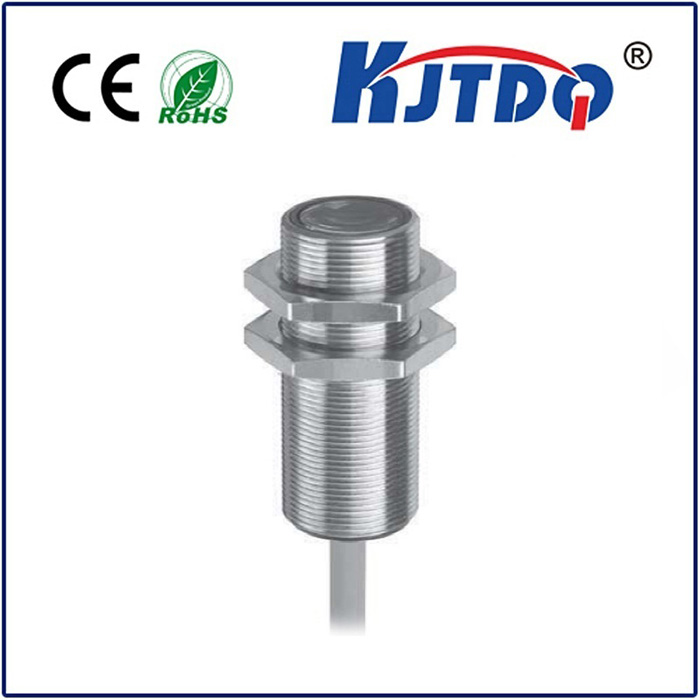
In the intricate world of industrial automation, the reliability of a single component can dictate the efficiency of an entire production line. Among these critical components, photoelectric switches stand as silent sentinels, and the RL20-3053ND model has carved out a significant reputation for precision and durability. This guide delves into the core features, operational principles, and diverse applications of this specific sensor, providing essential insights for engineers and system integrators.
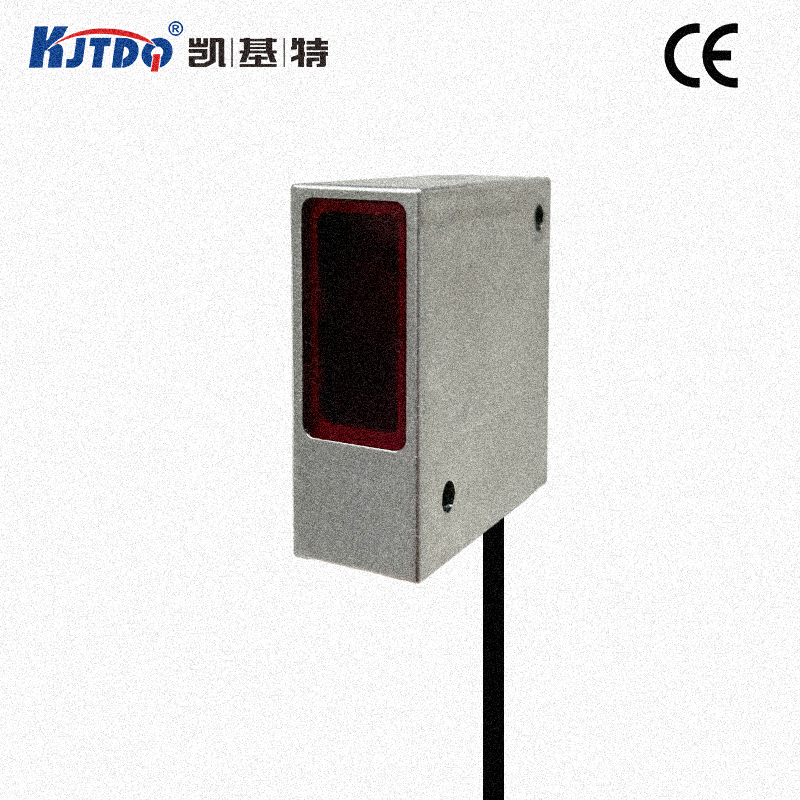
The RL20-3053ND is a diffuse reflective photoelectric switch, a design that simplifies installation and broadens its usability. Unlike through-beam sensors that require separate emitter and receiver units, this model houses both within a single, compact housing. It operates by emitting a beam of modulated light—typically from an LED—and then detecting the portion of that light that is reflected back from a target object. The built-in circuitry analyzes this reflected signal. When the received light intensity surpasses a pre-set threshold, the sensor's output state switches, signaling the presence of the object. This self-contained operation eliminates the need for precise alignment with a separate receiver, making it ideal for applications where mounting space is limited or where installing two separate units is impractical.
Key technical specifications define the RL20-3053ND's performance envelope. It typically features a sensing distance tailored for mid-range applications, often around several hundred millimeters, though the exact effective range is highly dependent on the target object's size, color, and surface texture. Light-colored, matte surfaces reflect light more effectively, allowing for longer detection ranges, while dark or shiny objects may require closer proximity. The "ND" suffix often indicates a built-in background suppression or fixed background suppression feature. This advanced technology allows the sensor to ignore objects beyond a specific set distance, effectively filtering out the background—like a conveyor belt or machine wall—and focusing only on the target within its defined sensing window. This capability is invaluable in complex environments, drastically reducing false triggers.
The construction of the RL20-3053ND is engineered for resilience. Housed in a robust casing, it boasts strong environmental resistance. Many variants offer an IP67 protection rating, meaning they are completely protected against dust ingress and can withstand temporary immersion in water. This makes them suitable for challenging environments common in manufacturing, packaging, and logistics, where exposure to dust, moisture, and occasional splashes is inevitable. The output is commonly a solid-state NPN or PNP transistor, providing a fast, bounce-free signal compatible with programmable logic controllers (PLCs), counters, and other control systems.
The practical applications for the RL20-3053ND photoelectric switch are extensive. In packaging machinery, it is frequently used for detecting the presence of boxes or products on a conveyor, triggering the next step in the process like labeling or sealing. Within assembly lines, it can verify if a component has been correctly placed before a robotic arm proceeds. In material handling, it assists in counting objects, monitoring stack heights, or ensuring proper positioning. Its background suppression feature is particularly useful for detecting transparent objects, like glass or plastic bottles, against a cluttered backdrop, or for precise positioning where only an object at a specific distance should be acknowledged.
Selecting and installing the RL20-3053ND requires consideration of several factors. First, clearly define the target object's characteristics and the required sensing distance. Always consult the manufacturer's datasheet for precise specifications regarding sensing curves for different materials. During installation, ensure the sensor is mounted securely and aligned correctly towards the expected target path. Environmental factors such as ambient light, which may include strong sunlight or welding arcs, can interfere with operation. Choosing a model with a modulated light source and potential supplementary shielding can mitigate this interference. Regular maintenance, primarily keeping the lens clean from dirt and grime, is a simple yet crucial practice to ensure long-term, reliable performance.
In conclusion, the RL20-3053ND photoelectric switch represents a blend of sophisticated sensing technology and rugged practicality. Its diffuse reflective design with background suppression offers a versatile solution for a wide array of object detection challenges in automated systems. By understanding its operating principles, key features, and optimal application scenarios, technicians and engineers can effectively integrate this reliable component to enhance system accuracy, reduce downtime, and drive operational efficiency. For those seeking a dependable sensor for mid-range detection with excellent environmental sealing and intelligent background discrimination, the RL20-3053ND remains a compelling and proven choice in the sensor marketplace.