In the intricate world of industrial automation, the reliability of a single component can dictate the efficiency of an entire production line. Among these critical components, photoelectric switches stand as silent sentinels, ensuring precision in object detection, positioning, and counting. The CPJ-DF150N2 photoelectric switch emerges as a standout solution in this domain, offering a blend of durability, accuracy, and versatility that meets the rigorous demands of modern manufacturing and logistics environments. This guide delves into the core features, operational principles, and practical applications of the CPJ-DF150N2, providing a comprehensive overview for engineers and system integrators seeking to optimize their automated processes.
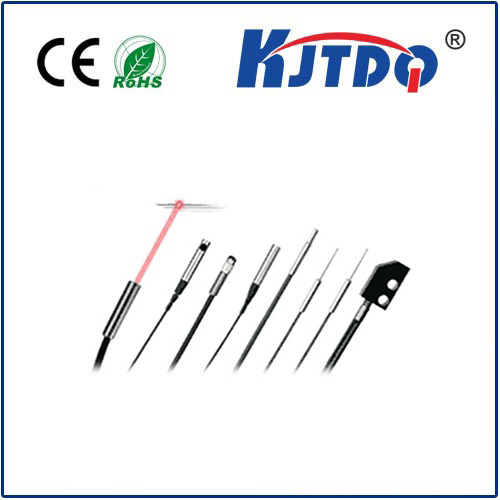
At its heart, the CPJ-DF150N2 is a through-beam photoelectric sensor. This design involves two separate units: a transmitter that emits a focused beam of light, typically infrared or laser, and a receiver positioned directly opposite. Detection occurs when an object physically interrupts this light beam. This method is renowned for its exceptional sensing distance and high reliability, as it is less susceptible to the color, reflectivity, or surface texture of the target object compared to reflective models. The CPJ-DF150N2 is engineered to deliver stable performance over long distances, making it ideal for applications requiring detection across conveyor belts, entry/exit points, or large machinery.
The construction of the CPJ-DF150N2 prioritizes resilience. Housed in a robust casing, it is designed to withstand the harsh conditions prevalent in industrial settings, including exposure to dust, moisture, and mechanical vibrations. Many models feature an IP67 or higher ingress protection rating, ensuring operational integrity even when subjected to temporary immersion or high-pressure washdowns. This ruggedness translates directly into reduced downtime and lower maintenance costs, a key consideration for cost-sensitive operations.
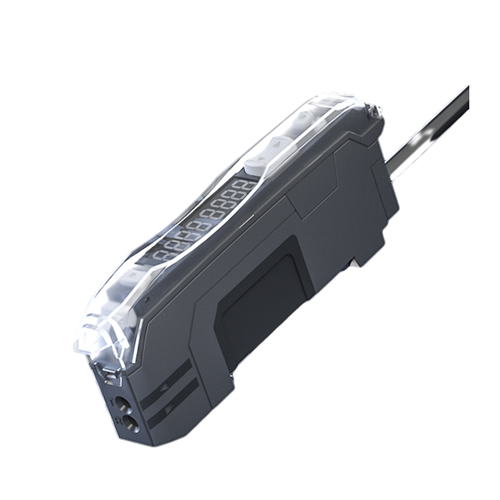
A significant advantage of the CPJ-DF150N2 is its ease of integration and setup. Modern versions often come equipped with intuitive alignment indicators, such as visible red beams or signal strength LEDs, which simplify the installation and commissioning process. This user-friendly design minimizes setup time and reduces the potential for human error. Furthermore, the switch typically offers multiple output options (like NPN or PNP transistor outputs) and operates on a standard voltage range (e.g., 10-30V DC), ensuring compatibility with a wide array of programmable logic controllers (PLCs), counters, and control systems without the need for complex interfacing modules.
The practical applications for the CPJ-DF150N2 are vast and varied. In packaging lines, it is indispensable for detecting the presence of boxes or products, triggering subsequent actions like labeling, filling, or sorting. Within the automotive industry, these switches ensure precise positioning of components on assembly robots. They are equally crucial in material handling, where they count items on a conveyor or detect the position of pallets in automated storage and retrieval systems (AS/RS). Their long-range capability also makes them perfect for security applications, such as monitoring unauthorized access through gates or doors in restricted areas.
When selecting a photoelectric switch like the CPJ-DF150N2 for a specific task, several factors must be evaluated. The required sensing distance is paramount; the CPJ-DF150N2 series offers models with ranges suitable for both close-proximity and extended-distance needs. Environmental conditions are another critical factor. For applications involving steam, heavy dust, or extreme temperatures, ensuring the model's specifications match the operational environment is essential for long-term reliability. Finally, the response time of the sensor must be fast enough to keep pace with the speed of the production line to avoid missed detections.
In conclusion, the CPJ-DF150N2 photoelectric switch represents a fusion of robust engineering and practical functionality. Its through-beam sensing principle provides unwavering accuracy, while its durable build guarantees longevity in challenging industrial landscapes. By offering reliable object detection, it forms a fundamental building block for enhancing safety, efficiency, and automation intelligence. For system designers and maintenance engineers aiming to build resilient and productive automated systems, understanding and utilizing the capabilities of the CPJ-DF150N2 is a step toward achieving seamless and fault-free operational flow.