Проверка
Проверка
Проверка
Проверка
Проверка
Проверка
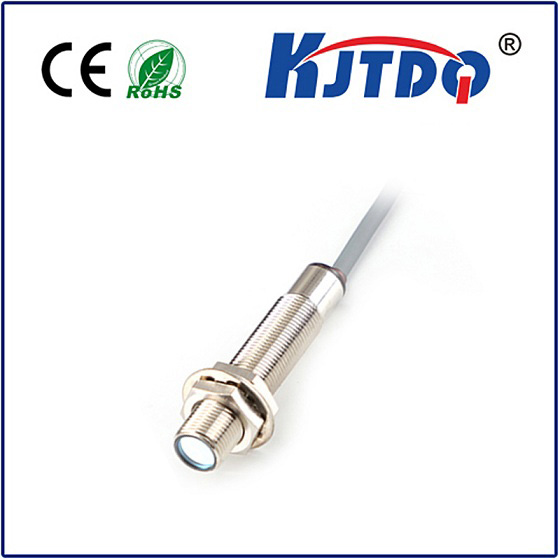
In the world of industrial automation, precision and reliability are non-negotiable. The E3F12-20DN1 photoelectric switch stands as a cornerstone component for countless sensing applications, offering a blend of durability and consistent performance that engineers and system integrators have come to depend on. This through-beam type sensor operates on a simple yet profoundly effective principle: a separate emitter and receiver unit create an invisible beam of light. When an object interrupts this beam, the switch triggers a signal. This method allows for the E3F12-20DN1 to achieve a remarkable sensing distance of up to 20 meters, making it exceptionally versatile for large-scale or demanding environments.
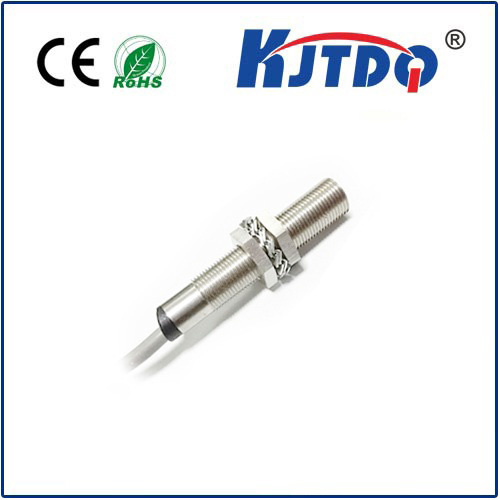
What truly sets the E3F12-20DN1 apart is its rugged construction and design resilience. Housed in a sturdy, cylindrical metal body, it is built to withstand the harsh realities of factory floors, including exposure to dust, moisture, and mechanical vibrations. Its IP67 protection rating confirms its ability to resist temporary immersion and dust ingress, ensuring operational continuity in challenging conditions. The switch features an NPN normally-open (NO) output configuration, a common standard that provides seamless compatibility with a wide array of programmable logic controllers (PLCs) and other control systems. This plug-and-play compatibility significantly reduces integration time and complexity.
The applications for the E3F12-20DN1 are vast and varied. It is frequently deployed in conveyor belt systems for precise object counting, package sorting, and jam detection. In automated assembly lines, it ensures components are present and correctly positioned before a robotic arm executes its task. It also plays a critical role in security systems, acting as a safety beam to detect unauthorized entry into restricted zones or to ensure machine guarding is in place before equipment starts. Its long-range capability is particularly valuable in warehouse automation for monitoring high-bay storage retrieval systems and in parking garages for vehicle presence detection.
Installation and alignment of the through-beam sensor are straightforward but require attention to detail for optimal performance. The emitter and receiver must be precisely opposed to each other. A common practice is to power the units and use the built-in indicator LEDs to confirm a stable beam connection before final mounting. Regular maintenance is minimal but should include periodic lens cleaning to prevent dust or grime from attenuating the light signal, which could lead to false triggers or missed detections. Checking mounting brackets for stability is also advised to maintain perfect alignment over time.
When selecting a photoelectric switch, comparing the E3F12-20DN1 with other types like diffuse-reflective or retro-reflective sensors is crucial. While diffuse sensors are simpler to install as they require only one unit, they have a shorter range and can be influenced by the color or reflectivity of the target object. Retro-reflective sensors offer a longer range than diffuse types but require a reflector and can be fooled by shiny objects. The through-beam design of the E3F12-20DN1 provides the longest possible range, highest excess gain, and the most reliable detection, as it is least affected by surface color, texture, or reflectivity. The trade-off is the need to install and align two separate components.
For system designers looking to future-proof their operations, the E3F12-20DN1 represents a reliable and proven choice. Its performance metrics, environmental robustness, and industry-standard output make it a versatile workhorse. By ensuring accurate object detection over considerable distances in tough environments, this photoelectric switch directly contributes to enhanced productivity, reduced downtime, and improved overall system safety. Its role is fundamental in translating physical events into the digital signals that drive modern, efficient, and intelligent automation.