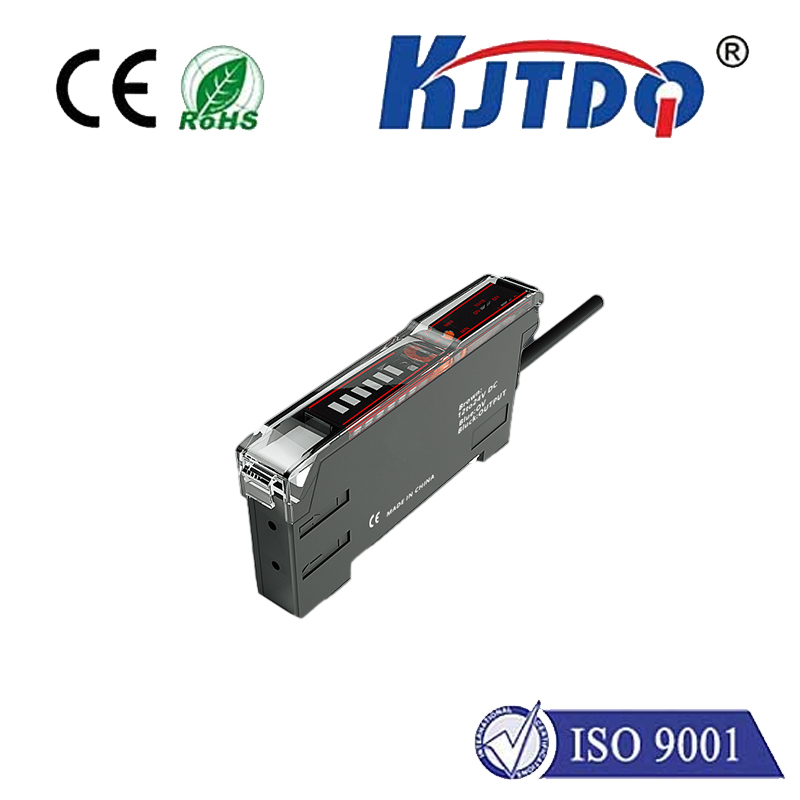
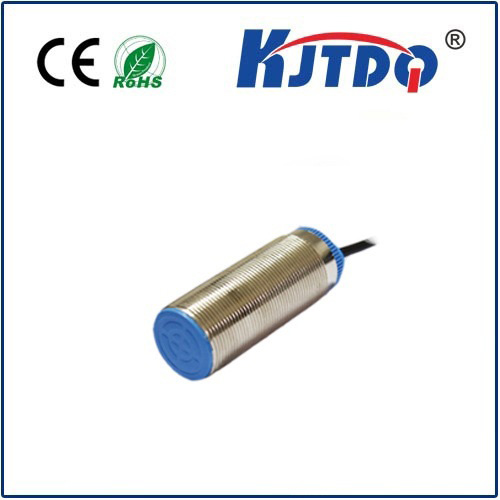
In the intricate world of industrial automation, the reliability of every component dictates the efficiency of the entire system. Among these critical components, photoelectric switches stand as silent sentinels, ensuring seamless operations. The ZL26-3022NH photoelectric switch emerges as a standout solution, engineered to deliver unparalleled performance in demanding environments. This comprehensive guide delves into its features, applications, and the tangible benefits it brings to modern manufacturing and control systems.
At its core, the ZL26-3022NH is a through-beam photoelectric sensor. This design involves a separate transmitter and receiver unit. The transmitter emits a focused beam of light, typically infrared or laser, which is then captured by the opposing receiver. An object is detected when it interrupts this light beam. This principle offers significant advantages, including exceptional sensing ranges and high immunity to environmental factors like dust, steam, or target surface color and reflectivity. The "NH" designation often indicates specific robust construction or enhanced environmental ratings.
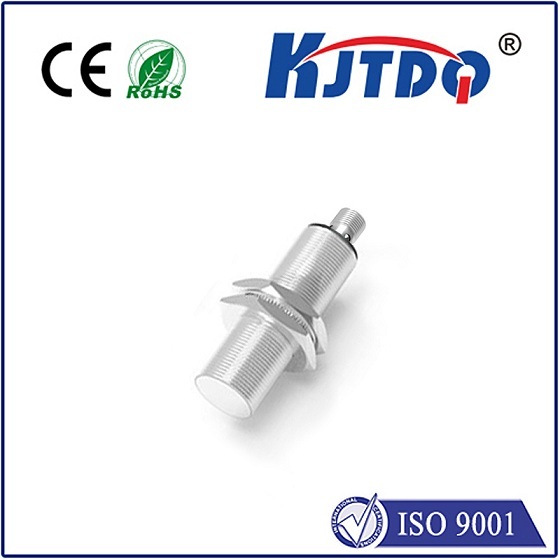
The construction of the ZL26-3022NH is tailored for industrial resilience. Housed in a rugged, often metal or high-grade polymer casing, it boasts impressive ingress protection ratings, such as IP67. This means it is completely protected against dust ingress and can withstand temporary immersion in water. This durability makes it suitable for harsh settings like food processing plants, automotive assembly lines, material handling systems, and outdoor applications where exposure to moisture and particulates is common. Its design prioritizes longevity, reducing downtime and maintenance costs.
Operational performance is where the ZL26-3022NH truly shines. It typically features a long sensing distance, which can span several meters, allowing for flexible installation in large machinery or conveyor systems. The response time is extremely fast, enabling the detection of high-speed objects on production lines without missing a beat. Furthermore, many models come with a visible red or green beam indicator, simplifying alignment during setup—a crucial factor for through-beam sensors where precise optical alignment is mandatory for optimal function.
Integration into existing control systems is straightforward. The ZL26-3022NH commonly provides a digital output signal, such as an NPN or PNP transistor switch, which is easily interfaced with Programmable Logic Controllers (PLCs), relays, or other industrial controllers. This plug-and-play compatibility accelerates deployment and minimizes system integration headaches. Its consistent and accurate signal ensures that downstream processes, like counting, positioning, or safety interlocks, function with absolute reliability.
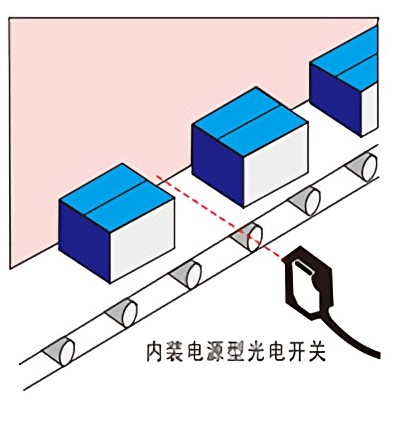
Consider a practical application in packaging automation. Cartons moving rapidly on a conveyor belt must be counted and sorted. The ZL26-3022NH, mounted on either side of the belt, creates an invisible detection curtain. Each carton breaking the beam sends a precise pulse to the control system, triggering accurate counting and subsequent diversion gates. Its immunity to the color or printed labels on the cartons guarantees error-free operation, a challenge for other sensor types like diffuse-reflective models.
Another critical use is in safety systems. Paired with appropriate safety relays, these switches can form part of a safety light curtain or area guard. When the beam is interrupted by an operator entering a hazardous zone, the machinery can be instantly halted, preventing accidents. The high reliability and fail-safe design principles inherent in quality through-beam sensors like the ZL26-3022NH are paramount for protecting personnel.
Selecting the right photoelectric switch is vital. The ZL26-3022NH through-beam type is ideal when you need long-range detection, high environmental resistance, and consistent performance regardless of the target object's properties. It is the preferred choice over diffuse or retro-reflective sensors in dirty, dusty, or long-range scenarios where false triggers must be eliminated. When planning an installation, key considerations include the required sensing distance, the size of the object to be detected, the ambient conditions (temperature, humidity, contaminants), and the necessary electrical output.
Maintenance is minimal but essential. Periodically cleaning the lens surfaces of both the transmitter and receiver ensures the light beam remains at full strength. Checking for physical damage to the housing or cables and verifying the alignment, especially after machinery vibration or impact, will sustain peak performance for years. The robust design of the ZL26-3022NH is built for such endurance, offering a superior total cost of ownership through reduced failures and interventions.
In conclusion, the ZL26-3022NH photoelectric switch represents a fusion of robust engineering and precise optical technology. It is more than just a component; it is a foundational element for achieving automation goals centered on efficiency, safety, and reliability. For engineers and system integrators seeking a dependable through-beam sensing solution capable of thriving in challenging industrial landscapes, the ZL26-3022NH stands as a proven and trustworthy choice, ensuring that the pulse of automation beats steadily and without fail.