Проверка
Проверка
Проверка
Проверка
Проверка
Проверка
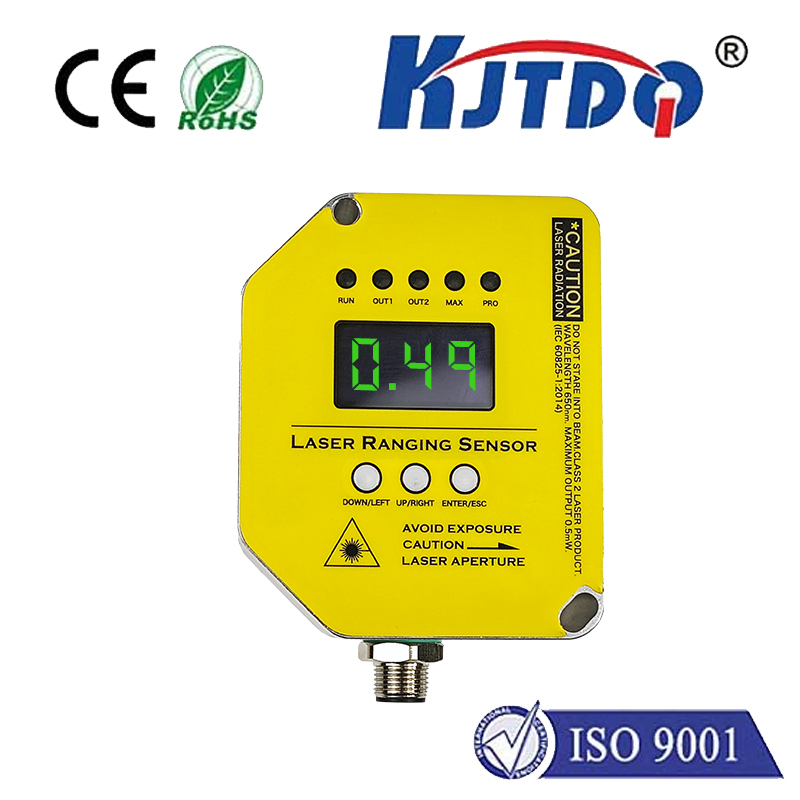
In the demanding landscape of modern industrial automation, precision, reliability, and durability are non-negotiable. The CD33-30N-422 laser sensor emerges as a cornerstone technology, engineered to meet these rigorous standards. This compact yet powerful device represents a significant leap in non-contact measurement and detection, offering unparalleled accuracy for a wide array of applications, from intricate assembly line tasks to robust material handling systems.
The core of the CD33-30N-422's performance lies in its advanced laser triangulation principle. It projects a highly focused, visible red laser beam onto a target object. The reflected light is then captured by a precision receiver at a specific angle. By calculating the displacement of the light spot on the receiver, the sensor can determine the exact distance to the object with micron-level resolution. This method ensures consistent and repeatable measurements, unaffected by surface color or material in most standard conditions, a common challenge with other optical sensors.
One of the defining features of the CD33-30N-422 is its robust 30mm sensing range. This range is meticulously calibrated to provide optimal performance for medium-distance applications, such as monitoring fill levels in containers, verifying the presence or absence of components on a conveyor, or controlling the precise positioning of robotic arms. The sensor's housing is typically constructed from high-grade metal or resilient industrial plastic, designed to withstand harsh environments involving dust, moisture, and mechanical vibrations commonly found in factory settings.
Installation and integration are streamlined for efficiency. The sensor often comes with versatile mounting options and intuitive teach-in functionality. Users can easily set the sensing window, output logic, and other parameters via a simple button interface or external controller, minimizing setup time and reducing potential errors. The output is typically provided through a stable PNP or NPN switching signal or an analog voltage/current signal, ensuring seamless compatibility with Programmable Logic Controllers (PLCs), human-machine interfaces (HMIs), and other industrial control systems.
The practical applications of the CD33-30-422 laser sensor are vast. In automotive manufacturing, it can be used for gap and flush measurement between body panels. In electronics, it ensures components are seated correctly on circuit boards. In packaging, it verifies lid closure and label placement. Its high-speed response capability makes it ideal for sorting and counting tasks on high-throughput production lines. Furthermore, its precise detection helps in quality control processes, identifying minute dimensional deviations that could lead to product defects, thereby reducing waste and enhancing overall production yield.
When selecting a sensor like the CD33-30N-422, it is crucial to consider the specific environmental and operational factors. While highly resistant to ambient light interference, extreme conditions may require additional protective housings. Regular maintenance, primarily keeping the lens clean from obstructions, ensures long-term operational stability. For applications involving highly reflective or transparent materials, consulting the technical specifications or the manufacturer is advised to confirm suitability or explore sensor variants with specialized filters.
Ultimately, the integration of the CD33-30N-422 laser sensor into an automation system is an investment in precision and efficiency. It provides the critical data needed for real-time process control, enabling smarter, more responsive, and more reliable manufacturing operations. By delivering accurate, non-contact detection, it helps bridge the gap between mechanical processes and digital control, forming a fundamental component in the advancement towards fully optimized, Industry 4.0-ready production facilities. Its role in enhancing safety, by replacing manual inspections in hazardous areas, and boosting productivity is undeniable, making it a key tool for engineers seeking robust and high-performance sensing solutions.