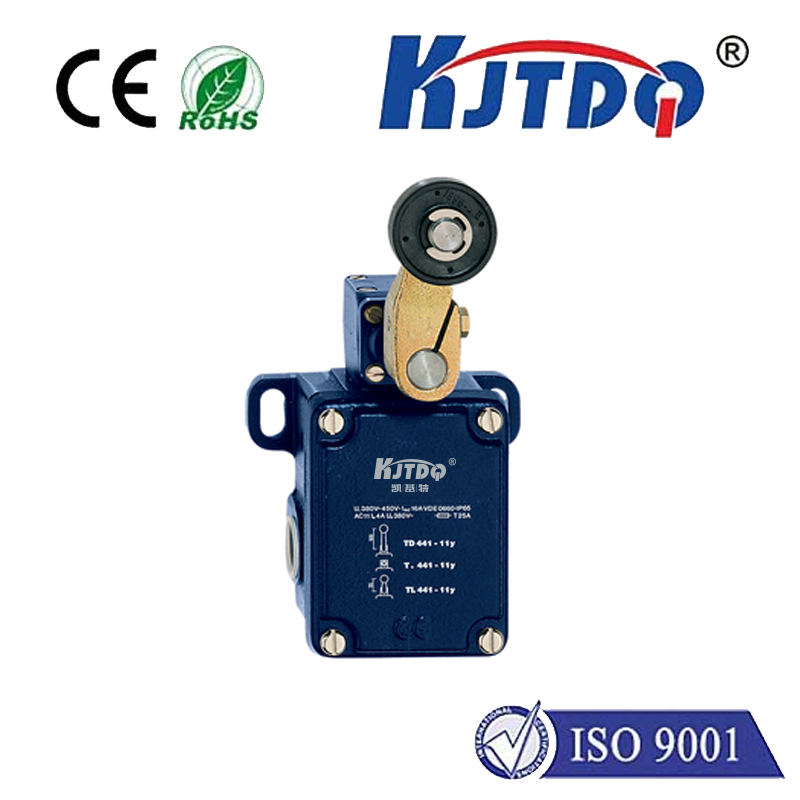
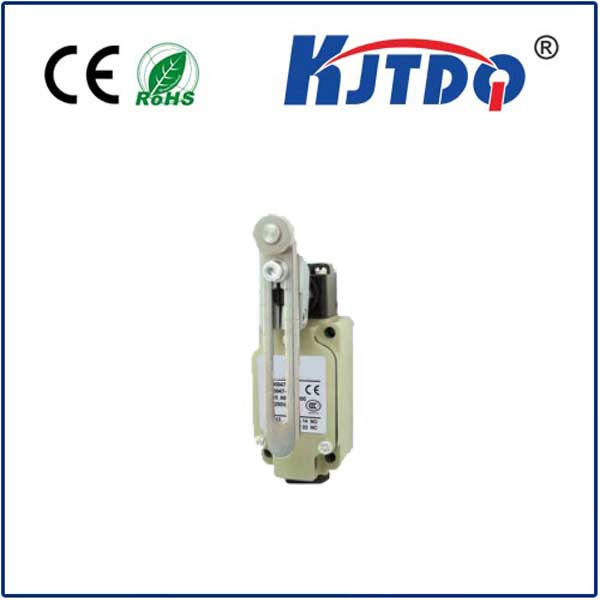
In the intricate world of electrical control and safety systems, a component often operates behind the scenes, yet its role is fundamentally critical. This component is the lever arm switch, a precise and reliable device designed for position sensing and limit control in a vast array of applications. Unlike simple toggle switches, the lever arm switch incorporates a mechanical actuator—a lever—that translates physical movement into an electrical signal. This mechanism allows it to detect the presence, absence, or specific position of an object, making it indispensable in automated processes.
The core principle of a lever arm switch is elegantly straightforward. It typically houses a robust micro switch within a durable casing. The external lever arm is connected to the actuator of this internal switch. When an object or machine part makes contact with and moves the lever arm through a predetermined angle, it triggers the internal switch mechanism. This action either opens or closes the electrical contacts, thereby changing the state of the circuit. This change of state can be used to send a signal to a control system, such as a Programmable Logic Controller (PLC), to initiate, halt, or modify an operation. The actuation force and the reset point are carefully calibrated, ensuring consistent and repeatable performance even in demanding industrial environments.
The versatility of lever arm switches is demonstrated by their widespread use across numerous sectors. In industrial automation, they are commonly employed as limit switches on conveyor systems, robotic arms, and automated guided vehicles (AGVs) to define the endpoints of movement and prevent over-travel. Within the realm of safety, these switches form a crucial part of interlock systems on machine guards and access doors. If a safety gate is opened, the lever arm is actuated, immediately cutting power to dangerous machinery and protecting personnel. Furthermore, they find applications in packaging machinery, material handling equipment, and even in some automotive systems for position feedback.
Selecting the appropriate lever arm switch requires careful consideration of several technical parameters to ensure optimal performance and longevity. The operating temperature range is vital, especially for environments with extreme heat or cold. Ingress Protection (IP) ratings indicate the switch's resilience against dust and moisture; a higher IP rating like IP67 is essential for washdown areas in food processing or outdoor applications. The electrical rating, including voltage and current capacity (both AC and DC), must match the control circuit's requirements. Additionally, the mechanical durability, often rated in millions of operations, the material of the lever arm and housing (e.g., metal or high-impact plastic), and the type of electrical output (e.g., SPDT - Single Pole Double Throw) are all critical factors. The length and style of the lever arm itself can also be customized for specific sensing needs.
The primary advantage of integrating a lever arm switch into a system is its proven reliability and direct physical feedback. It provides a tangible, mechanical confirmation of position that is often more trusted in critical safety functions than non-contact sensors in certain contexts. Their design is generally simple, making them easy to install, understand, and troubleshoot. Compared to more complex proximity sensors, they are often a cost-effective solution for straightforward position detection tasks. However, it is important to acknowledge their limitations. Being mechanical devices, they are subject to wear and tear over time, especially in high-cycle applications. They also require physical contact, which may not be suitable for fragile objects or high-speed operations where contact could cause damage or inefficiency.
In conclusion, the lever arm switch remains a cornerstone of electromechanical control. Its ability to reliably convert mechanical motion into a definitive electrical signal makes it a trusted component for ensuring operational precision and personnel safety. From controlling the simple stop-and-start of a conveyor to being the critical link in a safety interlock, its function is irreplaceable in many scenarios. When designing or maintaining a system that requires accurate position sensing, understanding the specifications, applications, and operational logic of the lever arm switch is a fundamental step toward achieving robust and dependable automation.