In the realm of industrial automation and precision measurement, the demand for reliable, accurate, and robust sensing solutions is paramount. Among the myriad of options available, the CD33-30CN/CP laser sensor stands out as a sophisticated tool engineered for high-performance applications. This guide delves into the core features, operational principles, and diverse use cases of this advanced sensor, providing a comprehensive overview for engineers, system integrators, and procurement specialists.
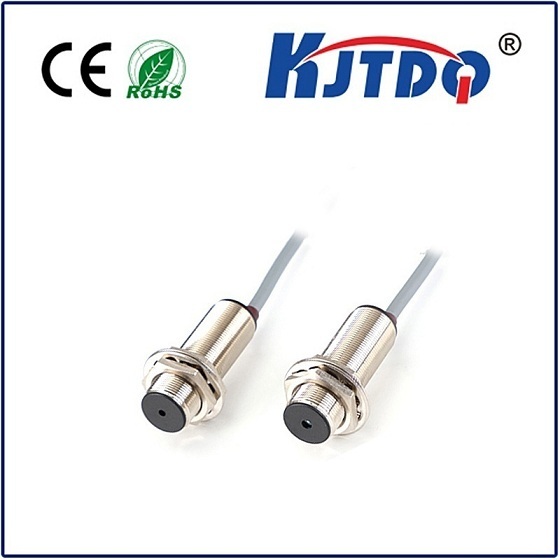
The CD33-30CN/CP is a member of a distinguished family of laser sensors designed for precise distance measurement and object detection. Its core technology is based on the principle of laser triangulation. The sensor emits a focused, visible red laser beam towards a target. The light reflected from the target's surface is then captured by a high-resolution receiving element within the sensor. By calculating the angle of the reflected beam, the sensor's internal processor can determine the exact distance to the object with exceptional accuracy. This method allows for non-contact measurement, which is crucial for applications involving delicate, hot, or moving surfaces where physical contact could cause damage or inaccuracies.
One of the defining characteristics of the CD33-30CN/CP is its impressive measuring range and resolution. Capable of detecting objects within a specified range, it offers micron-level precision, making it suitable for tasks where minute variations are critical. The sensor typically features both NPN (sinking) and PNP (sourcing) output configurations, denoted by the CN and CP suffixes. This dual-output flexibility ensures seamless integration into a wide variety of control systems, whether they are based on European (typically PNP) or Asian (typically NPN) standards. This plug-and-play compatibility significantly reduces installation time and complexity.
The housing of the CD33-30CN/CP is built to withstand the rigors of industrial environments. It is often rated with a high Ingress Protection (IP) code, such as IP67, indicating complete protection against dust and the ability to withstand temporary immersion in water. This rugged construction ensures reliable operation in settings with coolant, oil mist, dust, and vibration. Furthermore, many models incorporate an intuitive teach-in function. This allows users to easily set the sensing window, thresholds, and output logic directly on the device, often via a button or through a connected controller, eliminating the need for complex manual calibration with potentiometers.
The applications for the CD33-30CN/CP laser sensor are vast and span across multiple industries. In automotive manufacturing, it is used for precise gap and flush measurement between body panels, ensuring quality and fit. In electronics assembly, it verifies the presence and height of surface-mounted components on PCBs. Within packaging machinery, it controls fill levels, checks label placement, and counts products on high-speed lines. In robotics, it provides critical feedback for precise positioning and pick-and-place operations. Its ability to detect even shiny, dark, or transparent objects—often a challenge for other optical sensors—makes it exceptionally versatile.
When selecting a sensor like the CD33-30CN/CP, several factors must be considered. The required measuring range, the resolution needed for the task, the response time for high-speed processes, and the environmental conditions are all critical. The choice between the CN (NPN) and CP (PNP) versions must align with the existing PLC or controller input module specifications. Proper mounting, alignment, and understanding of the target surface's properties (color, material, reflectivity) are essential for optimal performance. Regular maintenance, primarily keeping the lens clean from contaminants, is recommended to sustain long-term accuracy.
In conclusion, the CD33-30CN/CP laser sensor represents a convergence of precision optics, robust engineering, and user-friendly design. It solves complex measurement and detection challenges in modern industrial automation. By offering high accuracy, environmental resilience, and flexible integration, it serves as a reliable "eye" for machines, enhancing quality control, optimizing processes, and improving overall operational efficiency. For professionals seeking a dependable solution for non-contact precision sensing, understanding the capabilities and applications of the CD33-30CN/CP is a significant step toward achieving superior automation results.