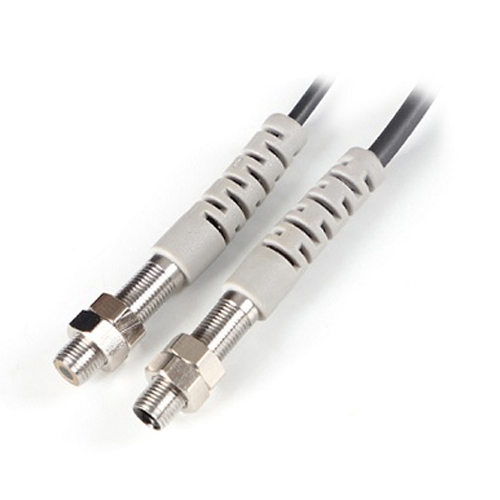
In the rapidly evolving landscape of industrial automation, the demand for high-precision, reliable measurement solutions is paramount. The 05D100 laser sensor emerges as a critical component, engineered to meet the rigorous demands of modern manufacturing and quality control processes. This device represents a significant advancement in non-contact measurement technology, offering unparalleled accuracy in distance and displacement sensing.
The core technology behind the 05D100 laser sensor is based on the principle of laser triangulation. A laser diode projects a visible red spot onto the target surface. The reflected light is then captured by a high-resolution CMOS array at a specific angle. By precisely calculating the position of the light spot on the sensor, the device determines the exact distance to the target with micron-level resolution. This method ensures measurements are both fast and immune to the inconsistencies often associated with physical contact probes.
One of the standout features of the 05D100 is its robust design tailored for harsh industrial environments. It typically boasts an IP67 protection rating, making it resistant to dust and water ingress. This durability ensures consistent performance on factory floors where oil mist, coolant, and particulate matter are common. The sensor's housing is often constructed from hardened metals or industrial-grade plastics, capable of withstanding mechanical shocks and vibrations that would compromise lesser equipment.
The application scope for the 05D100 laser sensor is vast. In automotive assembly lines, it is deployed for gap and flush measurement between body panels, ensuring perfect alignment and premium build quality. In electronics manufacturing, it verifies the precise height of components on printed circuit boards (PCBs) before soldering. Within the packaging industry, it monitors the fill level of containers or checks the thickness of materials like plastic films and metal sheets with exceptional repeatability.
Integration into existing systems is streamlined through multiple output options. Most models offer analog outputs (0-10V or 4-20mA) for continuous distance data and digital I/O for triggering or pass/fail judgments. Compatibility with standard industrial communication protocols like IO-Link is increasingly common, enabling seamless data exchange with PLCs (Programmable Logic Controllers) and SCADA systems for real-time process monitoring and control.
Calibration and setup have been simplified through intuitive software tools. Users can define measurement windows, set tolerances, and configure output parameters via a connected PC or handheld programmer. Advanced models may include features like background suppression, which allows the sensor to ignore irrelevant surfaces behind the primary target, and multi-point averaging to ensure stable readings on rough or textured materials.
When selecting a laser sensor like the 05D100, key specifications must be considered. The measuring range, which for this model class is often around 100mm with a standoff distance, defines its operational envelope. The repeatability, often specified in micrometers, indicates its measurement consistency. The response time, or how quickly it can take and output a reading, is crucial for high-speed production lines. The laser class (typically Class 2) ensures eye safety during operation.
The benefits of implementing such a sensor are substantial. It directly contributes to zero-defect manufacturing strategies by providing 100% in-line inspection, eliminating costly rework and recalls. It enhances productivity by enabling faster process cycles compared to tactile methods. Furthermore, the wealth of data generated supports predictive maintenance and continuous process optimization, forming a cornerstone of Industry 4.0 and smart factory initiatives.
Maintenance requirements are minimal. The solid-state design has no moving parts to wear out. Regular cleaning of the optical lens with appropriate materials is usually the only necessary upkeep to maintain optimal performance over an extended service life. This reliability translates to reduced downtime and lower total cost of ownership.
In conclusion, the 05D100 laser sensor is more than just a measurement tool; it is an enabler of precision, efficiency, and quality in automated industrial systems. Its ability to deliver accurate, non-contact measurements in challenging conditions makes it an indispensable asset for engineers and technicians aiming to optimize their processes, improve product quality, and maintain a competitive edge in a global market.