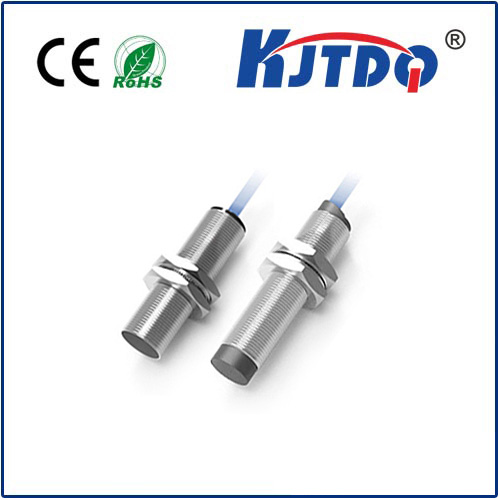
In the rapidly evolving landscape of industrial automation, the demand for sensors that deliver uncompromising precision and unwavering reliability has never been higher. The OCP162P0150E laser sensor stands as a pivotal component in this technological advancement, engineered to meet the rigorous demands of modern manufacturing and quality control environments. This device exemplifies the integration of sophisticated laser technology with robust industrial design, offering a solution that enhances operational efficiency and ensures consistent performance across diverse applications.
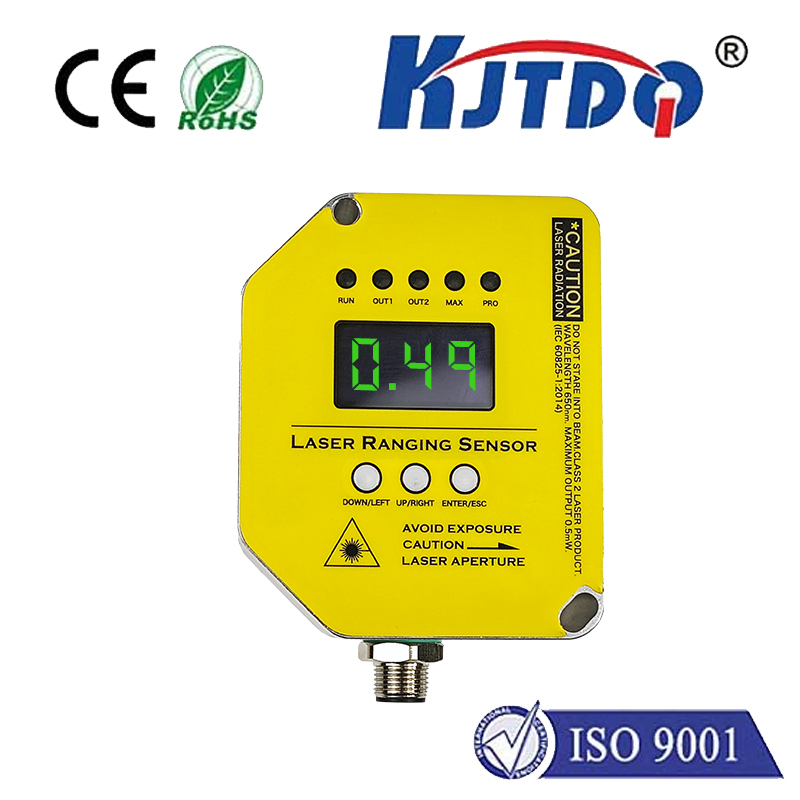
The core functionality of the OCP162P0150E revolves around its advanced laser triangulation principle. This method allows for non-contact, high-accuracy distance and position measurements. By emitting a focused laser beam onto a target surface and analyzing the reflected light with a precision receiver, the sensor can determine displacement or presence with micron-level accuracy. This capability is crucial for applications such as precise gap detection, thickness measurement, edge guidance, and part profiling on assembly lines. Its ability to perform reliably on various surface types, including reflective, matte, or even transparent materials, makes it exceptionally versatile.
One of the defining features of the OCP162P0150E is its robust construction, designed to withstand the challenging conditions typical of industrial settings. It often features a high-grade housing rated for IP67 protection, ensuring resistance against dust ingress and temporary immersion in water. This durability guarantees long-term operation in environments with significant vibration, temperature fluctuations, or exposure to coolants and oils. The sensor's integrated electronics are optimized for stability, minimizing drift over time and maintaining calibration even after prolonged use. This reliability translates directly into reduced downtime and lower maintenance costs for production facilities.
Integration into existing control systems is streamlined through multiple output options. The OCP162P0150E typically provides analog outputs (e.g., 0-10V or 4-20mA) for continuous measurement data and digital switching outputs (PNP or NPN) for simple object detection or threshold alarms. This flexibility allows it to interface seamlessly with Programmable Logic Controllers (PLCs), human-machine interfaces (HMIs), and data acquisition systems. The setup and configuration process is often facilitated by intuitive teach-in functions or dedicated software, enabling quick commissioning and adjustment of parameters like measuring range, response time, and output behavior without extensive technical expertise.
In practical application, the sensor proves invaluable in sectors like automotive manufacturing, electronics production, packaging, and material handling. For instance, in automotive body-in-white assembly, it ensures precise weld seam tracking and panel gap verification. In electronics, it can measure component height or verify placement on printed circuit boards. Its high-speed response enables real-time feedback for robotic guidance systems, enhancing the accuracy of pick-and-place operations. The OCP162P0150E's precision directly contributes to improved product quality, waste reduction, and optimized production throughput.
When selecting a sensor for critical measurement tasks, factors such as resolution, repeatability, and long-term stability are paramount. The OCP162P0150E laser sensor is designed with these parameters at the forefront. Its high resolution allows it to detect minute variations, while excellent repeatability ensures that measurements are consistent over thousands of cycles. Advanced models may incorporate features like background suppression to ignore irrelevant objects, temperature compensation to maintain accuracy across operational ranges, and configurable light spots for optimal performance on different surfaces.
Ultimately, the deployment of the OCP162P0150E laser sensor represents a strategic investment in process optimization. It provides the exact data needed for closed-loop control systems, enabling smarter, more adaptive automation. By delivering accurate, real-time measurements in a durable and easy-to-integrate package, it empowers engineers and system integrators to build more reliable, efficient, and intelligent production lines. As industries continue to push the boundaries of precision and speed, sensors of this caliber will remain indispensable tools for achieving operational excellence and maintaining a competitive edge in the global market.