Проверка
Проверка
Проверка
Проверка
Проверка
Проверка
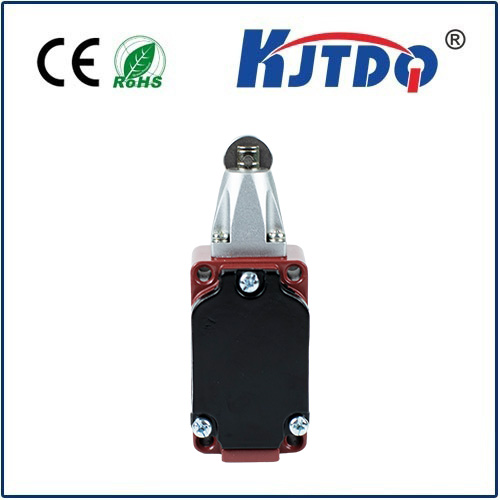
In the demanding environment of modern industrial facilities, operational efficiency must always be balanced with an uncompromising commitment to worker safety. Machinery, while powerful and productive, presents inherent risks that require immediate and reliable intervention capabilities. This is where the critical role of emergency stop devices comes into sharp focus. Among these, the pull cord switch stands as a fundamental and highly effective safeguard. The LX01-GKH-T1-A model represents a significant advancement in this essential safety technology, engineered to meet the rigorous demands of conveyor systems, processing lines, and other long-reach machinery.
The primary function of the LX01-GKH-T1-A pull cord switch is to provide a fail-safe method for personnel to halt machinery from any point along its length. In the event of an emergency, such as material jam, equipment entanglement, or a personnel hazard, an operator can quickly pull the brightly colored cable running parallel to the machine. This action instantaneously triggers the switch mechanism, sending a stop signal to the machine's control system. The design philosophy is rooted in simplicity and speed, ensuring that the safety response is intuitive and requires minimal training. The "T1" designation often relates to specific timing or tolerance standards, indicating a device built for precise and consistent performance under continuous operation.
Durability is a non-negotiable feature for any industrial component, and the LX01-GKH-T1-A is constructed to withstand harsh conditions. Its housing is typically fabricated from robust materials like die-cast aluminum or reinforced polymer, offering resistance to dust, moisture, and mechanical impact. The internal switching mechanism is designed for high electrical reliability and a long mechanical life, often exceeding millions of operations. This resilience minimizes downtime and maintenance costs, ensuring the safety system itself does not become a point of failure. Many models feature a clearly visible flag indicator that shows whether the switch has been activated, aiding in quick reset and system diagnostics after a safety event.
Installation and integration are streamlined to support both new projects and retrofits. The switch is usually mounted at a strategic point along the conveyor or machine frame, with the pull cable routed through easy-to-install guide brackets. The cable tension is adjustable to prevent sagging or false triggers while remaining sensitive enough for a swift emergency pull. Electrical connections are straightforward, interfacing directly with the safety relay or programmable logic controller (PLC) that manages the machine's motor drives. Compliance with international safety standards, such as IEC 60947-5-5 or specific ISO norms, is a key aspect, providing assurance that the device meets globally recognized benchmarks for performance and safety integrity.
Beyond the basic stop function, modern iterations like the LX01-GKH-T1-A often incorporate features that enhance operational intelligence. These can include dual-channel output contacts for monitoring circuit integrity, a manual reset function that requires a deliberate action to restart the machinery, and corrosion-resistant coatings for use in washdown or outdoor environments. The bright yellow or red cable serves as a constant visual reminder of the safety system's presence. Regular testing of the pull cord function is a recommended best practice, and the robust design of this switch facilitates such routine checks without compromising its reliability.
In conclusion, the integration of a reliable pull cord switch system is a fundamental pillar of a comprehensive industrial safety strategy. The LX01-GKH-T1-A model exemplifies this principle by combining immediate emergency response, rugged construction, and standards compliance. It transforms a length of cable into a vital lifeline, empowering every worker on the floor with the direct ability to prevent accidents. For facility managers and safety engineers, selecting a proven component like this is not merely a procurement decision; it is a direct investment in protecting personnel, preserving assets, and maintaining responsible production operations. The true value of such a device is measured not in its unit cost, but in the incidents it prevents and the lives it safeguards.