Проверка
Проверка
Проверка
Проверка
Проверка
Проверка
In the dynamic landscape of industrial automation, precision and reliability are non-negotiable. At the heart of countless motion control and safety systems lies a fundamental component: the industrial limit switch. These robust devices serve as the critical eyes and ears of machinery, providing definitive signals to control systems when a moving part reaches a predetermined point. The KJTDQ series of industrial limit switches exemplifies this essential role, engineered to meet the rigorous demands of modern manufacturing, material handling, and processing environments.
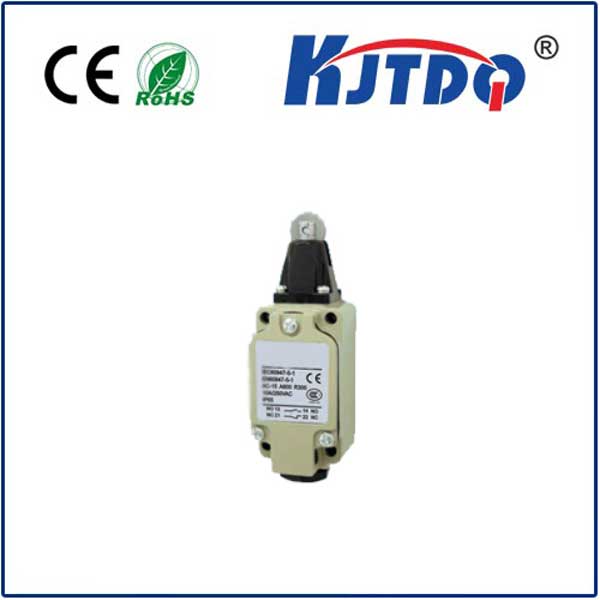
Unlike basic consumer-grade switches, an industrial limit switch is built to withstand harsh conditions. The KJTDQ models are typically housed in durable metal or high-strength polymer enclosures, offering protection against dust, moisture, oil, and mechanical impact. This rugged construction ensures consistent operation in settings ranging from automotive assembly lines to food and beverage processing plants. The core function is straightforward: a physical actuator—such as a lever, roller, or plunger—is displaced by a machine part. This action triggers an internal snap-action mechanism to rapidly open or close electrical contacts, sending a clear "stop," "start," or "change direction" signal to the programmable logic controller (PLC).
The applications for the KJTDQ industrial limit switch are vast and varied. They are indispensable for defining the travel limits of automated guided vehicles (AGVs), preventing over-travel on conveyor systems, ensuring robotic arms operate within their safe working envelope, and confirming the position of doors, gates, or valves. In safety-critical applications, they function as interlock devices, ensuring a guard door is securely closed before a machine can cycle, thereby protecting personnel from harm. This dual role in both operational control and personnel safety underscores their vital importance.
Selecting the right limit switch involves several key considerations, all addressed by the KJTDQ design philosophy. First is the actuator type. A roller lever switch is ideal for detecting the presence of objects on a conveyor, while a top-push plunger might be used for precise end-of-travel positioning. Environmental ratings, denoted by IP (Ingress Protection) codes, are crucial. KJTDQ switches offer high IP ratings, ensuring reliable performance in wet or dusty areas. Electrical specifications, including voltage, current rating, and contact configuration (normally open or normally closed), must match the control circuit requirements. Finally, mechanical life expectancy—often in the millions of cycles—is a testament to the durability built into quality industrial components like the KJTDQ.
The integration of the KJTDQ limit switch into a broader Industry 4.0 framework is increasingly seamless. While fundamentally an electromechanical device, its output is a fundamental digital signal that feeds into smarter control systems. This data point can be used for predictive maintenance analytics, helping to schedule switch replacement before failure and avoid unplanned downtime. When combined with sensors like proximity sensors or encoders, limit switches provide a fail-safe mechanical confirmation that software-based systems alone cannot guarantee.
Maintenance, though minimal, is essential for long-term reliability. Regular inspection of the KJTDQ switch for physical damage, loose mounting hardware, and wear on the actuator is recommended. Checking for consistent electrical signal output ensures the switch is communicating correctly with the control system. Their simple design often makes them easier to troubleshoot and replace than more complex solid-state sensors, a significant advantage in minimizing production stoppages.
In conclusion, the industrial limit switch remains a cornerstone of automated system design. The KJTDQ series, with its emphasis on ruggedness, precision, and versatility, provides engineers and system integrators with a trusted solution for achieving both operational efficiency and stringent safety standards. As automation continues to evolve, the fundamental need for reliable physical position detection ensures that robust components like the KJTDQ industrial limit switch will continue to play a critical role in the factories and facilities of the future.