In today's fast-paced industrial and automation environments, the demand for reliable, efficient, and flexible control systems is higher than ever. Traditional wired limit switches, while dependable, often come with significant drawbacks: complex installation, maintenance challenges due to cable wear and tear, and limited mobility. This is where the wireless limit switch emerges as a transformative solution, offering unprecedented freedom and reliability for remote monitoring and control applications.
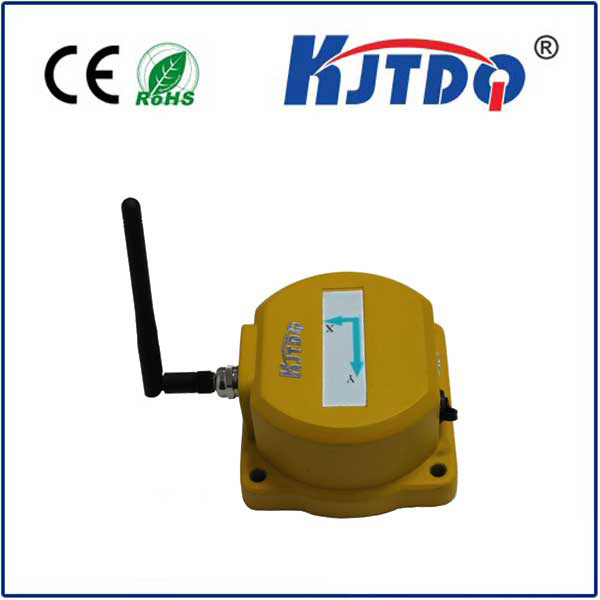
A wireless limit switch, at its core, performs the same fundamental function as its wired counterpart: it detects the presence or absence of an object, or monitors the position of a machine part, and sends a corresponding signal. The critical difference lies in the transmission method. Instead of relying on physical electrical cables to convey this signal to a control system like a PLC (Programmable Logic Controller), it utilizes wireless communication technologies such as radio frequency (RF), Bluetooth, or proprietary industrial protocols. This eliminates the need for extensive wiring runs, conduit, and associated hardware.
The advantages of integrating wireless limit switches into your operations are substantial. First and foremost is the drastic reduction in installation time and cost. Without the need to route cables through difficult or hazardous environments, setup becomes quicker, safer, and more economical. This is particularly beneficial in large facilities, on mobile machinery, or in applications where the sensor location is remote or rotating. Secondly, maintenance is simplified. The most common point of failure in traditional setups—the cable—is removed, leading to increased system uptime and lower long-term costs. Furthermore, wireless switches offer exceptional flexibility. They can be easily repositioned or added to a system as process needs change, providing scalable and adaptable control.
When selecting a wireless limit switch, several key factors must be considered to ensure optimal performance. Communication Range and Reliability are paramount. The switch must maintain a stable connection in your specific environment, which may contain metal obstructions, electrical noise, or other wireless devices. Look for models with robust signal integrity and adequate range for your application. Power Source and Battery Life is another critical consideration. Most wireless switches are battery-powered. Choosing a device with long battery life (often several years under normal operation) and clear low-battery indicators is essential to prevent unexpected downtime. Environmental Ratings cannot be overlooked. The switch housing should have an appropriate Ingress Protection (IP) rating (e.g., IP67) to withstand dust, moisture, oils, and extreme temperatures common in industrial settings. Finally, ensure the switch's Output Signal and Compatibility aligns with your receiver or control system, whether it requires a simple dry contact closure or a specific data packet.
Typical applications for wireless limit switches are vast and varied. In material handling, they are used to monitor gate positions on conveyor systems or signal the fill-level of silos and hoppers without running cables across moving platforms. In heavy machinery and mobile equipment, such as cranes, lifts, or agricultural vehicles, they provide reliable position feedback for booms, doors, or safety guards. For access control and security, they can wirelessly signal whether a door, hatch, or gate is open or closed. They are also ideal for retrofit projects, where adding wired sensors to an existing machine would be prohibitively expensive or disruptive.
Implementing a wireless limit switch system is generally straightforward. The switch unit is mounted in the desired location and paired with a compatible wireless receiver. The receiver, which connects to your central control system, is typically installed in a control cabinet. Modern systems feature simple pairing procedures and diagnostic LEDs for status monitoring. To maximize performance, it is advised to conduct a site survey to identify potential sources of interference, ensure the switches are within the specified range of the receiver, and follow a regular maintenance schedule to check battery status and housing integrity.
In conclusion, the wireless limit switch represents a significant leap forward in control system design. By eliminating the constraints of physical wiring, it delivers enhanced reliability, reduced installation and maintenance costs, and superior operational flexibility. For engineers and facility managers seeking to improve efficiency, reduce downtime, and future-proof their automation infrastructure, adopting wireless limit switch technology is a strategically sound decision. As wireless protocols continue to advance in robustness and security, their role in building smarter, more connected industrial environments will only become more central.