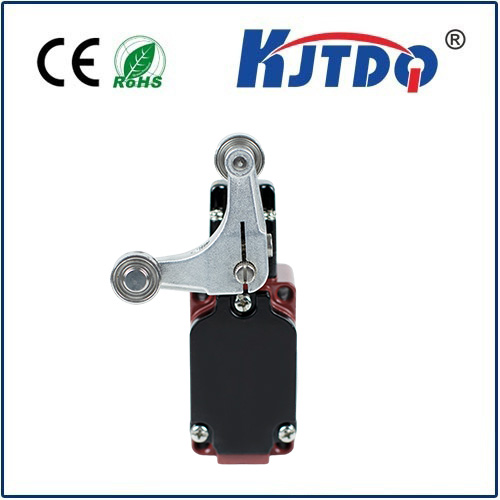
In the world of industrial automation and precision control, the reliability of every component is paramount. Among these critical components, the waterproof micro limit switch stands out as a fundamental device for ensuring accurate positioning, end-of-travel detection, and safety interlocking in countless applications. Unlike standard limit switches, its compact design and robust sealing make it indispensable for operations where exposure to moisture, dust, oils, and other contaminants is a constant challenge.
The core function of a micro limit switch is to detect the presence or absence of an object, or to monitor the limits of mechanical motion, by physically actuating a lever, roller, or plunger. This action opens or closes an electrical contact within the switch, sending a clear signal to the control system. The "micro" designation refers to its small size and often the minute movement required for actuation, allowing for installation in tight spaces without compromising on performance. However, the true differentiator for operations in harsh conditions is the "waterproof" feature. This is typically achieved through meticulous engineering, including sealed housings, often rated with standards like IP67 or higher. An IP67 rating, for instance, guarantees complete protection against dust ingress and the ability to withstand temporary immersion in water up to 1 meter deep. This level of protection ensures that the switch's internal mechanisms remain uncontaminated and fully functional, preventing false triggers, signal loss, or catastrophic failure that could lead to costly downtime.
The applications for waterproof micro limit switches are vast and varied. In the food and beverage industry, where equipment undergoes frequent high-pressure washdowns with caustic cleaners, these switches provide reliable detection on filling machines, packaging lines, and conveyor systems. Within automotive manufacturing, they are deployed on robotic arms, assembly jigs, and testing machinery that may be exposed to coolants and lubricants. Outdoor applications, such as in agricultural machinery, maritime equipment, or automated gates, benefit from their resistance to rain, humidity, and temperature fluctuations. Even in medical device manufacturing and laboratory automation, where cleanliness and reliability are non-negotiable, waterproof micro switches ensure precise control.
Selecting the right waterproof micro limit switch requires careful consideration of several factors beyond just the IP rating. The electrical specifications, including voltage, current rating (both AC and DC), and contact configuration (e.g., SPDT, SPST), must match the control circuit. The mechanical aspects are equally crucial: the actuator type (roller lever, simulated roller lever, plunger), the operating force, and the pre-travel and over-travel distances must suit the mechanical motion it needs to detect. Material construction is another key point; stainless steel actuators and housings offer superior corrosion resistance for extreme environments, while robust thermoplastic bodies may suffice for others. The switch's operational life, often rated in millions of cycles, is a direct indicator of its durability and long-term value.
The integration of a high-quality waterproof micro limit switch into a system is an investment in operational integrity. It enhances safety by reliably halting machinery at its intended limits, protects expensive equipment from damage due to over-travel, and ensures consistent product quality through repeatable positioning. Its failure in a critical application can lead to production stoppages, safety hazards, and significant financial loss. Therefore, partnering with reputable manufacturers who adhere to strict quality standards and offer comprehensive technical data is essential.
In conclusion, the waterproof micro limit switch is far more than a simple sensor. It is a precision-engineered guardian of mechanical movement, built to deliver unwavering performance where ordinary switches would falter. Its compact, sealed design bridges the gap between the demanding physical world of machinery and the precise requirements of electronic control systems. For engineers and system designers facing the challenges of moisture, contamination, and space constraints, specifying a reliable waterproof micro limit switch is a critical step toward building resilient, efficient, and safe automated processes. Its role may be small in size, but its impact on system uptime and reliability is profoundly significant.