In the world of industrial automation and control systems, the limit switch remains a fundamental and reliable component. Among its various configurations, the 1NO 1NC setup is one of the most common and versatile. This designation, which stands for "1 Normally Open and 1 Normally Closed," defines the electrical state of the switch contacts when it is in its resting, non-actuated position. Grasping this configuration is crucial for engineers, technicians, and procurement specialists to ensure correct selection, installation, and troubleshooting in a myriad of applications.
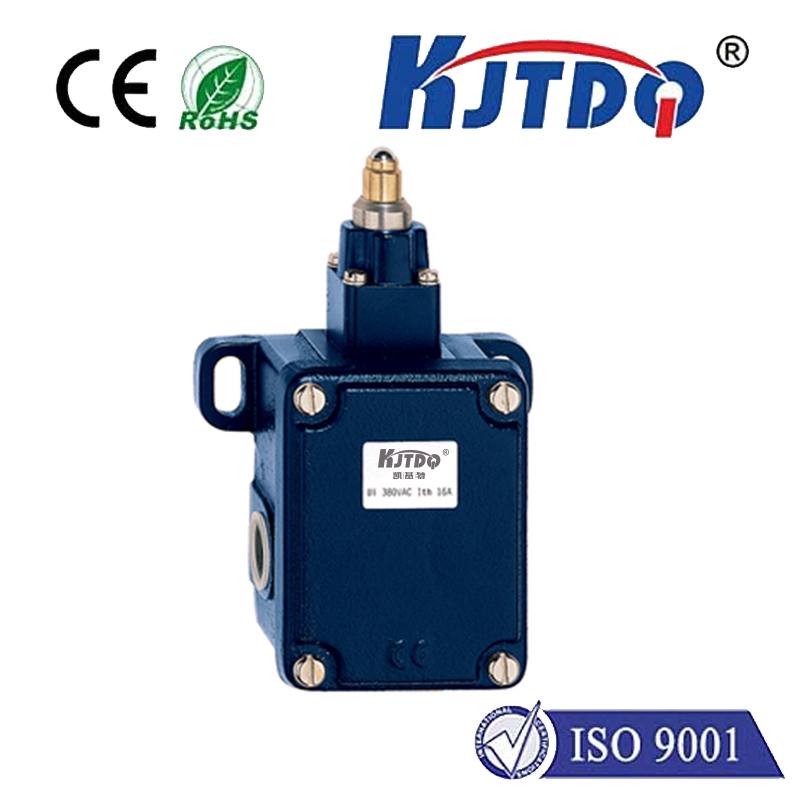
A limit switch is an electromechanical device that converts a mechanical motion into an electrical control signal. It typically consists of an actuator (like a lever, roller, or plunger) linked to a set of internal electrical contacts. The core function is to detect the presence or absence, position, or end-of-travel of an object. The terms "Normally Open" (NO) and "Normally Closed" (NC) describe the default state of these contacts without any external force applied to the actuator.
In a 1NO 1NC limit switch, you have two separate contact circuits. The "1 Normally Open" contact is open-circuit when the switch is not activated; no current flows through it. When the actuator is pressed or triggered by a target object, this NO contact closes, completing the circuit and allowing current to flow. Conversely, the "1 Normally Closed" contact is closed-circuit in the resting state, providing a continuous path for current. Upon actuation, this NC contact opens, breaking the circuit and stopping the current flow.
This dual configuration provides exceptional flexibility and failsafe capabilities. For instance, in a safety interlock system on a machine guard door, the NC contact might be wired into the main control circuit. When the door is properly closed, the NC contact remains closed, allowing the machine to operate. If the door is opened, the actuator is released, the NC contact opens, and it immediately breaks the control circuit to stop the machine, ensuring operator safety. Simultaneously, the NO contact could be used to activate a warning light or an alarm signal when the door is open, providing a positive indication of the unsafe state.
Another classic application is in automated production lines for position verification. A limit switch with a roller lever actuator can be positioned to detect when a moving carriage or shuttle reaches its intended endpoint. The change in state of either the NO or NC contact sends a precise signal to the Programmable Logic Controller (PLC) to stop the drive motor, initiate the next process step, or confirm the object's location for quality control. The 1NO 1NC design allows the same physical switch to provide both a "position reached" signal (using the NO contact) and a "position not reached" or "home" signal (using the NC contact), optimizing wiring and component count.
Selecting the right limit switch involves more than just the contact configuration. Factors such as the actuator type (lever, roller plunger, fork lever), electrical rating (voltage and current capacity), housing material (metal or plastic for environmental protection), and operational life (mechanical and electrical durability) are equally important. The 1NO 1NC contact arrangement is available across a wide range of these switch types, making it a universal choice for both simple and complex control logic.
Installation and maintenance are straightforward but require attention to detail. Proper alignment of the actuator with the target machine part is essential to ensure consistent and reliable actuation without undue mechanical stress. Regular inspection for physical wear on the actuator and periodic checking of contact resistance can prevent unexpected downtime. Understanding the schematic symbols for NO and NC contacts is vital for reading electrical diagrams and troubleshooting circuit issues efficiently.
In conclusion, the limit switch with a 1NO 1NC configuration is a cornerstone of industrial control. Its ability to provide two complementary electrical signals from a single mechanical action offers design engineers a powerful tool for creating safe, efficient, and reliable automated systems. From packaging machinery and conveyor systems to robotic arms and safety gates, this versatile switch configuration continues to play a critical role in monitoring and controlling mechanical movement, proving that sometimes the most effective solutions are based on simple, robust principles.