In the complex landscape of industrial automation and control systems, the reliability of every component is paramount. Among these critical components, the limit switch plays a foundational role in ensuring both operational precision and personnel safety. Governed by stringent international standards, the EN 60947-5 specification defines the performance, safety, and testing requirements for control circuit devices and switching elements, including limit switches. This article delves into the significance of the EN 60947-5 standard for limit switches, exploring their function, key features, and the tangible benefits they bring to modern industrial applications.
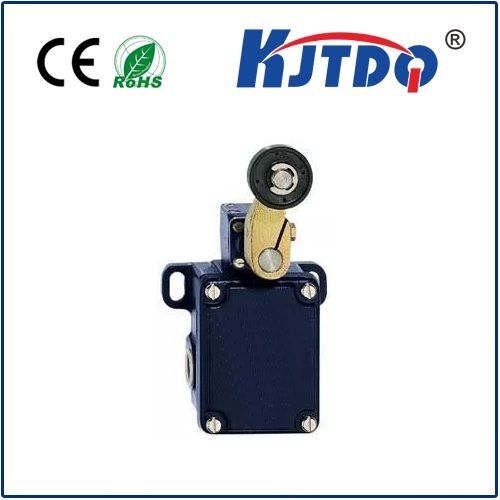
A limit switch, in its essence, is an electromechanical device that detects the presence or absence of an object, or monitors the limits of travel, by physical contact. Its primary function is to convert a mechanical motion into an electrical control signal. This signal can then be used to stop, start, or sequence operations within a machine or process. Common applications are ubiquitous: from ensuring a robotic arm stops at a precise point, to confirming a safety guard is properly closed on a press, to controlling the travel of elevators and conveyor systems. The "limit" it refers to is often a physical boundary that should not be crossed for reasons of safety, quality, or process integrity.
The EN 60947-5 standard, part of the broader EN 60947 series for low-voltage switchgear and controlgear, provides the essential framework for these devices. Compliance with EN 60947-5 is not merely a technical formality; it is a declaration of quality, durability, and safety. The standard meticulously outlines requirements for constructional features, performance characteristics, and marking. Key aspects covered include:
* Electrical Endurance: Specifying the number of operating cycles (often in the millions) the switch must withstand under defined load conditions, ensuring long-term reliability.
* Mechanical Endurance: Defining the mechanical life expectancy of the actuator mechanism, which is crucial for high-cycle applications.
* Protection Degrees (IP Ratings): Classifying the enclosure's protection against ingress of solid objects and water (e.g., IP65, IP67), which is vital for operation in dusty, humid, or washdown environments.
* Safety-Related Performance: For certain types, it addresses functional safety aspects, contributing to overall machine safety systems.
* Clear Marking: Ensuring devices are clearly labeled with their ratings, terminal designations, and standards compliance for safe and correct installation.
Choosing an EN 60947-5 compliant limit switch, such as those offered by KJTDQ, delivers concrete advantages. First and foremost is enhanced safety. Standard-compliant switches are designed to fail in a predictable manner and are built to prevent hazards like contact welding, which is critical in emergency stop circuits. Operational reliability is significantly improved, reducing unplanned downtime and maintenance costs associated with premature device failure. Furthermore, global market acceptance is facilitated, as the EN standard is widely recognized and harmonized across many regions, simplifying procurement and system integration for multinational operations.
When selecting a limit switch for a specific application, engineers must consider several factors beyond mere standard compliance. The actuator type (roller lever, plunger, fork lever, etc.) must match the motion and force of the target object. The electrical ratings (voltage, current, switching capacity) must be suitable for the connected control circuit. The environmental conditions dictate the necessary IP rating and housing material (metal or rugged plastic). Finally, the required output configuration (normally open, normally closed, or changeover contacts) must align with the control logic.
In conclusion, the EN 60947-5 limit switch represents a cornerstone of dependable industrial control. It transcends being a simple sensor, evolving into a certified component that safeguards personnel, protects valuable machinery, and ensures consistent process flow. For system integrators, maintenance engineers, and plant managers, specifying limit switches that carry the EN 60947-5 mark is a proactive step toward building resilient, safe, and efficient automation systems. As technology advances, the fundamental principle remains: robust, standards-driven components like these form the reliable backbone upon which sophisticated industrial productivity is built.