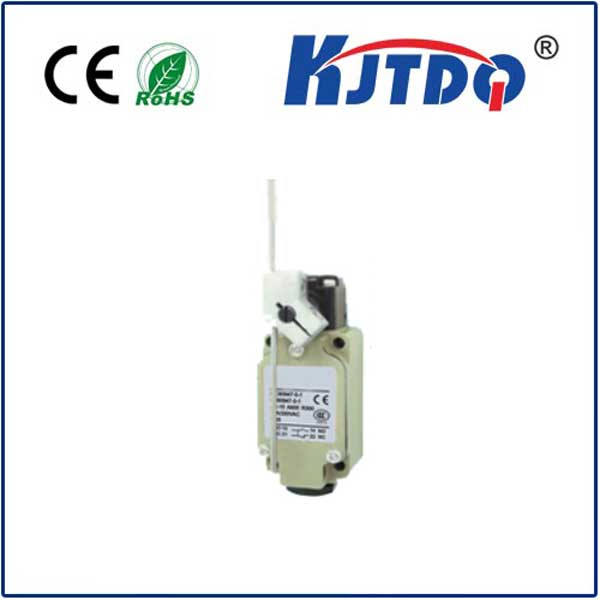
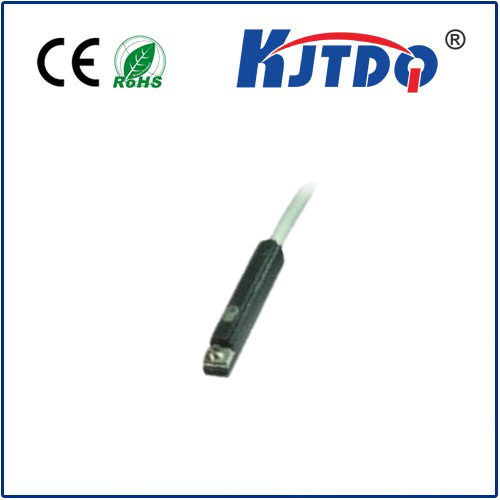
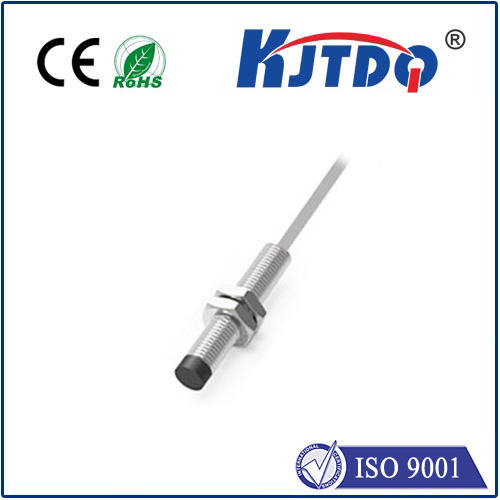
In the intricate world of industrial automation, where precision and reliability are non-negotiable, the limit switch stick emerges as a fundamental yet often understated component. This device, a specific type of actuator for a limit switch, plays a pivotal role in converting mechanical motion into a definitive electrical signal, thereby dictating the start, stop, or change in sequence of a machine's operation.
A limit switch stick, typically a robust rod or lever, is physically attached to the moving part of a machine. As the machine operates—be it a conveyor belt, a robotic arm, or a packaging unit—the stick makes contact with the limit switch's actuator head. This physical interaction triggers the switch to open or close an electrical circuit. This simple action is the cornerstone of positional control. It tells the control system, unequivocally, that a specific point in the mechanical travel has been reached. For instance, in a CNC machine, a limit switch stick ensures the cutting tool stops precisely at the programmed coordinates, preventing overtravel that could damage both the tool and the workpiece.
The design and material of the limit switch stick are critical to its performance and longevity. Manufacturers often construct these sticks from hardened steel, stainless steel, or durable polymers to withstand harsh industrial environments involving vibration, impact, moisture, and temperature fluctuations. The length, shape, and mounting angle of the stick are carefully engineered to match the specific kinematics of the application. A well-chosen stick ensures accurate and repeatable actuation, minimizing false triggers or missed signals that could lead to production errors or safety hazards.
Beyond basic positional control, the limit switch stick is integral to safety interlocking. In automated gates or guards, for instance, a limit switch with a properly positioned stick confirms that the safety door is fully closed before dangerous machinery is allowed to start. This failsafe mechanism protects personnel from accidental injury. Furthermore, in complex sequencing operations, multiple limit switches with different stick configurations can provide a series of positional confirmations, enabling sophisticated multi-step processes to proceed smoothly and autonomously.
The evolution towards Industry 4.0 and smart manufacturing has not diminished the importance of this mechanical component. Instead, it has highlighted the need for its seamless integration with digital systems. The reliable signal generated by the physical actuation of the limit switch stick becomes a crucial data point for Programmable Logic Controllers (PLCs) and supervisory systems. It provides the tangible, real-world feedback upon which digital logic and analytics depend. Maintenance teams also rely on the condition of the stick as a visual and tactile indicator; wear or deformation can signal the need for preventive maintenance before a critical failure occurs.
Selecting the right limit switch stick involves a thorough analysis of the application's mechanical requirements, environmental conditions, and required lifecycle. Factors such as the force of actuation, the frequency of operation, and the required precision all influence the choice. Partnering with a knowledgeable supplier who understands the nuances of motion control can ensure the selection of an optimal stick, thereby maximizing the reliability and efficiency of the entire automated system. In essence, while it may appear as a simple piece of metal or plastic, the limit switch stick is a vital link in the chain of automated control, translating physical movement into the electrical language of machines with unwavering accuracy.