Проверка
Проверка
Проверка
Проверка
Проверка
Проверка
In the intricate world of industrial automation, where precision and reliability are non-negotiable, the limit switch arm stands as a fundamental yet often overlooked hero. This critical component acts as the tactile interface between a machine's moving parts and its control system, dictating the start, stop, or change in operation based on physical position. Far from being a simple lever, the design, material, and functionality of a limit switch arm directly influence the efficiency, safety, and longevity of countless automated processes.
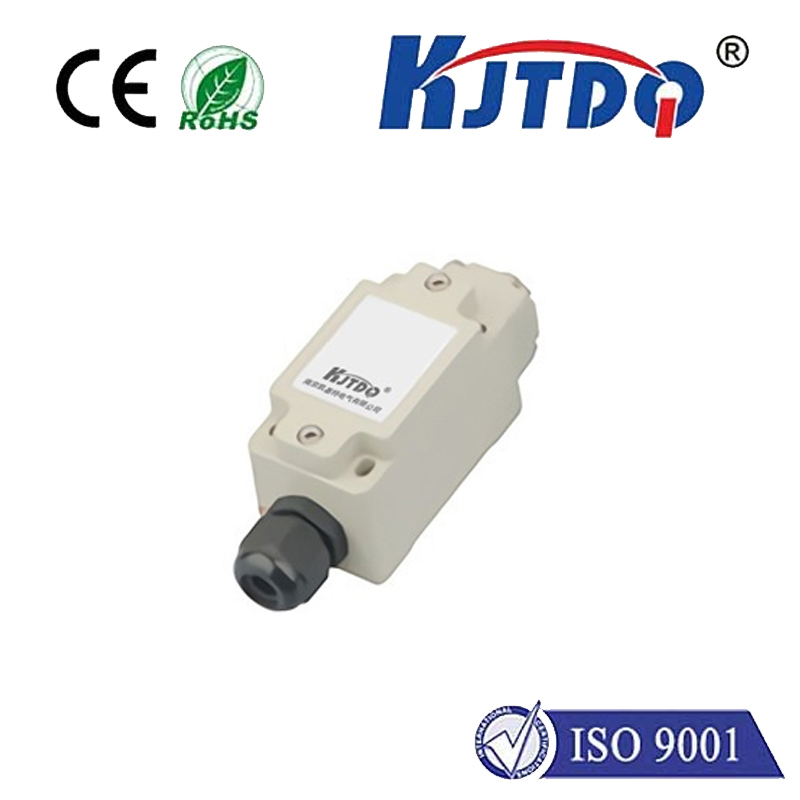
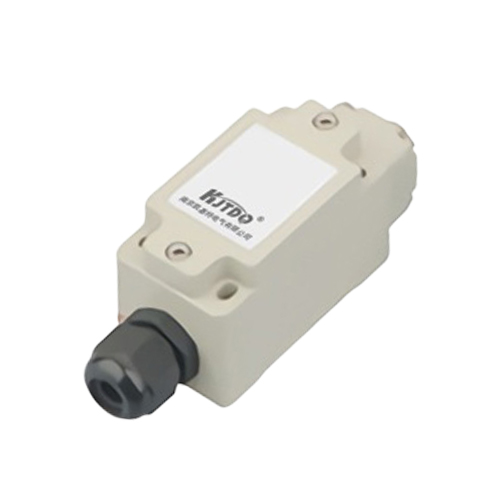
The primary role of a limit switch arm is to translate mechanical motion into an electrical signal. As a machine component—be it a conveyor belt, a robotic arm, or a garage door—reaches a predetermined point, it makes contact with the arm. This actuation triggers the switch mechanism inside the housing, sending a clear signal to the programmable logic controller (PLC). This signal is the cornerstone of sequential control, ensuring operations occur in the correct order and within defined physical boundaries. Without a reliably actuated limit switch arm, systems could over-travel, causing collisions, jams, or even catastrophic equipment failure.
Selecting the appropriate limit switch arm is a nuanced decision that hinges on the specific application. The variety is extensive, each engineered for different environmental conditions and actuation needs. Standard lever arms are common for general purposes, often featuring roller tips to reduce friction and wear. Fork lever arms are designed to detect objects from multiple directions, while wobble sticks or whisker arms are ideal for detecting fragile items or in spaces with minimal clearance. The material composition is equally vital; stainless steel arms offer corrosion resistance for harsh, wash-down environments common in food and beverage processing, while durable plastics may suffice for lighter-duty, indoor applications.
Durability and repeatability are the hallmarks of a high-quality limit switch arm. In high-cycle operations, where the arm might be actuated thousands of times per hour, metal fatigue and wear at the pivot point are primary concerns. Premium arms are constructed with robust bearings and hardened contact points to withstand constant mechanical stress. Furthermore, the arm's length and pivot mechanism determine its actuation force and travel, which must be precisely calibrated to match the switch's specifications. An arm that is too long or too stiff may not actuate the switch properly, while one that is too weak may bend or break under load.
The integration of the limit switch arm into a system requires careful consideration of positioning and alignment. Installers must ensure the arm makes positive, clean contact with the target object—known as the actuator—at the exact moment required. Misalignment can lead to "false trips" or, worse, a failure to trip, both of which disrupt production flow. Regular maintenance, including checking for loose mounting hardware, inspecting the arm for deformation or wear, and testing the switch's electrical response, is crucial for preventing unplanned downtime. In many cases, the ability to easily replace just the arm, rather than the entire switch assembly, represents significant cost and time savings.
Beyond basic machine control, advanced applications showcase the versatility of the limit switch arm. In safety interlocking systems on machine guards, a precisely engineered arm ensures a door cannot be opened while machinery is in motion, protecting personnel. In packaging lines, specialized arms count products or verify the position of components with remarkable accuracy. As Industry 4.0 evolves, traditional mechanical limit switches with arms are being complemented by proximity sensors, but in environments with dust, moisture, or where physical confirmation is paramount, the mechanical limit switch arm remains irreplaceable due to its simplicity, robustness, and direct physical feedback.
Ultimately, the limit switch arm is a testament to the principle that effective automation relies on perfecting both the digital and the physical. It is the reliable bridge that ensures the digital commands of a control system are faithfully executed in the mechanical world. For engineers and maintenance professionals, understanding its function, selection criteria, and maintenance needs is essential for designing and sustaining efficient, safe, and productive automated systems. Specifying the correct limit switch arm is not a minor detail; it is a critical decision that safeguards equipment, optimizes processes, and ensures continuous operational integrity.