In the world of industrial automation and machinery, where space is at a premium and reliability is non-negotiable, the mini limit switch stands as a critical component. These compact devices, often overlooked due to their size, play an outsized role in ensuring operational safety, precision, and efficiency. The KJTDQ series of mini limit switches exemplifies this perfectly, offering a robust solution for applications demanding accurate position detection within tight spatial constraints.
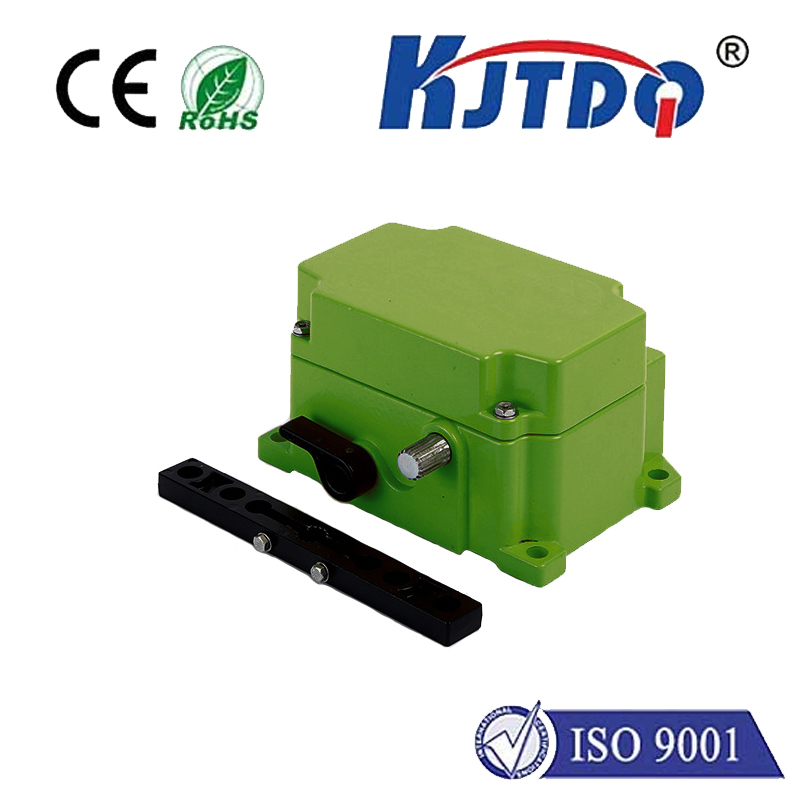
Unlike their larger counterparts, mini limit switches are engineered for environments where every millimeter counts. Their primary function is to detect the presence or absence of an object, or to monitor the limits of motion, thereby triggering a control action. This could involve stopping a motor, changing the direction of a conveyor belt, initiating a new sequence in an assembly line, or providing a safety interlock. The mechanism is elegantly simple: an actuator (like a lever, roller, or plunger) is physically displaced by a moving part of the machine. This displacement actuates an internal snap-action switch, rapidly opening or closing an electrical circuit to send a clear signal to the machine's control system.
The design philosophy behind a high-quality mini limit switch, such as the KJTDQ model, focuses on several key attributes. Durability is paramount. These switches are built to withstand millions of operational cycles, often in harsh conditions involving dust, moisture, vibration, and temperature fluctuations. The housing is typically constructed from engineered plastics or metals like zinc alloy, providing excellent resistance to impact and environmental factors. The internal contacts are made from precious metals like silver or gold alloy to ensure low contact resistance and reliable electrical performance over time.
Precision is another cornerstone. The repeat accuracy—the ability to actuate at the exact same point every time—is crucial for processes that depend on consistent positioning. The snap-action mechanism ensures a quick, clean break or make of the circuit, minimizing arcing and contact wear, which directly translates to a longer service life and consistent signal integrity. This is vital for preventing machine jams, product defects, or unsafe conditions.
The versatility of the mini limit switch is evident in its wide range of actuator styles and electrical specifications. Common actuator types include lever arms (with various roller shapes), plungers, and simulated roller plungers. This allows engineers to select the perfect configuration for the specific mechanical motion they need to detect. Electrically, these switches are available with different contact configurations (SPDT, SPST-NO, SPST-NC) and current/voltage ratings to seamlessly integrate into diverse control circuits, from low-voltage logic signals to higher-power motor controls.
So, where are these miniature workhorses deployed? Their applications are vast and cross-industry. In packaging machinery, they ensure cartons are correctly positioned for sealing. Within automated guided vehicles (AGVs), they serve as bumper sensors for collision avoidance. In CNC machines and 3D printers, they provide precise homing and limit detection for moving axes. They are found in elevator systems to confirm door closure, in automotive assembly lines for part verification, and even in consumer appliances like washing machines to detect lid position. The KJTDQ mini limit switch, with its reliable construction, is designed to perform consistently across all these scenarios.
Selecting the right mini limit switch requires careful consideration of the operating environment, the required mechanical life, the electrical load, and the physical space available. Factors such as ingress protection (IP) ratings for dust and water resistance, operating force, pre-travel, and over-travel distances must all align with the application's demands. A switch that is too fragile or not sealed properly will fail prematurely, causing costly downtime. Conversely, an over-specified switch may be an unnecessary expense.
The integration of mini limit switches represents a fundamental layer of machine intelligence and safety. They provide the essential physical feedback that digital control systems rely upon to function correctly. As automation trends continue toward miniaturization and increased complexity, the role of compact, reliable sensing components like the mini limit switch becomes even more critical. They are a testament to the principle that great functionality does not always require a large footprint, but rather, intelligent design and proven reliability. For engineers and maintenance professionals, understanding and specifying the correct mini limit switch is a key step in building durable, efficient, and safe automated systems.