Проверка
Проверка
Проверка
Проверка
Проверка
Проверка
In the intricate world of industrial automation and machinery control, countless components work in silent concert to ensure precision, safety, and efficiency. Among these, the mechanical limit switch stands as a fundamental, reliable, and often overlooked workhorse. Far from being a relic of the past, this electromechanical device continues to play a critical role in modern manufacturing, packaging, material handling, and countless other applications. Its enduring presence is a testament to its simplicity, durability, and cost-effectiveness.
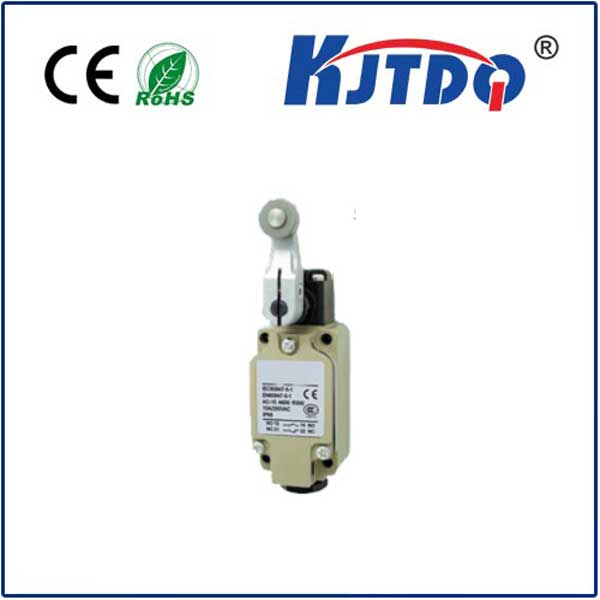
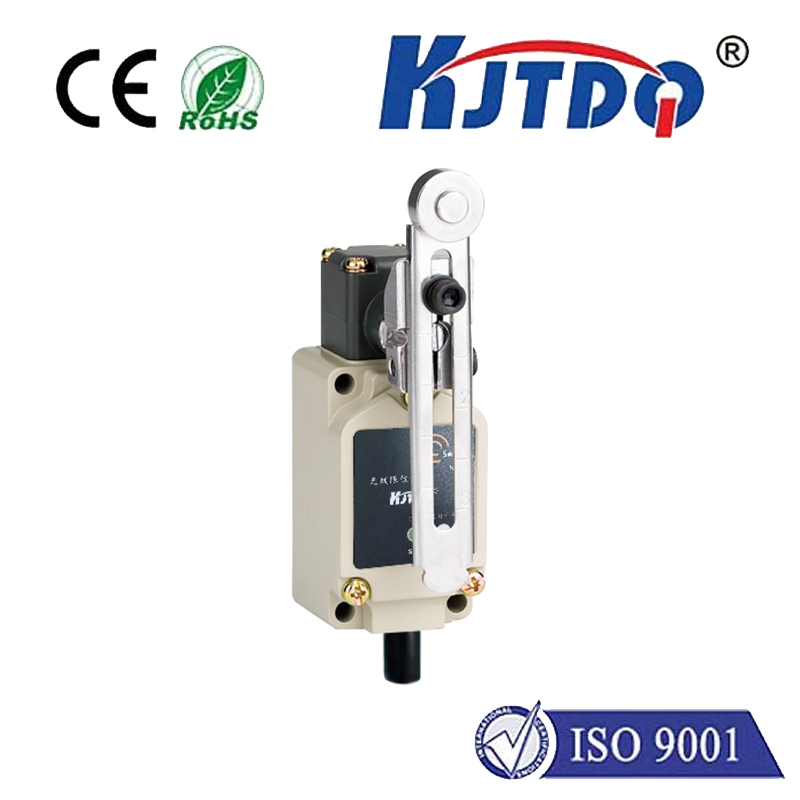
At its core, a mechanical limit switch is a sensor. It detects the presence or absence of an object, or monitors the position of a machine part, by making physical contact. The basic operating principle is straightforward: an external force, typically from a moving machine component or a product on a conveyor, actuates a lever, roller, or plunger on the switch. This physical movement triggers an internal mechanism—a set of electrical contacts—to change state. This change, either opening or closing a circuit, sends a definitive signal to the machine's control system, such as a Programmable Logic Controller (PLC). This signal can command the machine to stop, start, reverse direction, initiate a new sequence, or simply confirm a position.
The defining characteristic of these switches is their tactile, physical actuation. This direct contact provides a high degree of accuracy and repeatability for position sensing. Common actuator types include roller levers for sensing the edge of a material, plungers for precise linear movement, and wobble sticks for omnidirectional detection. The robust construction of a typical mechanical limit switch, often housed in a metal or high-grade plastic body with sealed components, makes it exceptionally resilient in harsh industrial environments. It can withstand significant shock, vibration, temperature variations, and exposure to contaminants like dust, oil, and moisture—conditions where more delicate non-contact sensors might falter.
The applications for mechanical limit switches are vast and varied. They are indispensable for defining the endpoints of travel for linear actuators, robotic arms, and overhead cranes, preventing over-travel and potential damage. In automated assembly lines, they verify the presence of a part in a fixture or confirm that a guard door is securely closed before initiating a cycle, a crucial safety interlock. On packaging machinery, they ensure cartons are correctly positioned for filling or sealing. They can count objects passing on a conveyor by actuating with each item or serve as a manual emergency stop device.
While non-contact sensors like inductive, capacitive, or photoelectric switches offer advantages in speed and wear-free operation, mechanical limit switches hold distinct competitive edges. Their primary strength lies in their unambiguous signal; the physical actuation provides a definitive, "hard" stop or trigger point that is easily understood and diagnosed by maintenance personnel. They are generally less expensive than many non-contact alternatives and are immune to environmental factors that can affect sensing fields or light beams, such as target color, transparency, or material composition. Their simplicity translates to easy installation, setup, and troubleshooting without the need for complex calibration.
Selecting the right mechanical limit switch involves careful consideration of several factors. The operating environment dictates the required ingress protection (IP) rating to guard against solids and liquids. The electrical specifications—voltage, current rating (both AC and DC), and contact configuration (normally open, normally closed, or changeover)—must match the control circuit. Mechanical considerations include the actuator type and length, the required operating force, and the expected lifecycle, as the moving parts will experience physical wear over millions of cycles. For high-speed or high-frequency applications, alternative sensors might be more suitable to avoid mechanical fatigue.
In conclusion, the mechanical limit switch remains a cornerstone of industrial control systems. Its role as a reliable, cost-effective, and robust position-sensing solution is secure. For engineers and system designers, it represents a trusted tool for ensuring machine safety, sequencing, and operational integrity. In an era of rapid technological advancement, the enduring utility of the mechanical limit switch proves that sometimes, the most effective solution is one grounded in proven, mechanical simplicity. It truly is an unsung hero, quietly performing essential tasks that keep the wheels of industry turning smoothly and safely.