Проверка
Проверка
Проверка
Проверка
Проверка
Проверка
In the intricate world of electrical control and automation, precision and reliability are non-negotiable. For applications demanding robust performance under higher voltage conditions, the 120V micro switch stands as a critical component. This comprehensive guide delves into the technology, applications, and key selection criteria for these versatile switches, ensuring you make an informed decision for your next project.
A 120V micro switch, fundamentally, is a compact, snap-action switch designed to operate reliably at 120 volts AC or DC. Its defining characteristic is the "micro" movement of its actuator—a very small physical displacement is required to trigger a rapid, positive switching action. This snap-action mechanism, often involving a spring-loaded lever, minimizes arcing and ensures a crisp, clean electrical connection or disconnection. This is particularly crucial at 120V, where higher electrical loads are common, and contact bounce or slow switching can lead to premature wear, pitting, and potential failure.
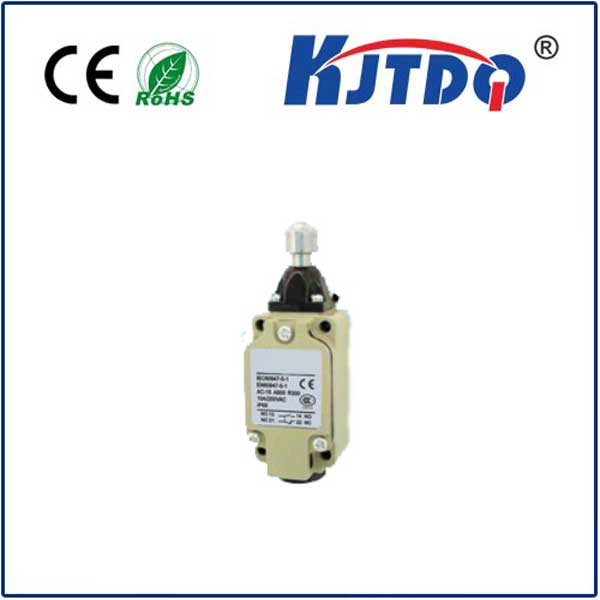
The construction of a quality 120V micro switch is engineered for durability. The housing is typically made from robust, heat-resistant, and insulating materials like thermoplastics or fiberglass-reinforced polymers. Internally, the contacts are the heart of the switch. For 120V applications, silver alloy contacts (such as silver cadmium oxide or silver nickel) are prevalent due to their excellent conductivity and superior arc resistance. The actuator types vary widely, including standard levers (simulated, straight, or roller), pin plungers, and leaf springs, allowing the switch to be integrated into countless mechanical configurations.
The applications for 120V micro switches are vast and span numerous industries. In industrial automation, they serve as precise limit switches on conveyor systems, CNC machines, and robotic arms, providing accurate positional feedback and safety interlocks. Within the realm of appliance manufacturing, they are indispensable as door interlock switches in ovens, washing machines, and dishwashers, ensuring the device only operates when safely closed. They are also found in power tools as safety triggers, in HVAC systems for damper control, and in vending machines for product detection. Their role is always to provide a reliable, low-resistance electrical signal based on a precise physical event.
Selecting the right 120V micro switch requires careful consideration of several technical parameters beyond just the voltage rating. First, examine the current rating, both for resistive and inductive loads (often lower). A switch rated for 15A resistive load at 120VAC might only be rated for 5A for a motor (inductive load). The electrical life expectancy, rated in cycles (often tens of thousands to millions), indicates longevity under specified loads. Mechanical life, usually higher, refers to operation without electrical load. Environmental factors are critical: look for ingress protection (IP) ratings against dust and water, and ensure the switch can withstand the ambient temperature range and potential exposure to oils, chemicals, or vibrations. Finally, the actuator style and operating force must match the physical actuation method of your application.
When comparing a 120V micro switch to lower-voltage variants (like 5V or 12V), the primary differences lie in insulation, contact gap, and arc suppression. The 120V switch is designed with greater internal clearance and creepage distances to prevent arcing across terminals. The contact materials and spring mechanisms are optimized to break higher-voltage circuits cleanly, managing the more significant electrical arc that can form upon disconnection. Using an under-rated switch in a 120V circuit is a severe safety hazard, risking switch welding, fire, or equipment damage.
In conclusion, the 120V micro switch is a marvel of electromechanical engineering, offering unparalleled reliability for medium-voltage control tasks. Its snap-action design provides consistent performance, while its rugged construction ensures longevity in demanding environments. By understanding its operating principles, key specifications, and vast application landscape, engineers, technicians, and procurement specialists can leverage this component to enhance the safety, functionality, and durability of their electrical systems. Always prioritize switches from reputable manufacturers that comply with relevant international safety standards, ensuring your designs are both effective and secure.