In the intricate world of industrial automation and temperature management, precision and reliability are non-negotiable. Among the myriad of components that ensure systems operate within safe and optimal parameters, the thermodisc limit switch stands as a critical guardian. This device, particularly exemplified by models like the KJTDQ series, plays a pivotal role in preventing overheating, protecting equipment, and ensuring process consistency across various applications, from commercial appliances to complex industrial machinery.
A thermodisc limit switch is a thermally actuated electrical switch. Its core operation is elegantly simple yet profoundly effective. At its heart lies a bimetallic disc, engineered from two metals with different coefficients of thermal expansion bonded together. When the surrounding temperature reaches a specific, pre-calibrated point, the disc snaps from a concave to a convex shape (or vice versa) with a distinctive "click." This mechanical action directly opens or closes an electrical circuit. This snap-action mechanism is key; it provides a crisp, definite break in the electrical connection, avoiding arcing and ensuring a reliable on/off signal. Once the temperature drops below the reset point, the disc snaps back to its original position, restoring the circuit. This automatic reset function is a hallmark of many thermodisc limit switches, making them ideal for applications requiring cyclic protection.
The applications for these robust devices are vast and varied. In the commercial sector, they are ubiquitous in coffee makers, griddles, fryers, and HVAC systems, acting as primary safety cut-offs to prevent dangerous overheating. Industrially, they are indispensable for monitoring motor winding temperatures, protecting transformers, and safeguarding process heaters in plastics manufacturing or packaging equipment. Their role is purely protective; they are the last line of defense, activating only when a primary temperature controller fails or an abnormal condition arises, thereby preventing potential fire hazards, equipment damage, and costly downtime.
When selecting a thermodisc limit switch, several critical specifications demand attention. The set point or operating temperature is, of course, paramount. The differential, or the temperature difference between the switch opening and resetting, determines the control band. Electrical rating—the voltage and current (amps) the contacts can safely handle—must match the load of the circuit it controls. Physical configuration, such as blade or screw terminal types, and the material of the housing (often stainless steel or a robust polymer) are chosen based on the installation environment, considering factors like exposure to moisture, chemicals, or vibration.
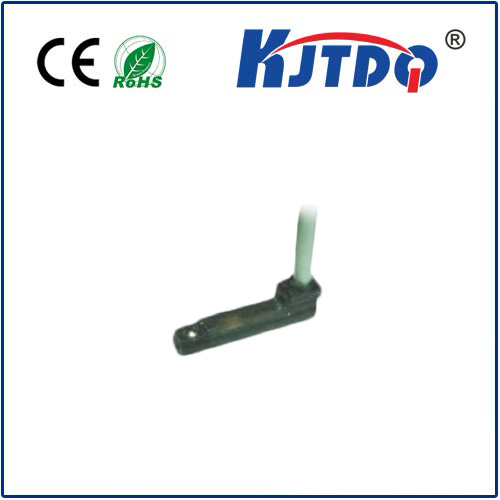
This is where a product like the KJTDQ series distinguishes itself. Engineered for high-performance demands, the KJTDQ thermodisc limit switch typically offers enhanced features such as a hermetically sealed stainless steel casing. This seal provides exceptional resistance to contamination from dust, moisture, and corrosive atmospheres, ensuring long-term stability and accuracy. Its construction is designed for durability in challenging environments, offering consistent performance where lesser components might fail. The precision calibration of its bimetallic disc ensures that the trip point is accurate and repeatable over thousands of cycles, a crucial factor for maintaining quality control and safety standards in continuous industrial processes.
The advantages of integrating a reliable thermodisc limit switch like the KJTDQ into a system are clear. First and foremost is enhanced safety, providing a fail-safe mechanism that operates independently of electronic controls. This mechanical reliability translates to reduced risk of catastrophic failure. Secondly, it protects capital investment by preventing thermal damage to expensive machinery and components, extending their operational lifespan. Finally, it contributes to operational efficiency by minimizing unplanned stoppages, ensuring that production lines and essential equipment run smoothly and predictably.
In conclusion, in an era where system integrity is paramount, the thermodisc limit switch remains a fundamentally important component. Its simple, physics-based operation offers unmatched reliability for temperature-based safety switching. For engineers and system designers seeking a robust, maintenance-free solution for overtemperature protection, specifying a high-quality switch such as the KJTDQ series is a prudent decision. It represents not just a component purchase, but an investment in system resilience, safety, and long-term operational peace of mind.