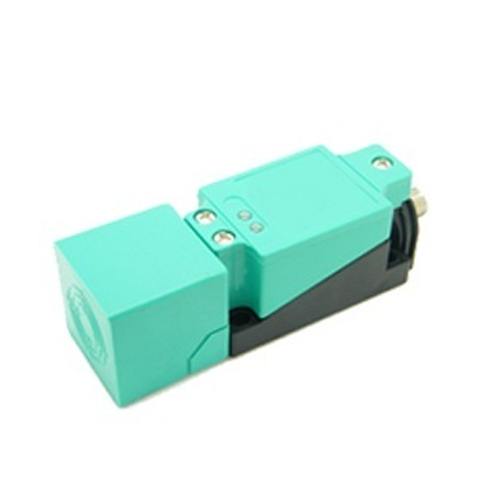
In the world of industrial automation and control systems, the seamless operation of machinery hinges on the reliability of its most fundamental components. Among these, the limit switch plays a pivotal role. It acts as a sentinel, providing precise positional feedback to control circuits, signaling when a machine part has reached the end of its travel or a specific point. However, in applications involving inductive loads like solenoids, relays, or motors, a common challenge arises: voltage spikes and electrical noise. This is where integrating a diode with a limit switch transforms from a simple component into a critical solution for enhanced durability and system integrity. A limit switch with a built-in or externally added diode, specifically a flyback or freewheeling diode, addresses this very issue.
When a limit switch controls an inductive load, opening the circuit interrupts the current flow. The magnetic field surrounding the inductor collapses rapidly, generating a high reverse voltage spike known as back-electromotive force (back-EMF). This transient voltage can be many times higher than the system's operating voltage. Without protection, this spike arcs across the switch contacts, causing pitting, premature wear, and eventual failure. More critically, it injects electrical noise into the control system, which can lead to erratic behavior in programmable logic controllers (PLCs), sensor malfunctions, or data corruption.
The incorporated diode provides a simple yet elegant path for this disruptive energy. When wired in parallel with the inductive load, but in reverse bias relative to the supply voltage, the diode remains non-conducting during normal operation. The moment the switch opens and the inductive load tries to maintain current flow, the polarity across the load reverses. This puts the diode into forward bias, creating a safe, low-resistance loop that allows the induced current to decay gradually. This process, often called freewheeling, clamps the voltage spike to a safe level—slightly above the supply voltage—protecting both the switch contacts and the sensitive electronic components downstream.
The benefits of specifying a limit switch with a diode are substantial. First and foremost is the dramatic extension of the switch's mechanical life. By virtually eliminating contact arcing, the physical degradation of the contacts is minimized, leading to millions more reliable cycles. This translates directly into reduced maintenance costs, less unplanned downtime, and higher overall equipment effectiveness (OEE). Secondly, it ensures signal integrity. Clean, noise-free signals from the limit switch mean the control system receives accurate positional data, enabling precise and repeatable machine operations. This is paramount in high-speed packaging, robotic assembly, and precision machining.
When selecting or designing a circuit with such a component, attention to diode specifications is key. The diode's peak inverse voltage (PIV) rating must exceed the system's voltage, and its current rating must handle the load's continuous current. Fast-recovery diodes are often preferred to manage the swift transient events effectively. For engineers and maintenance personnel, the implementation is straightforward. The diode is connected across the load terminals with the cathode to the positive side of the supply. Many modern limit switch manufacturers now offer sealed, plug-in models with integrated diode networks, providing a robust, maintenance-free solution that withstands harsh industrial environments containing dust, moisture, and vibration.
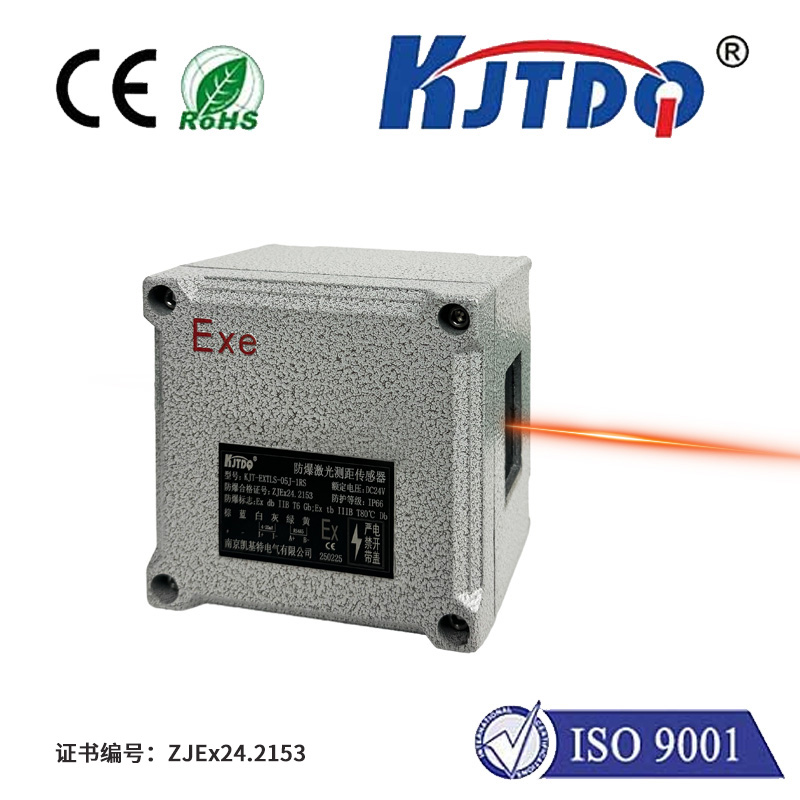
In conclusion, the integration of a diode into a limit switch circuit is not merely an optional add-on but a fundamental design principle for robust automation. The KJTDQ series, embodying this integration, represents a commitment to reliability. It moves beyond basic switching function to actively protect the entire control ecosystem. By mitigating electrical noise and suppressing voltage transients, it safeguards investments in machinery, ensures consistent production quality, and builds a foundation for trouble-free operation. For any application where reliability is non-negotiable, specifying a limit switch with diode protection is a clear and intelligent engineering decision.