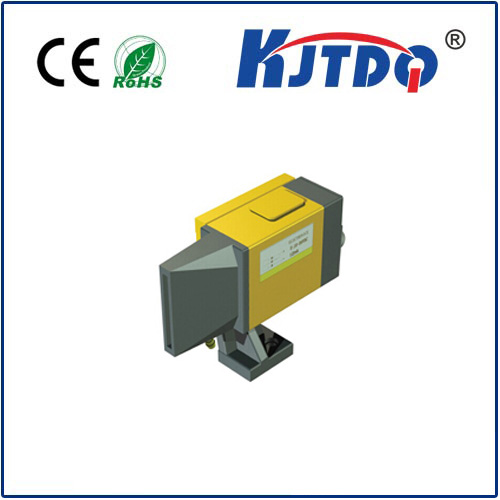
In industrial automation and control systems, the reliable detection of position and movement is paramount. Among the various components that ensure operational safety and precision, the IEC limit switch stands as a fundamental and widely trusted device. Governed by standards set by the International Electrotechnical Commission (IEC), these switches are engineered for durability, consistency, and interoperability in demanding environments.
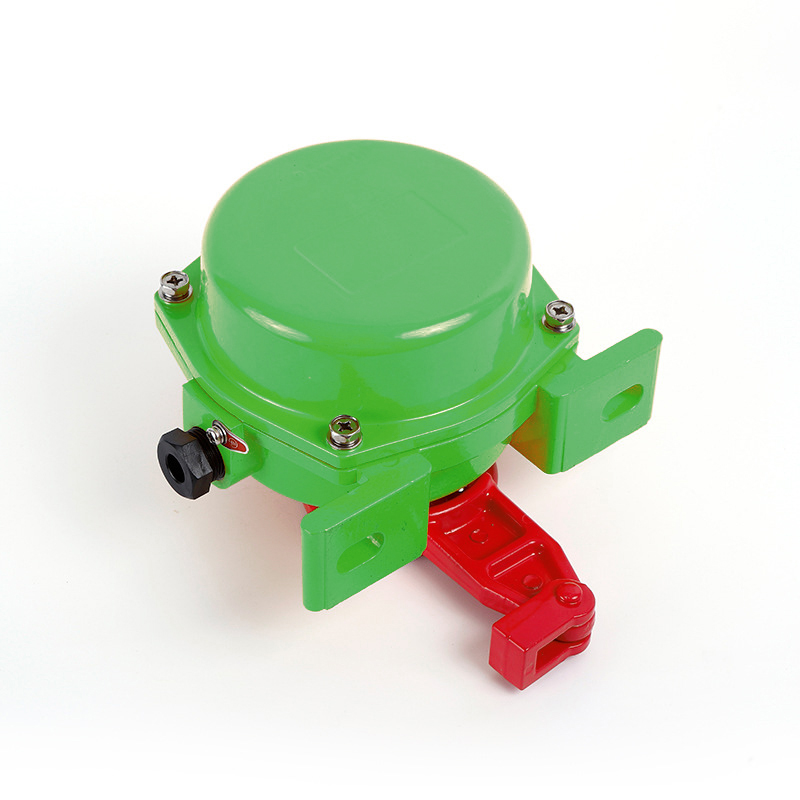
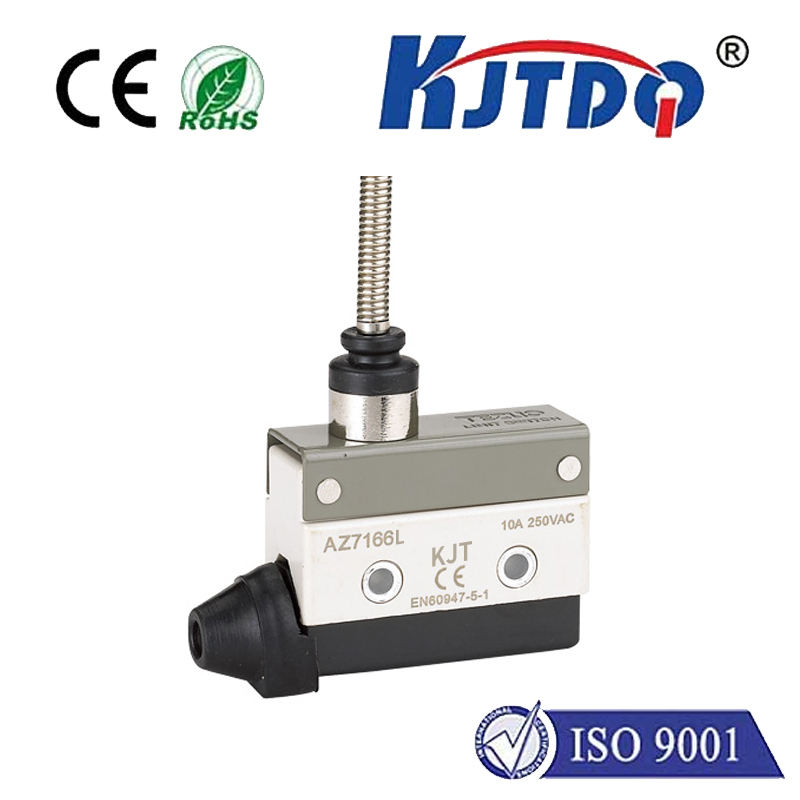
An IEC limit switch is an electromechanical device designed to detect the presence or absence of an object, or to monitor the limits of travel of a machine part. Its operation is straightforward: a physical actuator (like a lever, roller, or plunger) is triggered by the motion of the target object. This mechanical movement internally operates one or more electrical contacts, either opening or closing a circuit. This simple action sends a critical signal to the control system—to stop a motor, reverse a direction, initiate a sequence, or register a count. The "IEC" designation signifies that the switch's construction, performance, electrical ratings, and mounting dimensions adhere to international standards. This standardization is crucial for engineers and maintenance personnel, as it guarantees a level of performance, safety, and ease of replacement across equipment from different manufacturers worldwide.
The defining characteristics of a high-quality IEC limit switch are what make it indispensable. Firstly, the housing is typically robust, made from materials like die-cast zinc, stainless steel, or high-grade thermoplastics, offering high degrees of ingress protection (IP ratings) against dust, water, and oil. This ensures reliable operation in harsh conditions found in manufacturing plants, packaging lines, and material handling systems. Secondly, the actuator mechanisms are varied—from standard levers and rollers to specialized forms like wobble sticks or fork levers—allowing for precise adaptation to different mechanical motions. The electrical contacts are rated for specific current and voltage loads (e.g., 10A at 250V AC), with options for normally open (NO), normally closed (NC), or changeover configurations. Furthermore, many modern IEC limit switches feature positive break contacts, a safety mechanism where the contacts are forcibly opened by a non-spring-dependent action, ensuring the circuit breaks even if the spring fails.
The applications of IEC limit switches span virtually every sector of industry. In automated assembly lines, they are used to confirm the position of a workpiece on a conveyor, triggering the next step in the process. In crane and hoist systems, they serve as critical end-of-travel limiters, preventing overtravel and potential catastrophic damage. On machine tools, they define the start and end points of a cutting path, ensuring dimensional accuracy. They are also integral in elevator systems for floor leveling and door control, and in robotics for defining safe working envelopes. Their role is often one of safety and precision; by providing a hard-wired, physical signal, they offer a reliable fail-safe that is sometimes preferred over purely sensor-based systems.
When selecting an IEC limit switch for a specific application, several factors must be considered. The operating environment dictates the required IP rating and housing material—a washdown area in a food plant demands stainless steel and a high IP69K rating, while a dusty warehouse might require IP65. The mechanical duty cycle, including the frequency of operation and the force applied to the actuator, determines the needed mechanical life, which can range from hundreds of thousands to millions of operations. Electrical load compatibility is non-negotiable; the switch's contact rating must safely handle the connected circuit's current and voltage. Finally, the actuator type and orientation must be chosen to engage reliably with the moving part it is intended to detect.
In conclusion, the IEC limit switch remains a cornerstone of industrial control. Its standardized design, proven electromechanical operation, and rugged construction provide a level of dependable performance that is essential for both efficiency and safety. While proximity sensors and vision systems offer advanced capabilities, the simplicity, directness, and fail-safe nature of a well-chosen limit switch ensure it will continue to be a vital component in the automated world. For system designers and maintenance engineers, understanding the specifications and proper application of these devices is key to building robust and reliable automation solutions.