Проверка
Проверка
Проверка
Проверка
Проверка
Проверка
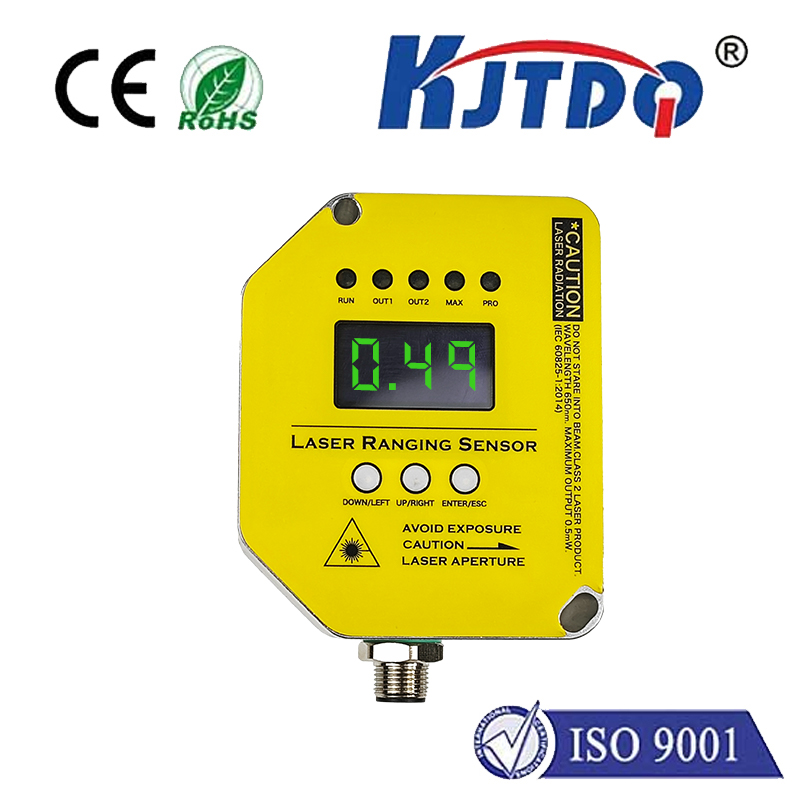
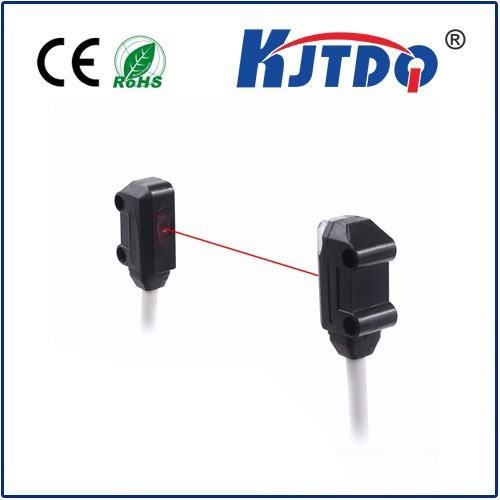
In the realm of industrial automation and precision control, the laser photoelectric sensor stands as a cornerstone technology. Unlike conventional sensors, these devices utilize a focused laser beam to achieve unparalleled accuracy in detection, measurement, and positioning tasks. Their principle of operation is elegantly straightforward yet powerful: a laser emitter projects a coherent, highly concentrated light beam towards a target. A receiver then detects the presence, absence, or modulation of this beam. Changes caused by the target—such as interruption, reflection, or diffusion of the light—are instantly converted into electrical signals, triggering precise control actions.
The advantages of laser photoelectric sensors are manifold and critical for modern manufacturing. First and foremost is their exceptional precision. The collimated laser beam allows for the detection of extremely small objects or precise edges, with sensing spots that can be focused down to sub-millimeter diameters. This enables applications like minute part verification, high-accuracy edge guiding, and exact positioning that other sensor types struggle to match. Secondly, their long sensing range is a significant benefit. Certain models can reliably detect objects several meters away, making them ideal for large-scale material handling, warehouse logistics, and automated storage systems.
Furthermore, the high response speed of laser sensors facilitates real-time monitoring in high-speed production lines, such as in packaging, bottling, or electronics assembly, where every millisecond counts. Their stability is another key attribute; the coherent light is less susceptible to ambient light interference compared to standard diffuse sensors, ensuring reliable operation in varied lighting conditions. Additionally, many laser photoelectric sensors offer advanced features like background suppression, which allows them to ignore objects beyond a set distance, and precise teach-in programming for easy setup.
The applications of laser photoelectric sensors span virtually every industry. In automotive manufacturing, they ensure robotic arms weld at exact points and verify the presence of tiny components. In the pharmaceutical sector, they count pills with faultless accuracy and inspect blister packs for missing tablets. Within electronics, they position circuit boards for assembly and detect microscopic flaws. Logistics centers rely on them for parcel dimensioning, barcode reading in sortation systems, and palletizing guidance. They are also indispensable in food and beverage for liquid level control, label detection, and packaging seal integrity checks.
Selecting the right laser photoelectric sensor requires careful consideration of several parameters. The required sensing distance and the size of the target object dictate the necessary beam type and spot size. Environmental factors such as dust, fog, or extreme temperatures may necessitate sensors with higher ingress protection (IP) ratings or specialized housings. The required output type—whether digital (PNP/NPN) or analog—depends on the control system architecture. For challenging surfaces, a retro-reflective model with a reflector might be optimal, while for color-independent detection or very small objects, a through-beam sensor provides the highest reliability.
Installation and alignment, while precise, are streamlined in modern designs with visible red laser beams for easy targeting. Regular maintenance primarily involves keeping the lens clean from obstructions like dust or oil mist to maintain optimal performance. As Industry 4.0 advances, the integration of laser sensors with IO-Link and other industrial communication protocols is becoming standard, enabling predictive maintenance, remote parameter adjustment, and seamless data integration into broader control networks.
In conclusion, the laser photoelectric sensor is far more than a simple switch. It is a sophisticated instrument of precision that drives efficiency, quality, and reliability in automated processes. By delivering unmatched accuracy, long range, and robust performance, it solves complex detection challenges and forms the sensory backbone of intelligent factories and logistics systems worldwide. Understanding its capabilities and proper application is essential for engineers and technicians aiming to optimize automation systems for peak performance and future-ready adaptability.