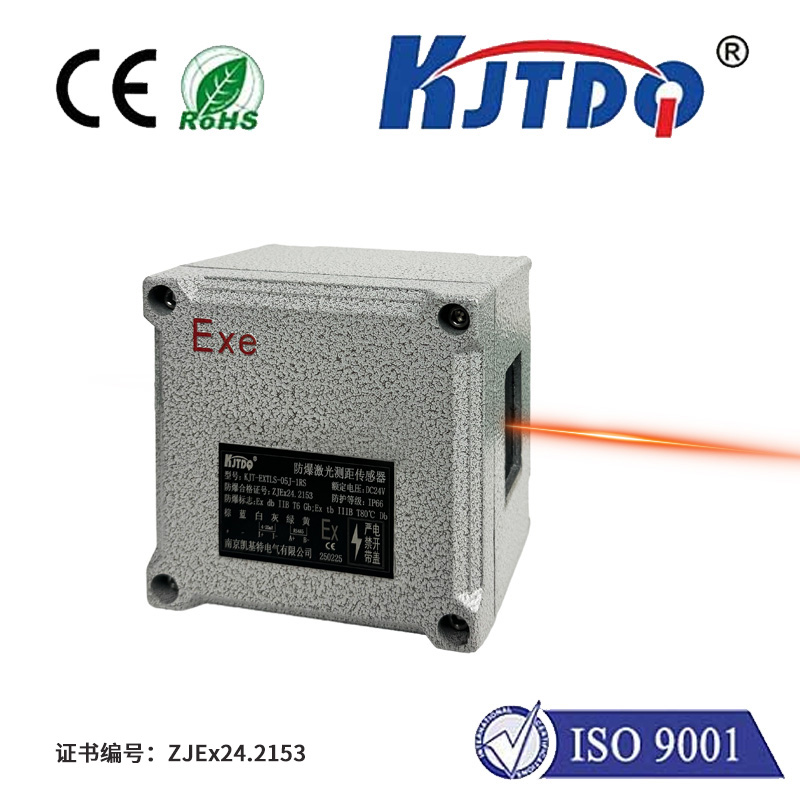
In today's fast-paced industrial and technological landscape, precision measurement is no longer a luxury—it's a necessity. The laser distance module sensor has emerged as a cornerstone technology, enabling accuracy and efficiency across countless applications. From robotics and automation to construction, surveying, and smart devices, these compact yet powerful sensors are transforming how we measure and interact with the physical world.
A laser distance module sensor operates on a simple yet profound principle: it emits a laser beam toward a target and calculates the distance by measuring the time it takes for the light to reflect back. This method, known as time-of-flight (ToF) or phase-shift measurement, allows for non-contact, high-speed, and remarkably accurate readings. Unlike traditional tape measures or ultrasonic sensors, laser modules offer superior precision, often down to millimeter-level accuracy, even over long ranges.
One of the standout features of modern laser distance sensors is their versatility. They come in various forms, including compact modules for integration into consumer electronics, ruggedized units for industrial environments, and long-range models for outdoor use. For instance, in autonomous vehicles, these sensors help in obstacle detection and navigation by providing real-time distance data. In smart home systems, they enable features like gesture control or automated lighting adjustments. The construction industry relies on them for accurate leveling and alignment, significantly reducing human error and project timelines.
Integration is another key advantage. Many laser distance modules are designed with user-friendly interfaces, such as UART, I2C, or PWM outputs, making them easy to incorporate into existing systems. Developers and engineers appreciate the plug-and-play capability, which accelerates prototyping and deployment. Moreover, advancements in miniaturization have led to sensors that are not only smaller but also more energy-efficient, extending battery life in portable devices.
Despite their sophistication, laser distance sensors are built to withstand challenging conditions. High-quality modules feature robust housings that protect against dust, moisture, and mechanical shocks, ensuring reliable performance in factories, warehouses, or outdoor settings. Calibration and maintenance are minimal, thanks to stable laser diodes and advanced signal processing algorithms that compensate for environmental variables like ambient light or temperature fluctuations.
Looking ahead, the future of laser distance module sensors is bright. Innovations in areas like multi-sensor fusion, where laser data is combined with camera or inertial measurements, promise even greater accuracy and contextual awareness. As the Internet of Things (IoT) expands, these sensors will play a pivotal role in creating smarter, more responsive environments. Whether it's optimizing warehouse logistics, enhancing robotic precision, or enabling new consumer gadgets, the laser distance module sensor is poised to remain at the forefront of measurement technology.
For businesses and innovators, adopting this technology means staying competitive. It offers a blend of precision, speed, and adaptability that few alternatives can match. By understanding its capabilities and applications, you can unlock new possibilities in your projects, driving efficiency and innovation forward.