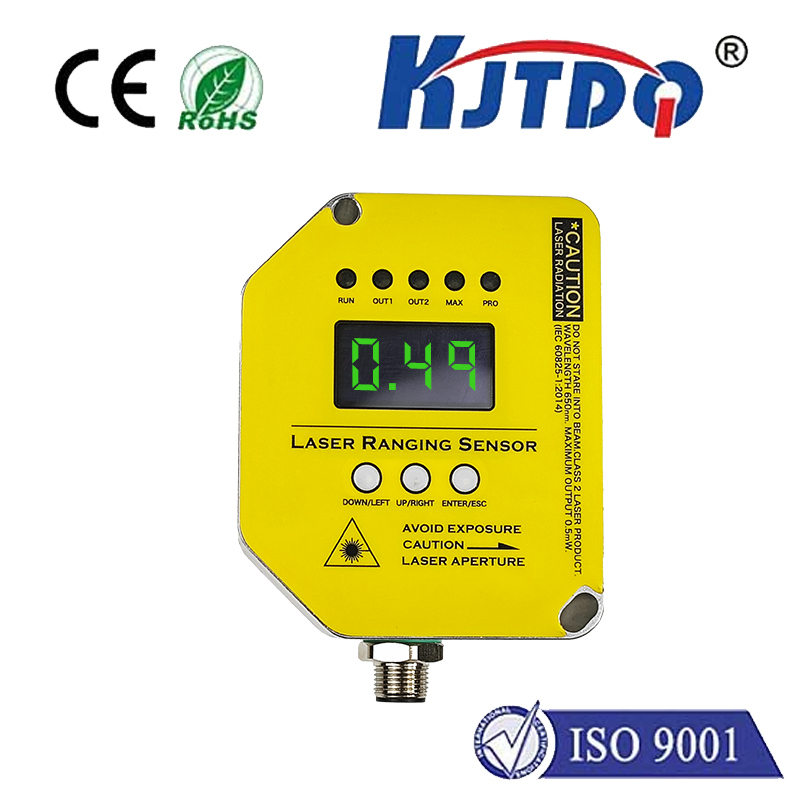
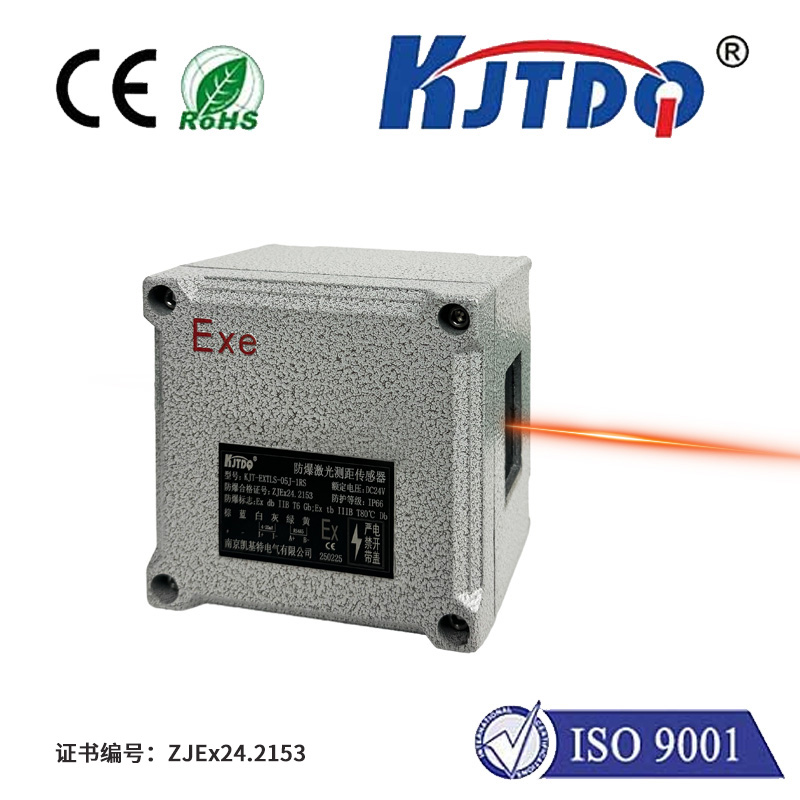
In the realm of precision measurement and spatial awareness, few technologies have garnered as much attention and utility as the Lidar laser range sensor. This sophisticated device, which stands for Light Detection and Ranging, operates by emitting laser pulses and measuring the time it takes for the light to reflect back from objects. The result is a highly accurate, three-dimensional map of the surrounding environment, enabling applications that range from autonomous vehicles and robotics to topographic mapping and industrial automation.
The core principle behind a Lidar sensor is relatively straightforward, yet its execution requires advanced engineering. A laser diode emits rapid pulses of light, often in the near-infrared spectrum. These pulses travel outward until they encounter an object. Upon impact, the light scatters, with a fraction returning to the sensor's receiver. A precise timer, typically a high-speed photodetector coupled with specialized circuitry, calculates the time of flight (ToF) for each pulse. Given the constant speed of light, this time measurement is directly converted into an exact distance. By scanning the laser beam across a field of view—either through mechanical rotation, micro-electromechanical systems (MEMS) mirrors, or solid-state phased arrays—the sensor accumulates millions of distance points per second, creating a rich, detailed point cloud.
What sets modern Lidar laser range sensors apart is their remarkable combination of range, accuracy, and resolution. High-performance models can detect objects from a few centimeters to several hundred meters away, with distance accuracy often within a few millimeters. The angular resolution, which determines how finely the scene is sampled, can be exceptionally high, allowing the detection of small objects or fine details. This capability is paramount for safety-critical systems like self-driving cars, where identifying a pedestrian, a curb, or a stray tire on the highway must be instantaneous and reliable.
Beyond automotive applications, Lidar sensors are revolutionizing numerous industries. In robotics, they serve as the primary "eyes" for mobile robots navigating dynamic warehouses or fulfillment centers. In agriculture, they are used for crop monitoring and yield prediction by creating detailed 3D models of fields. Surveyors and civil engineers employ terrestrial Lidar for creating as-built models of construction sites or monitoring geological stability. The technology even plays a crucial role in archaeology, revealing hidden structures beneath forest canopies.
The evolution of Lidar is strongly tied to advancements in key components: lasers, detectors, and beam-steering mechanisms. Early systems were bulky, expensive, and power-hungry, limiting their use to large-scale scientific and military projects. Today, the drive towards solid-state Lidar—which has no moving parts—is making the technology more compact, affordable, and robust. These solid-state sensors are ideal for mass-market integration, promising to bring high-precision ranging to consumer electronics and Internet of Things (IoT) devices.
However, selecting the right Lidar laser range sensor involves careful consideration of specifications. Key parameters include maximum range, field of view (both horizontal and vertical), frame rate, and the wavelength of the laser. Environmental robustness is also critical; a sensor must perform consistently in rain, fog, dust, and under varying light conditions. Manufacturers are continually innovating with multi-wavelength systems and advanced signal processing algorithms to overcome these environmental challenges.
As the technology matures, the future of Lidar laser range sensors looks exceptionally bright. Research is ongoing into integrating Lidar data with other sensor modalities like cameras and radar through sensor fusion, creating a more redundant and comprehensive perception system for machines. Furthermore, the push for miniaturization is leading to the development of chip-scale Lidar, which could one day be as ubiquitous as the camera in a smartphone. This proliferation will unlock new applications we are only beginning to imagine, from smart city infrastructure and personal safety devices to immersive augmented reality experiences.
In conclusion, the Lidar laser range sensor is far more than a simple distance-measuring tool. It is a foundational technology enabling machines to perceive and interact with the world in three dimensions with unprecedented fidelity. Its journey from specialized laboratories to mainstream applications underscores its transformative potential. For engineers, developers, and innovators looking to build the next generation of autonomous and intelligent systems, understanding and leveraging this powerful sensing technology is not just an advantage—it is an imperative.