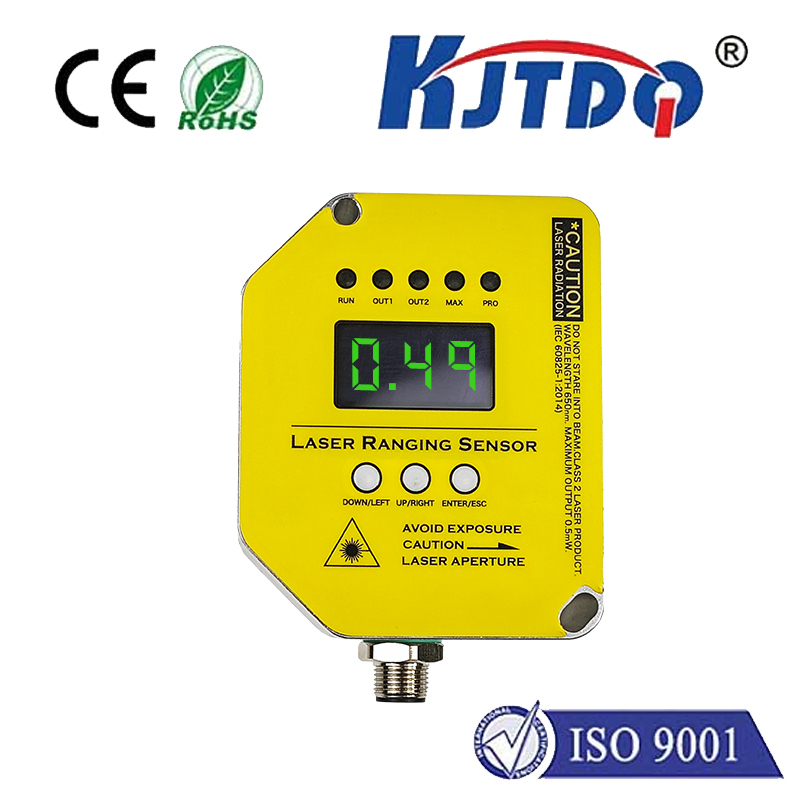
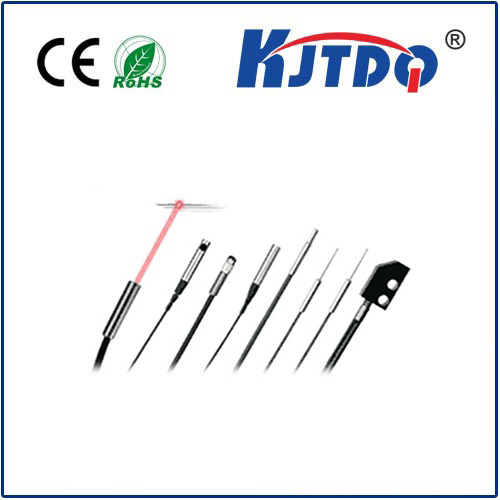
In the realm of precision measurement and detection, a transformative technology is setting new benchmarks for accuracy, speed, and reliability. The CMOS laser sensor represents a significant leap forward, merging the high sensitivity of Complementary Metal-Oxide-Semiconductor (CMOS) imaging technology with the precision of laser-based measurement. This fusion creates a powerful tool that is reshaping industries from advanced manufacturing and robotics to autonomous vehicles and consumer electronics.
Unlike traditional sensor systems that often struggle with trade-offs between resolution, frame rate, and power consumption, the CMOS laser sensor offers an elegant solution. At its core, the technology utilizes a laser emitter to project a controlled beam of light onto a target surface. The reflected light is then captured by a highly sensitive CMOS image sensor. This sensor, built with an array of microscopic photodiodes, converts the incoming photons into electrical signals with exceptional efficiency. The real magic happens in the subsequent signal processing, where sophisticated algorithms analyze the captured laser pattern—its shape, intensity, and position—to calculate precise measurements such as distance, displacement, profile, and even surface texture with micron-level accuracy.
The advantages of this technology are manifold. First and foremost is its unparalleled precision. Capable of detecting minute changes that are invisible to the human eye or conventional sensors, it ensures quality control in manufacturing processes where a fraction of a millimeter matters. Secondly, speed is a defining characteristic. The inherent design of CMOS technology allows for rapid data capture and processing, enabling real-time, high-speed inspection on fast-moving production lines without creating bottlenecks. This high frame rate is crucial for dynamic applications.
Furthermore, CMOS laser sensors are renowned for their robustness and stability. They perform consistently in challenging environments, resisting interference from ambient light or electrical noise that often plagues other optical sensors. Their compact size and relatively low power consumption, a hallmark of CMOS design, make them ideal for integration into portable devices and systems where space and energy are at a premium. From ensuring the perfect gap in smartphone assembly and guiding robotic arms with pinpoint accuracy to enabling LiDAR systems for environmental mapping, the applications are vast and growing.
The integration of smart features is the next frontier. Modern CMOS laser sensors often come equipped with onboard processors and intelligent software, allowing for edge computing. This means the sensor can make preliminary decisions or filter data locally, reducing the load on central systems and enabling faster response times. This intelligence is vital for the Internet of Things (IoT) and Industry 4.0, where interconnected devices must operate autonomously and efficiently.
In conclusion, the CMOS laser sensor is not merely an incremental improvement but a foundational technology enabling a new wave of automation and precision. By delivering a unique combination of accuracy, speed, and durability in a compact form factor, it is solving complex measurement challenges and opening doors to innovations that were previously impractical. As research continues to enhance its sensitivity and reduce costs, its adoption is poised to expand, solidifying its role as a critical component in the smart, data-driven systems of the future.