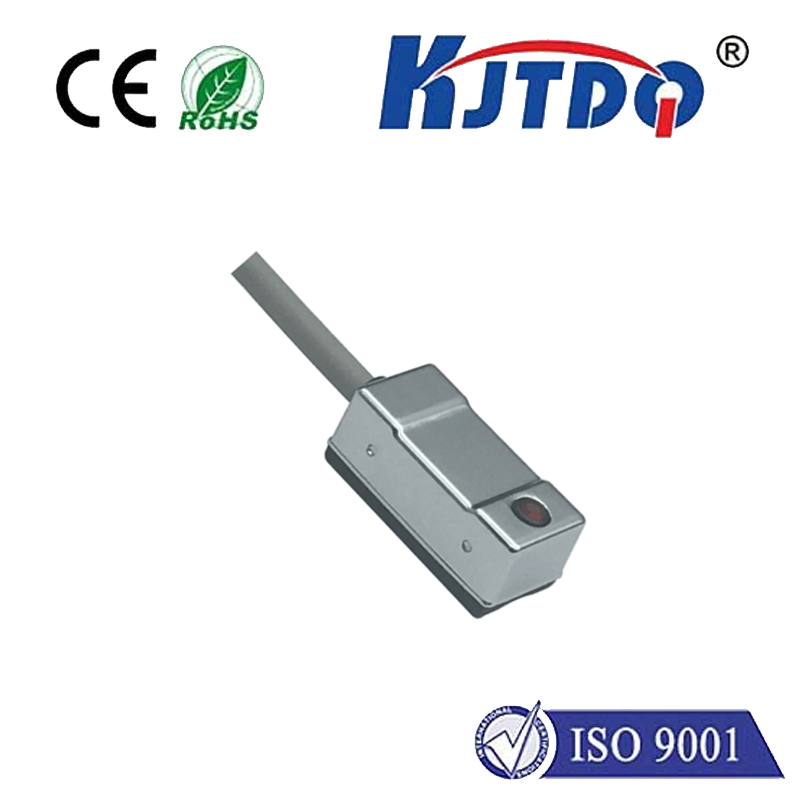
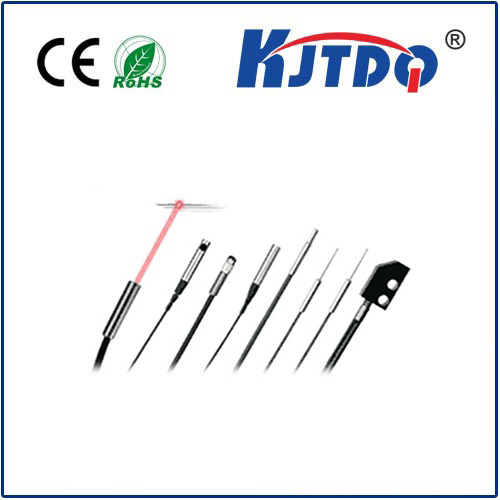
In the world of industrial automation and precision engineering, achieving accurate, non-contact measurement is a fundamental requirement. This is where the laser displacement sensor emerges as an indispensable tool. Far from being a simple gadget, it represents a sophisticated convergence of optics, electronics, and advanced signal processing, designed to deliver micron-level accuracy in the most demanding environments.
At its core, a laser displacement sensor operates on the principle of triangulation. A focused laser beam is projected onto the target surface. The reflected light, now displaced based on the target's distance, is captured by a high-resolution receiving element, typically a CCD or CMOS sensor. By precisely calculating the angle of the reflected beam, the sensor's internal processor determines the exact distance to the target with remarkable speed and repeatability. This method allows for measurements that are immune to the inconsistencies and wear associated with physical contact probes.
The applications for these sensors are vast and critical across numerous sectors. In automotive manufacturing, they ensure the precise gap and flushness between body panels, guaranteeing quality and aesthetics. On semiconductor production lines, they verify the thickness of wafers and the height of minute components. In the realm of robotics, they provide essential feedback for guidance, positioning, and inspection tasks, enabling robots to interact with their environment intelligently. From monitoring vibration and deformation in heavy machinery to controlling the fill level in packaging, the laser displacement sensor is a silent guardian of quality and efficiency.
Selecting the right sensor requires careful consideration of several key parameters. Measurement range defines the minimum and maximum distances over which the sensor can operate accurately. Spot size is crucial; a smaller spot allows for measurement on intricate features or sharp edges. Resolution indicates the smallest distance change the sensor can detect, while linearity reflects the accuracy across the entire measurement range. Furthermore, environmental factors cannot be ignored. Models are available with robust housings, specialized filters, and enhanced algorithms to combat challenges like ambient light interference, high temperatures, or exposure to dust and coolant.
Modern advancements continue to push the boundaries of what these sensors can achieve. High-speed models capture data at rates exceeding 100 kHz, perfect for monitoring fast-moving production lines. Confocal chromatic sensors offer exceptional performance on transparent or multi-layered materials. Some integrated models now combine displacement measurement with profile scanning capabilities, providing a rich 2D or even 3D dataset from a single unit. The integration of industrial communication protocols like EtherCAT, PROFINET, and IO-Link simplifies connectivity and enables seamless data flow into larger control and analytics systems.
The true value of implementing a laser displacement sensor extends beyond a single measurement point. It is an investment in process stability, waste reduction, and predictive maintenance. By providing continuous, real-time data, these sensors form the backbone of a data-driven manufacturing strategy. They help prevent defects before they occur, minimize material usage, and ensure that every product meets stringent specifications consistently. For engineers and plant managers seeking to enhance automation, improve product quality, and boost operational efficiency, understanding and leveraging the capabilities of laser displacement sensor technology is not just an option—it is a strategic imperative for staying competitive in today's high-precision industrial landscape.