Проверка
Проверка
Проверка
Проверка
Проверка
Проверка
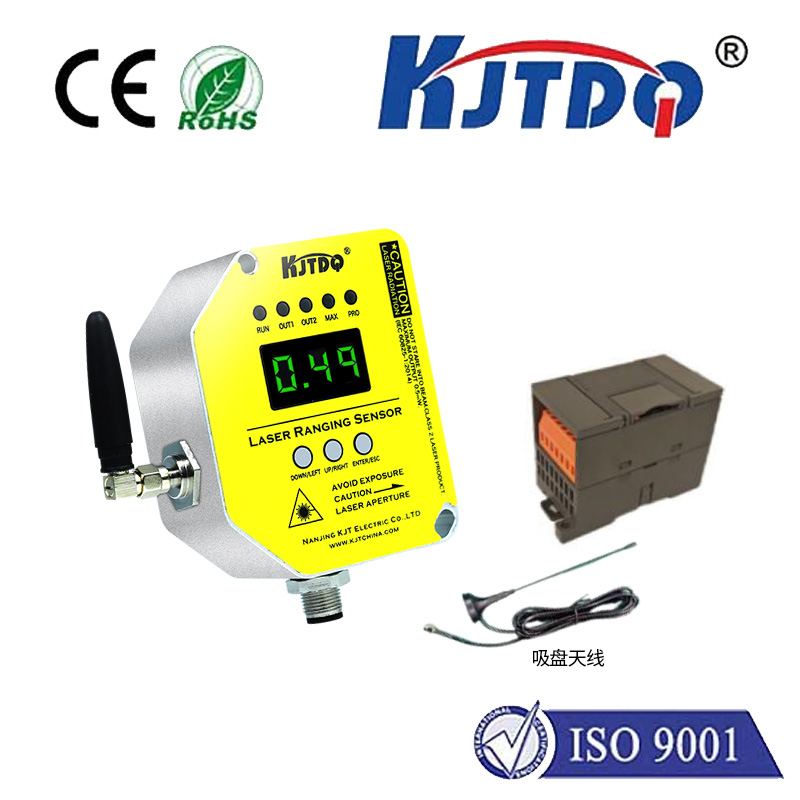
In industries where accuracy over vast distances is not just a preference but a critical requirement, the introduction of the 200-meter laser distance sensor marks a significant technological leap. This device transcends the limitations of traditional measuring tools, offering a blend of long-range capability, pinpoint accuracy, and operational robustness that is reshaping workflows in construction, surveying, mining, and logistics. Unlike conventional ultrasonic sensors or manual tape measures, which struggle with environmental interference and human error over long spans, this laser-based solution delivers reliable data instantly.
The core principle behind this sensor is laser time-of-flight (ToF) technology. It emits a focused laser pulse towards a target. A high-speed internal clock then measures the exact time it takes for the pulse to reflect back to the sensor's receiver. Since the speed of light is a constant, the sensor's sophisticated processor can calculate the distance with remarkable precision. Modern 200m models incorporate advanced signal processing algorithms to filter out ambient light noise and compensate for atmospheric conditions, ensuring stable readings even in challenging outdoor environments.
The practical applications for a laser distance sensor with a 200-meter range are extensive and transformative. In large-scale construction projects, project managers and engineers use it to quickly and safely measure site dimensions, building heights, and land gradients without the need for cumbersome equipment or multiple personnel. Surveyors employ it for topographic mapping and boundary verification, drastically reducing field time. In warehouse and port management, these sensors enable efficient inventory volume calculation and precise positioning of cranes and cargo, optimizing space and logistics operations. Furthermore, in forestry and agriculture, they assist in measuring tree heights and monitoring crop growth over large plots.
Selecting the right 200m laser distance sensor involves evaluating several key specifications beyond just the maximum range. Accuracy, typically within ±1.5mm to ±2mm at 200m, is paramount for critical applications. The laser class (usually Class 2, which is eye-safe) and ingress protection rating (IP65 or higher is recommended for dust and water resistance) determine its durability in harsh sites. User interface features, such as a bright backlit display, Bluetooth connectivity for data transfer to mobile devices, and intuitive software for area and volume calculations, significantly enhance productivity. Battery life is another crucial factor, with high-capacity lithium-ion options ensuring the device lasts through long work shifts.
Operational efficiency gains are the most immediate benefit. What used to take a crew hours to measure with tapes and wheels can now be accomplished by a single operator in minutes with a laser sensor. This not only saves labor costs but also minimizes site disruptions and enhances worker safety by keeping personnel away from potentially hazardous areas. The digital data output eliminates manual transcription errors, ensuring that blueprints, reports, and inventory systems are fed with accurate information, leading to better planning and reduced material waste.
While the technology is highly reliable, optimal performance requires an understanding of its operating parameters. The sensor requires a reasonably reflective target for a strong return signal at 200 meters; extremely dark or absorbent surfaces may reduce the effective range. Direct, bright sunlight can sometimes interfere, though high-quality sensors have filters to mitigate this. Regular cleaning of the lens and following the manufacturer's calibration guidelines are simple yet essential maintenance practices to preserve long-term accuracy.
The evolution of the laser distance sensor to a reliable 200-meter tool represents a clear move towards smarter, data-driven industrial operations. It replaces guesswork and estimation with concrete, verifiable numbers. For professionals tasked with managing large spaces and assets, integrating this technology is no longer a luxury but a strategic investment in precision, efficiency, and competitive advantage. As these sensors become more integrated with building information modeling (BIM) software and the Internet of Things (IoT), their role as a fundamental data collection node in the digital ecosystem will only grow more vital.