Проверка
Проверка
Проверка
Проверка
Проверка
Проверка
In the world of industrial automation and control, photoelectric sensors stand as a cornerstone technology. These devices, often simply called photo sensors, detect the presence, absence, or distance of an object using a light transmitter and receiver. Their operation is elegantly simple yet profoundly effective, making them indispensable across countless sectors. At their core, a photoelectric sensor emits a beam of light—visible red, infrared, or laser—and detects changes in the received light signal caused by the target object.
The fundamental principle relies on the modulation of light. The sensor's emitter sends out a modulated light pulse. When this light strikes an object, it may be reflected, absorbed, or pass through. The receiver, tuned to the specific modulation frequency, analyzes the returning light. A change in the intensity, time-of-flight, or angle of the received light triggers the sensor's output switch. This output is typically a clean digital signal (ON/OFF) that can be seamlessly integrated into a Programmable Logic Controller (PLC) or other control systems to initiate actions like counting, positioning, or sorting.
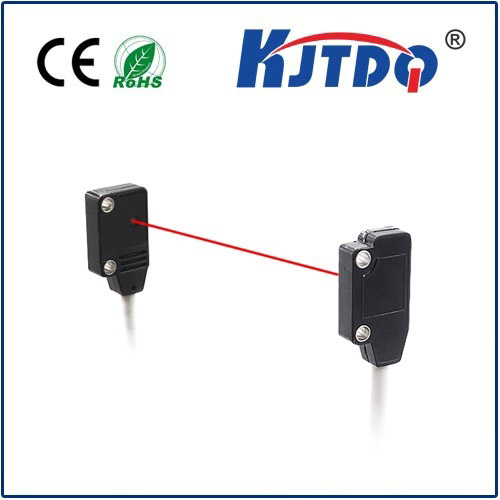
Photoelectric sensors are primarily categorized into three main types based on their sensing mode, each suited for different challenges. The first is the *through-beam* or opposed mode sensor. This type consists of two separate units: a transmitter and a receiver placed opposite each other. Detection occurs when an object physically breaks the light beam between them. This configuration offers the longest sensing range and highest reliability, as it is less affected by the object's color, reflectivity, or surface angle. It is ideal for detecting opaque objects over large distances, such as in warehouse door safety systems or on long conveyor lines.
The second type is the *retro-reflective* sensor. Here, both the emitter and receiver are housed in a single unit. The sensor works in conjunction with a reflector or reflective tape. The emitted light beam travels to the reflector and bounces back to the receiver. An object is detected when it interrupts this return path. This design provides a good balance of range and convenience, eliminating the need to wire two separate units over a distance. However, it can be fooled by highly reflective objects that might bounce light back similarly to the reflector. Modern versions often use polarized filters to mitigate this issue, only accepting light that has its polarization rotated by the specific reflector.
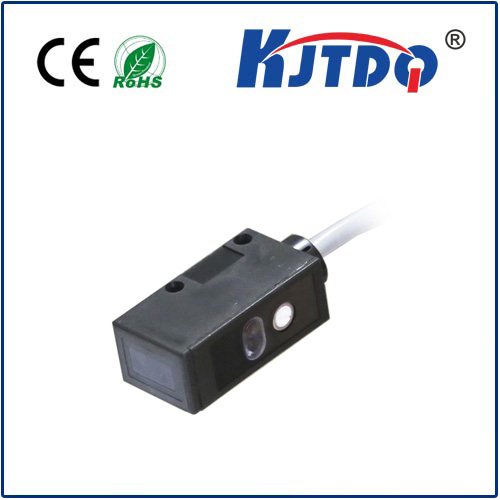
The third and most versatile category is the *diffuse* or proximity mode sensor. In this design, both emitter and receiver are in one housing, and it detects the light reflected directly off the target object itself. The sensor activates when sufficient light bounces back from the object's surface. This makes installation extremely simple, as only one device needs to be mounted. However, its performance is highly dependent on the object's color, texture, and reflectivity. A white object will be detected from a farther distance than a black one. Diffuse sensors are perfect for short-range applications where space is limited or where mounting a reflector is impractical, such as detecting bottles on a filling line or packages on a chute.
Beyond these core types, specialized variants have emerged. Background suppression sensors are a sophisticated form of diffuse sensor that use triangulation to detect objects only within a precise, fixed distance, ignoring anything beyond it, regardless of color. Contrast sensors detect differences in surface color or contrast, essential in label detection. Luminescence sensors detect the presence of materials that glow under UV light.
The applications of photoelectric sensors are vast and varied. In manufacturing, they count products on assembly lines, detect jammed parts, and ensure correct positioning for robotic arms. In packaging, they verify label placement, check fill levels in transparent containers, and control the sealing process. In the automotive industry, they are used for precise part positioning and safety curtain applications. They are also critical in material handling for palletizing, warehouse automation, and even in everyday life within automatic doors, hand dryers, and paper dispensers.
Selecting the right photoelectric sensor requires careful consideration of several factors. The primary consideration is the *sensing distance* required for the application. Through-beam sensors offer the longest range, followed by retro-reflective, then diffuse. The *object characteristics*—its size, color, material, and surface finish—will dictate the needed sensor type and light source. Environmental conditions are crucial; factors like dust, fog, ambient light, and temperature can affect performance, necessitating sensors with robust housings (IP67/IP69K ratings), special filters, or modulated light to ignore ambient interference. Finally, the required *output type* (PNP/NPN, analog, or IO-Link for smart sensors) and *connection method* must be compatible with the existing control system.
Modern advancements continue to push the boundaries. The integration of IO-Link communication transforms standard sensors into intelligent devices that can transmit detailed diagnostic data, such as signal strength, operating temperature, and contamination levels, enabling predictive maintenance. Laser-based sensors provide extremely small, precise spots for detecting tiny objects or edges. The evolution of photoelectric sensor technology remains focused on greater precision, reliability in harsh environments, and smarter, more connected functionality, solidifying their role as the eyes of modern automation.