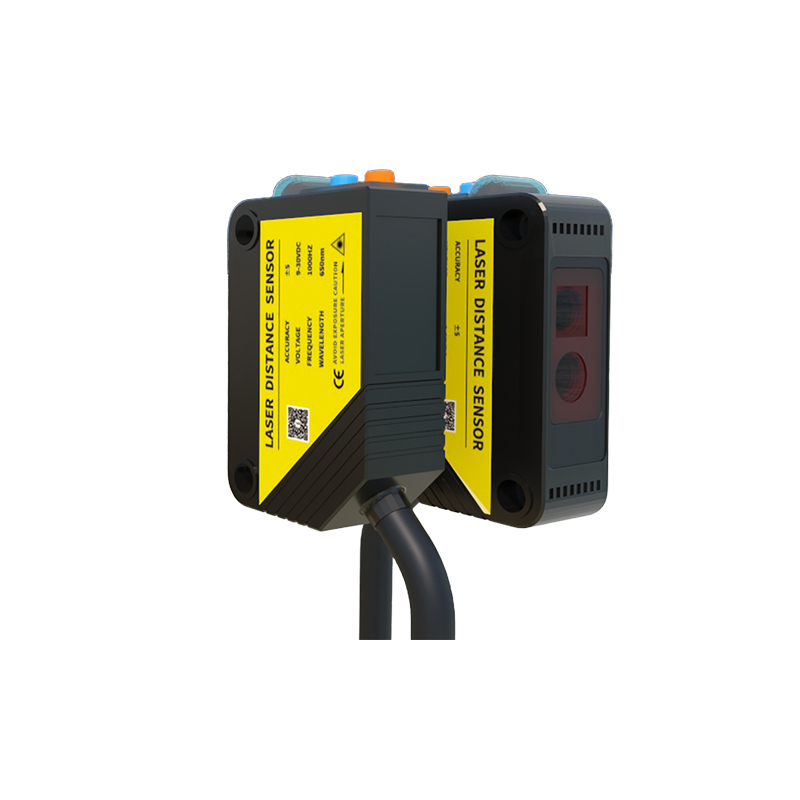
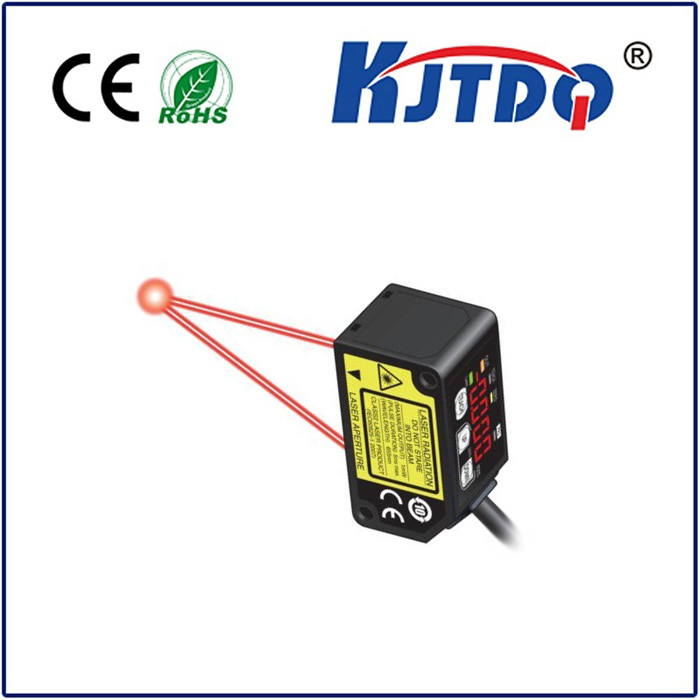
In the realm of industrial automation, precision and reliability are paramount. The trough beam photoelectric sensor, often referred to as a through-beam sensor, stands as a cornerstone technology for countless applications requiring accurate detection and measurement. This device operates on a simple yet effective principle: it consists of a separate transmitter and receiver unit. The transmitter emits a focused beam of light—typically infrared, visible red, or laser—directly towards the receiver. When an object passes through this beam, it interrupts the light path, triggering a signal change in the receiver. This binary "on/off" state is then communicated to a control system, such as a PLC, to initiate or halt a process.
The fundamental advantage of the through-beam photoelectric sensor lies in its exceptional sensing range and stability. Because the beam travels directly from emitter to receiver without relying on reflection, it can detect objects over long distances, often exceeding tens of meters with high-power models. This makes it ideal for large-scale applications like conveyor belt monitoring, where it can detect the presence or absence of products, count items, or verify positioning with unwavering accuracy. Its immunity to surface color, texture, or reflectivity is another key benefit; whether detecting a transparent glass bottle, a matte black box, or a shiny metal part, the sensor performs consistently as long as the object is opaque enough to interrupt the beam.
Modern trough beam photoelectric sensors are engineered for durability in harsh industrial environments. They are commonly housed in rugged, IP67-rated enclosures that protect against dust, water jets, and mechanical impacts. This robustness ensures reliable operation in settings ranging from food and beverage processing plants, where washdowns are frequent, to automotive assembly lines with significant vibration. Advanced models incorporate features like adjustable sensitivity, time-delay functions, and diagnostic LEDs to simplify installation, troubleshooting, and maintenance. Some are even equipped with synchronization capabilities, allowing multiple sensor pairs to operate in close proximity without optical interference, a critical feature in dense machinery layouts.
The application spectrum for these sensors is vast. In packaging machinery, they ensure precise carton sealing by verifying flap presence. In material handling, they prevent jams by monitoring stack heights or guiding robotic arms. In the electronics industry, they verify component insertion on circuit boards. Their role in safety systems is also crucial, often serving as non-contact safety curtains to protect personnel around hazardous machinery by instantly stopping equipment if the light curtain is breached. The evolution towards Industry 4.0 has further integrated these sensors into smart networks. With IO-Link or Ethernet connectivity, they can transmit not just a simple switch signal but also diagnostic data—such as operating hours, temperature readings, or lens contamination alerts—enabling predictive maintenance and reducing unplanned downtime.
Selecting the right trough beam photoelectric sensor requires careful consideration of several factors. The operating distance must match the application gap between the emitter and receiver. The light source type is critical: infrared beams offer discretion and resistance to ambient light interference, visible red beams simplify alignment during setup, and laser beams provide extremely precise detection for small objects or long ranges. Environmental conditions, such as temperature extremes, humidity, and exposure to chemicals, dictate the required housing material and ingress protection rating. Finally, the output type (e.g., NPN, PNP, analog, or relay) must be compatible with the existing control system architecture. Proper installation is equally important; securing both units firmly to prevent misalignment from vibration and ensuring the lens remains clean are essential for sustained accuracy.
In conclusion, the trough beam photoelectric sensor is an indispensable tool in the automation engineer's arsenal. Its straightforward operating principle belies its sophisticated impact on efficiency, quality control, and safety. By providing a reliable, long-range, and material-independent detection solution, it forms the eyes of automated systems, enabling seamless, high-speed, and error-free operations. As industries continue to pursue greater productivity and connectivity, the ongoing innovation in photoelectric sensing technology, including more compact designs, enhanced communication protocols, and smarter diagnostics, will ensure that the trough beam sensor remains a vital component in the factories of the future, driving progress one uninterrupted beam at a time.