Проверка
Проверка
Проверка
Проверка
Проверка
Проверка
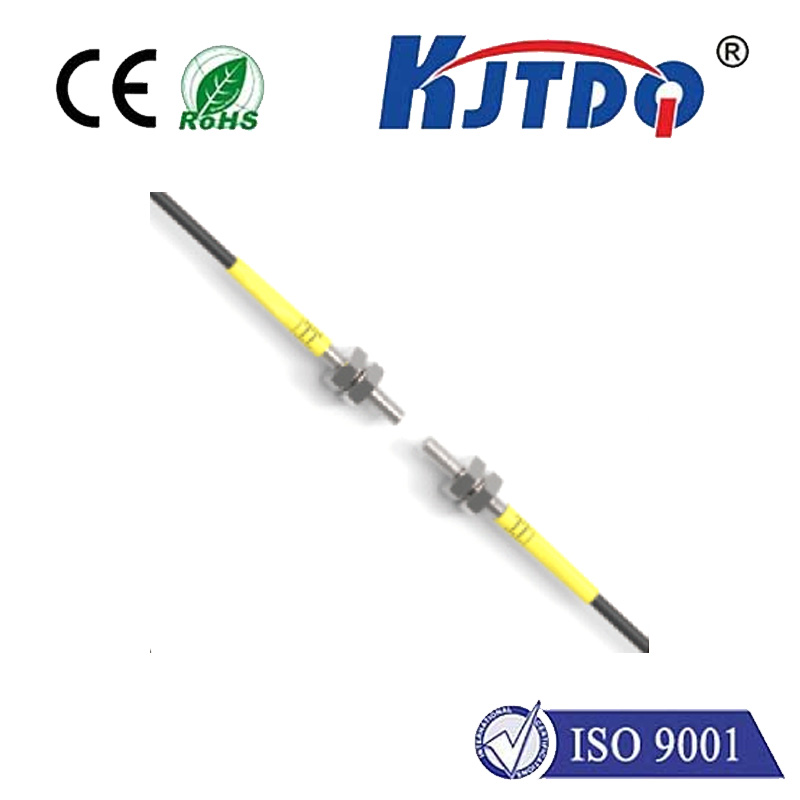
In today's rapidly evolving industrial landscape, the photoelectric beam sensor stands as a cornerstone of automation and safety systems. These devices, often referred to as light beam sensors or safety light curtains, operate by emitting an invisible or visible beam of light between a transmitter and receiver. When this beam is interrupted by an object, person, or any unexpected intrusion, the sensor triggers an immediate response, such as halting machinery, activating alarms, or initiating safety protocols. This fundamental principle makes them indispensable across a myriad of applications, from manufacturing assembly lines and robotic work cells to warehouse logistics and public access control.
The core technology behind photoelectric beam sensors involves advanced optoelectronics. The transmitter unit typically houses a light-emitting diode (LED) that projects a modulated infrared or laser beam. The corresponding receiver, positioned precisely opposite, contains a photodetector tuned to the specific wavelength of the emitted light. Modern sensors employ sophisticated modulation techniques to distinguish the genuine signal from ambient light interference, ensuring remarkable reliability even in challenging environments with high levels of dust, vibration, or variable lighting conditions. This robustness is critical for maintaining continuous operation in factories and outdoor settings where downtime can lead to significant productivity losses.
One of the most compelling advantages of photoelectric beam sensors is their versatility in configuration. They can be deployed as single-beam units for basic presence detection or as multi-beam arrays forming comprehensive light curtains for area guarding. For instance, around a hazardous robotic arm, a vertical array of beams can create an invisible protective shield. The moment an operator's hand breaches this shield, the system commands the robot to enter a safe state, preventing potential injuries. Similarly, in automated guided vehicle (AGV) systems, horizontal beams mounted at low heights can detect obstacles on the path, enabling collision avoidance and ensuring smooth material flow within smart warehouses.
Beyond safety, these sensors are pivotal for enhancing operational efficiency and enabling precise process control. In packaging lines, a photoelectric beam can accurately count products passing on a conveyor belt by tallying each beam break. It can also verify the correct positioning of components before a robotic welder or assembler commences its task, thereby reducing errors and material waste. In the realm of access control, beams installed at entry points can monitor pedestrian or vehicle traffic, integrating with building management systems to regulate door operations or gather occupancy data for analytics.
The integration of photoelectric beam sensors with the Industrial Internet of Things (IIoT) represents the next frontier. Contemporary models come equipped with smart features like programmable logic, diagnostic outputs, and communication protocols such as IO-Link, Ethernet/IP, or PROFINET. This connectivity allows for real-time monitoring of sensor health and performance metrics directly from a central control panel or a cloud platform. Maintenance teams can receive predictive alerts about lens contamination or alignment issues before a failure occurs, shifting from reactive to proactive maintenance strategies. This data-driven approach not only extends the equipment's lifespan but also contributes to overall plant efficiency and safety compliance.
Selecting the appropriate photoelectric beam sensor requires careful consideration of several factors. The operating range, or sensing distance, must match the application's physical layout. For long-range detection across wide factory bays, sensors with a range of several tens of meters are available. The required resolution, determined by the beam's diameter and spacing in a multi-beam system, defines the smallest object that can be reliably detected—a crucial parameter for finger or hand protection in safety applications. Environmental ratings for ingress protection (IP) and resistance to chemicals, temperature extremes, and mechanical shock are equally vital to ensure durability. Furthermore, compliance with international safety standards, such as IEC 61496 for type 2 or type 4 safety light curtains, is non-negotiable for applications involving personnel protection.
Installation and alignment, while straightforward for modern self-contained units, are critical for optimal performance. Many sensors feature built-in alignment aids like visual indicators or audible signals that guide technicians during setup. Regular maintenance, primarily keeping the optical lenses clean from dirt and debris, is a simple yet essential practice to prevent false triggers or missed detections. As automation systems grow more complex and collaborative robots (cobots) work alongside humans, the role of photoelectric beam sensors as reliable, non-contact guardians becomes increasingly paramount. They provide a seamless layer of protection that safeguards human workers while enabling machines to operate at their full, productive potential, embodying the perfect synergy between safety and efficiency in the automated world.