In the realm of industrial automation and precise control, the ability to detect objects reliably over significant distances is paramount. The 30m distance photoelectric sensor represents a significant leap forward in sensing technology, offering unparalleled performance for applications where standard sensors fall short. This advanced device utilizes a focused beam of light to identify the presence or absence of objects from up to 30 meters away, providing a critical solution for large-scale operations.
The core technology behind these long-range sensors often involves modulated infrared light. Unlike simple on/off light beams, these sensors emit a pulsed signal. This modulation allows the receiver to distinguish the sensor's own light from ambient background illumination, such as sunlight or factory lighting, which is crucial for maintaining stability and accuracy over its entire 30-meter range. This robust design ensures consistent operation even in challenging environmental conditions, including light dust, fog, or varying temperatures.
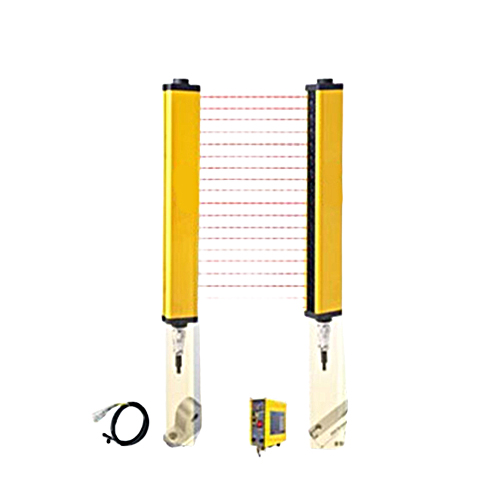
One of the primary advantages of the 30m photoelectric sensor is its versatility in sensing modes. The through-beam type, consisting of separate transmitter and receiver units, offers the longest and most reliable detection distance, making it ideal for monitoring wide conveyor belts, large warehouse doors, or parking garage entrances. The retro-reflective type, which uses a reflector to bounce the light back to a combined unit, provides a simpler installation while still achieving impressive range for applications like vehicle detection on access roads. Advanced versions even incorporate background suppression technology, allowing them to ignore objects beyond a set distance and focus only on the target area.
The integration of a 30m distance photoelectric sensor into a system brings transformative benefits. It enhances safety by monitoring hazardous zones or perimeter security from a safe distance. In logistics, it enables precise inventory management in high-bay warehouses by detecting pallets on racks. For manufacturing, it allows for the early detection of products on lengthy assembly lines, facilitating better process timing and control. The long operating distance also reduces the number of sensors required, simplifying system architecture and lowering long-term maintenance costs.
When selecting a 30m photoelectric sensor, several key specifications demand attention. The light source, typically infrared for maximum range, must be considered alongside the response time, which needs to be fast enough for high-speed applications. The housing rating is critical; an IP67 or higher rating ensures protection against dust and water jets, which is essential for outdoor or harsh indoor use. Output types, such as NPN, PNP, or analog, must be compatible with the existing control system, like a PLC.
Installation and alignment, though straightforward, require careful planning for optimal performance. Ensuring a clear line of sight is essential, as obstructions can cause false readings. For through-beam types, precise alignment of the transmitter and receiver is necessary to achieve the full 30m potential. Many modern sensors feature visible red light or audible signals to aid in this alignment process. Regular maintenance, primarily keeping the lenses clean from dirt and debris, is a simple yet vital practice to guarantee long-term, reliable operation.
The future of long-range sensing is bright, with trends pointing towards increased intelligence and connectivity. The next generation of 30m photoelectric sensors is likely to incorporate IO-Link communication, providing detailed diagnostic data, remote parameter configuration, and predictive maintenance alerts directly to control systems. This shift towards smart sensors will further reduce downtime and integrate seamlessly into Industry 4.0 and IoT frameworks.
In conclusion, the 30m distance photoelectric sensor is not merely an incremental improvement but a foundational tool for modern large-scale automation. Its ability to deliver stable, long-range detection solves complex challenges in material handling, security, and industrial process control. By providing a reliable "eye" over vast areas, it empowers engineers and system designers to build safer, more efficient, and more intelligent automated environments, pushing the boundaries of what is possible in detection technology.