In the world of industrial automation, precision and reliability are non-negotiable. The KJTDQ E3Z-D62 PNP 8-50cm photoelectric sensor stands out as a critical component for countless applications, from packaging lines to material handling systems. This comprehensive guide delves into its features, working principles, and practical uses, providing essential insights for engineers and system integrators.
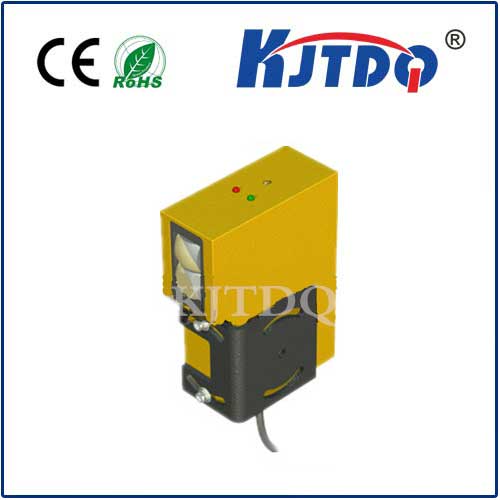
At its core, the E3Z-D62 is a diffuse-reflective photoelectric sensor with a PNP output configuration. The "8-50cm" specification denotes its adjustable sensing range, offering flexibility for various detection distances. Unlike through-beam or retro-reflective sensors, this model detects objects by receiving light reflected directly from the target's surface. This design simplifies installation, as it requires only a single unit—no separate receiver or reflector is needed on the opposite side.
The PNP (sourcing) output is a key feature. In this configuration, the sensor's output terminal switches to a positive voltage when an object is detected, sourcing current to the load. This is a common and often preferred standard in many PLC (Programmable Logic Controller) and control system architectures, particularly in Europe and Asia. It ensures seamless integration with a wide array of industrial control equipment.
The adjustable sensing range of 8 to 50 centimeters is a significant advantage. This adjustability, typically via a potentiometer on the sensor body, allows for fine-tuning in the field. Whether you need to detect a small component at a close distance or a larger object further away, the E3Z-D62 can be calibrated to the exact requirement, minimizing false triggers and maximizing operational efficiency. The built-in sensitivity adjustment compensates for variations in object color, surface texture, and environmental conditions like ambient light.
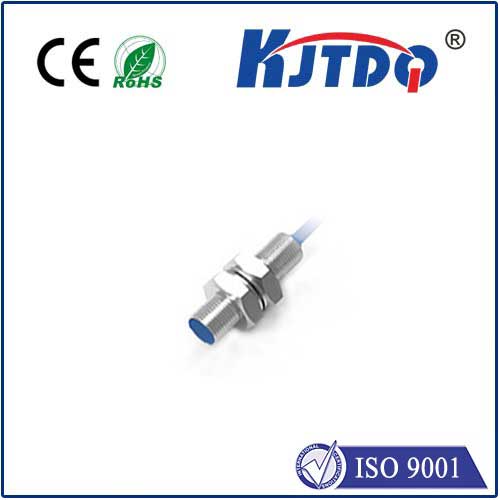
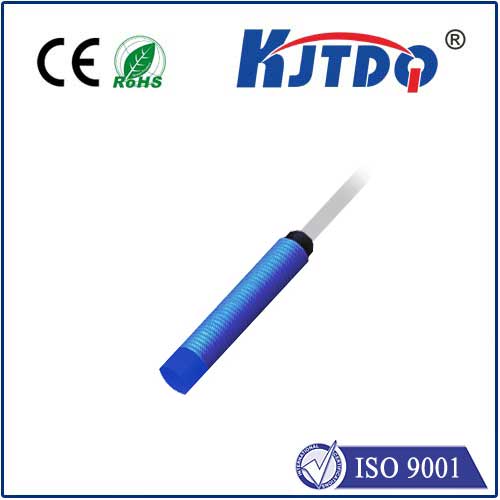
Durability is engineered into every aspect of the KJTDQ E3Z-D62. Housed in a robust, cylindrical metal or high-grade plastic casing, it is built to withstand the harsh realities of industrial environments. It typically features an IP67 rating, making it dust-tight and capable of withstanding temporary immersion in water. This makes it suitable for washdown areas in food and beverage production or dusty conditions in manufacturing plants. The stable performance is maintained across a wide operating temperature range, ensuring consistent operation from cold storage facilities to hot factory floors.
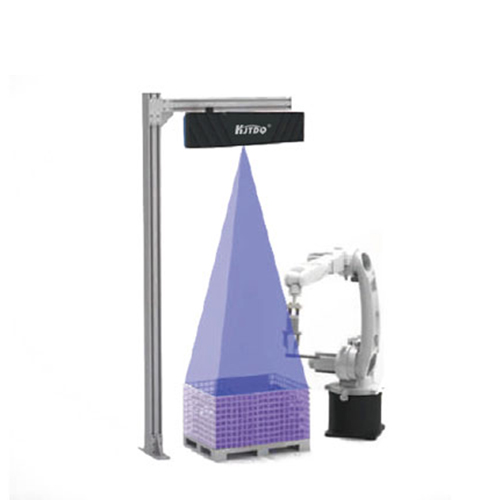
So, where is this sensor most effectively deployed? Its applications are vast. On conveyor belts, it reliably detects the presence, absence, or passage of products for counting, sorting, and positioning. In automated assembly, it verifies if a part is correctly placed before the next process step. It can be used for level detection in bins or silos, preventing overflows or shortages. The diffuse-reflective nature makes it ideal for detecting non-transparent objects with varying surface properties, though highly reflective or very dark objects may require specific tuning.
Installation and wiring are straightforward. The sensor usually comes with a pre-wired cable or a quick-disconnect connector. The standard three-wire connection includes brown (power +), blue (power -), and black (output signal). When connecting to a PLC input card, the black wire (PNP output) is connected to the input terminal, while the PLC's common is connected to the negative supply. Always refer to the specific datasheet for the KJTDQ E3Z-D62 model for precise wiring diagrams and voltage specifications (commonly 12-24V DC).
For optimal performance, consider a few best practices. Ensure the sensor is mounted securely to avoid vibration-induced errors. Carefully align it with the target's most detectable surface. Use the sensitivity adjustment to set the detection threshold just above the background reflection level. For challenging surfaces, such as shiny metal, angling the sensor slightly can prevent direct specular reflection from fooling the receiver. Regular maintenance, including lens cleaning to remove dust or grime, is simple but crucial for long-term reliability.
Troubleshooting common issues often involves a systematic approach. If the sensor fails to detect, check the power supply and wiring connections first. Verify that the object is within the adjusted sensing range and that the sensitivity setting is appropriate. Ambient light interference from strong sources like welding arcs or direct sunlight can be mitigated by using sensors with modulated LED light (which the E3Z series typically employs) or installing physical shields.
In conclusion, the KJTDQ E3Z-D62 PNP 8-50cm photoelectric sensor represents a blend of versatility, robustness, and precision. Its adjustable range, durable construction, and industry-standard PNP output make it a dependable workhorse for automating detection tasks. By understanding its capabilities and following proper installation guidelines, you can significantly enhance the reliability and efficiency of your automated systems, ensuring smooth and uninterrupted operations.