Проверка

Проверка
Проверка
Проверка
Проверка
Проверка
In the realm of industrial automation, precision and reliability are non-negotiable. The square photoelectric sensor, particularly those utilizing retro-reflective technology, stands as a cornerstone for countless detection and control applications. This specific design, often marked by its robust, compact housing, offers distinct advantages in diverse operational environments, from packaging lines to material handling systems. The integration of the retro-reflective principle elevates its functionality, providing a reliable solution for object detection where direct alignment or complex wiring is impractical.
The fundamental operation of a retro-reflective square photoelectric sensor is elegantly straightforward. The sensor unit houses both a light emitter, typically an LED, and a receiver. It projects a beam of light towards a specialized retro-reflector. Unlike a standard mirror, a retro-reflector is designed to reflect the light beam directly back to its source, regardless of the angle of incidence within a specified range. The sensor's receiver continuously monitors this returned light. When an object passes between the sensor and the retro-reflector, it interrupts this beam. The receiver detects the loss of the reflected signal, triggering an output switch. This "break-beam" method is highly effective and simplifies installation, as only the sensor head requires power and control wiring, with the passive reflector mounted on the opposite side.
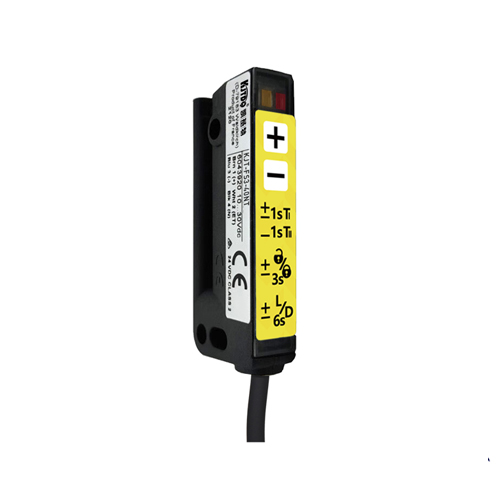
The square form factor of these sensors is a key contributor to their widespread adoption. The shape allows for easy and secure mounting in standard fixtures and on machinery. Its flat surfaces often facilitate better sealing against dust, moisture, and other industrial contaminants, frequently resulting in high Ingress Protection (IP) ratings like IP67. This durability ensures consistent performance in harsh conditions where round sensors might be more challenging to seal effectively. The square design also provides ample space for clear status indicators, such as LED lights for power and output signals, which are crucial for quick diagnostics and maintenance.
When combined with retro-reflective technology, the square photoelectric sensor addresses several common challenges. One primary benefit is simplified alignment. Since the retro-reflector returns light over a broad angle, the precise alignment between the sensor and reflector is less critical than with a through-beam system requiring two perfectly aligned units. This reduces installation time and minimizes errors. Furthermore, it cuts cabling and installation costs by half compared to through-beam sensors, as only one active device needs connection to the control system. This makes it an economical and efficient choice for long-range detection applications, with some models capable of sensing distances of several meters.
However, selecting and applying a square retro-reflective photoelectric sensor requires careful consideration. The nature of the target object is paramount. Highly reflective or transparent materials, such as glossy plastic or glass, can sometimes reflect enough light back to the sensor to prevent proper detection. For these challenging materials, sensors with polarization filters are essential. A polarized retro-reflective sensor emits polarized light. The retro-reflector is designed to depolarize the light and send it back. The sensor's receiver has a filter that only accepts the depolarized light. A shiny object, while reflective, will typically maintain the light's polarization, preventing it from being recognized by the receiver, thus ensuring a reliable detection signal.
Environmental factors also play a significant role. Ambient light, especially strong sunlight or light from other machinery, can interfere with the sensor's beam. Modern square retro-reflective sensors incorporate advanced modulation techniques. The emitted light is pulsed at a specific high frequency, and the receiver is tuned to recognize only that frequency. This makes the sensor virtually immune to interference from constant or differently modulated ambient light sources, guaranteeing stable operation in complex lighting conditions. Additionally, for outdoor or washdown environments, selecting a model with a stainless-steel housing or specialized coatings can prevent corrosion and extend service life.
The applications for these versatile sensors are extensive. In conveyor systems, they are used for counting boxes, detecting jams, or positioning items. In automated storage and retrieval systems, they ensure the precise positioning of shuttles and lifts. In the food and beverage industry, they can detect labels on bottles or the presence of products in containers. The robustness of the square housing makes them suitable for heavy machinery and automotive assembly lines where vibration and shock are common. Their reliability forms the backbone of safety systems, such as detecting the presence of personnel in restricted zones or ensuring protective guards are in place.
In conclusion, the square photoelectric sensor utilizing retro-reflective technology represents a perfect synergy of practical design and intelligent sensing principle. Its durable, easy-to-install housing, coupled with the cost-effective and reliable retro-reflective detection method, makes it an indispensable component in modern industrial automation. By understanding its operating principles, key features like polarization filters and modulated light, and proper application guidelines, engineers and technicians can leverage this technology to enhance system efficiency, improve safety, and reduce operational costs. As automation continues to evolve, the square retro-reflective photoelectric sensor will undoubtedly remain a critical and trusted tool for precise, non-contact detection.