Проверка

Проверка
Проверка
Проверка
Проверка
Проверка
In today's rapidly evolving industrial landscape, the demand for reliable, accurate, and efficient sensing technology has never been greater. At the heart of countless automated systems lies a critical component: the optical photoelectric sensor. This sophisticated device operates on a simple yet powerful principle, using light to detect the presence, absence, or distance of an object without physical contact. Its applications span from intricate assembly lines in electronics manufacturing to robust material handling in logistics warehouses, proving itself as an indispensable tool for enhancing productivity and ensuring quality.
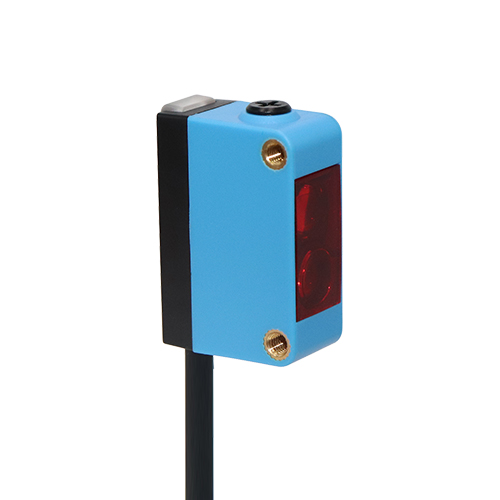
The core functionality of an optical photoelectric sensor involves three key elements: an emitter, a receiver, and a signal processor. The emitter, typically an LED or laser diode, projects a beam of light. The receiver, a phototransistor or photodiode, is designed to detect this light. The sensor's operation is defined by how the emitted light interacts with the target object. In a through-beam sensor, the emitter and receiver are separate units. An object is detected when it breaks the light beam traveling between them, offering the longest sensing ranges and highest reliability. The retro-reflective type combines the emitter and receiver in one housing, using a reflector to bounce the light back. Detection occurs when the target interrupts this reflected beam. Finally, the diffuse reflective sensor, the most common type, houses both elements together and detects light reflected directly off the target itself, simplifying installation.
The advantages of implementing optical photoelectric sensors are manifold. Their non-contact nature eliminates mechanical wear and tear, leading to significantly longer service life and reduced maintenance costs compared to mechanical limit switches. They provide exceptionally fast response times, capable of detecting objects in microseconds, which is crucial for high-speed sorting and packaging applications. Furthermore, they can sense a wide variety of materials—metal, plastic, glass, wood, and even liquids—provided there is a contrast in reflectivity. Modern sensors are also incredibly versatile, with models offering background suppression to ignore distant objects, precise color recognition, and the ability to detect minute contrasts or transparent materials.
Choosing the right optical photoelectric sensor requires careful consideration of several environmental and application factors. The operating distance, or sensing range, must be matched to the specific task. The physical size and material of the target object influence the choice of sensor type and beam pattern. Ambient light conditions are critical; industrial settings with strong ambient light require sensors with modulated LED light sources to prevent false triggers. Environmental challenges like dust, fog, or splashing liquids may necessitate sensors with higher ingress protection (IP) ratings. Finally, the required output signal—whether a simple digital switch (PNP/NPN) or a proportional analog signal for distance measurement—determines the interface with the control system.
Looking forward, the integration of optical photoelectric sensors with Industrial Internet of Things (IIoT) frameworks and Industry 4.0 initiatives is set to redefine their role. Smart sensors now come equipped with IO-Link communication, enabling remote configuration, real-time diagnostics, and predictive maintenance data transmission. This connectivity transforms the sensor from a simple detection device into a rich data point within a networked ecosystem, allowing for deeper process optimization and smarter, more adaptive automation solutions. As machine vision and simpler photoelectric sensing continue to converge, these components will remain fundamental in building the intelligent, responsive, and efficient factories of the future.