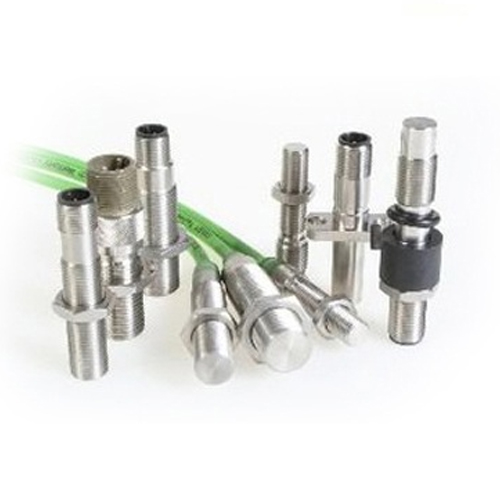
In the precise world of industrial automation, where milliseconds and microns matter, the ability to reliably detect and differentiate based on color is a game-changer. Color mark photoelectric sensors, sophisticated variants of their standard counterparts, are engineered for this exact purpose. They don't just sense the presence or absence of an object; they identify specific color marks, labels, or contrasts with remarkable accuracy, enabling a higher level of process control and quality assurance.
At their core, these sensors operate on the principle of photoelectric sensing, but with a critical enhancement: color recognition. They emit a beam of light—often red, green, or blue LED-based—towards the target. The sensor's receiver then analyzes the intensity of the reflected light. Different colors reflect specific wavelengths of light to varying degrees. A color mark sensor is precisely calibrated to recognize a predefined contrast or a specific color shade. For instance, it can be set to detect a dark blue mark on a light blue background or a small yellow registration dot on a white packaging web. This is achieved through advanced optics and electronics that filter and compare the reflected light against a taught-in reference value.
The applications for color mark photoelectric sensors are vast and critical across numerous industries. In the packaging and labeling sector, they are indispensable for ensuring correct label placement, verifying print registration, and detecting color-coded tabs for product sorting. The textile industry relies on them for pattern alignment and color sequence control in fabric manufacturing. In printing, they provide precise web guidance by detecting registration marks. The food and beverage industry uses them to check for correct cap or label colors, while pharmaceutical packaging lines utilize them to verify the presence of colored safety seals or specific markings on blister packs. Their ability to ignore ambient light and focus solely on the target contrast makes them reliable even in challenging environments.
Selecting the right color mark sensor involves several key considerations. First is the sensing mode: diffuse reflective models are common for detecting marks on the same surface, while through-beam types offer higher precision for transparent film applications. The light source color is paramount; a green LED, for example, provides excellent contrast for detecting red marks, while a red LED is superior for green or blue targets. The response time must be fast enough to keep up with high-speed production lines. Programmability is another crucial feature. Modern sensors allow users to easily "teach" the device the acceptable color or contrast range directly on the production floor, simplifying setup and changeovers. Factors like sensing distance, environmental sealing (IP rating for dust and moisture), and output type (PNP/NPN, analog, or IO-Link for smart factory integration) must also align with the application's demands.
The advantages of implementing these specialized sensors are substantial. They directly enhance product quality by eliminating errors in labeling, printing, and assembly. This reduces waste and costly rework. Automation becomes more flexible, as a single line can handle products differentiated only by a color mark without mechanical adjustments. Ultimately, this leads to increased overall equipment effectiveness (OEE), higher throughput, and consistent output. When integrating a color mark sensor, best practices include ensuring a stable, consistent background, minimizing vibration, and protecting the lens from dust and debris. Regular verification of the sensing performance is recommended to maintain optimal operation.
As Industry 4.0 evolves, color mark photoelectric sensors are becoming smarter. Integration with industrial networks and the advent of sensors with IO-Link communication provide not just a detection signal but valuable diagnostic data, predictive maintenance alerts, and remote parameter adjustment capabilities. This intelligence transforms them from simple switches into integral data points within the connected factory. For any operation requiring precise color-based detection, registration, or sorting, investing in a robust and appropriately specified color mark photoelectric sensor is not just an upgrade—it's a fundamental step towards achieving precision, efficiency, and unwavering quality control in modern manufacturing.