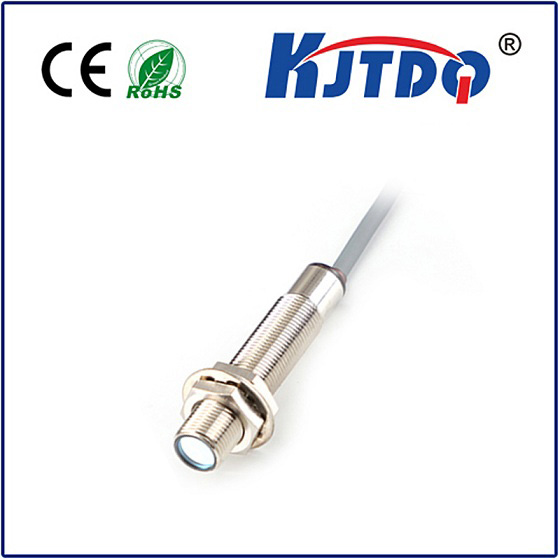
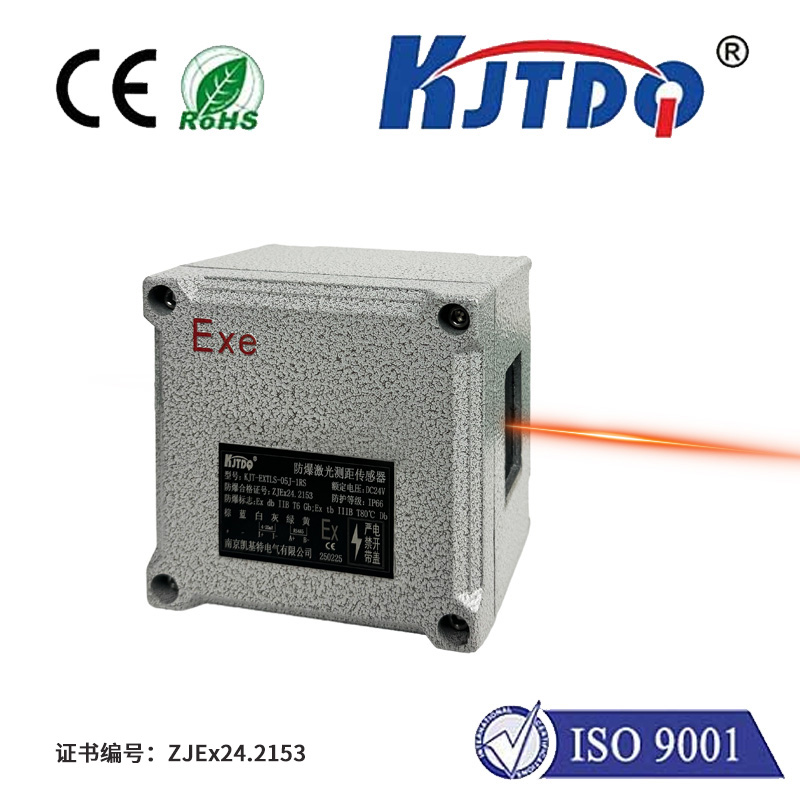
In the world of industrial automation and smart systems, the photoelectric sensor stands as a fundamental component, enabling machines to "see" and interact with their environment. Unlike mechanical limit switches, these sensors perform contactless detection, offering high precision, long life, and remarkable versatility. At its core, a photoelectric sensor operates by emitting a beam of light, typically from an LED, and detecting changes in the received light intensity caused by the presence or absence of a target object.
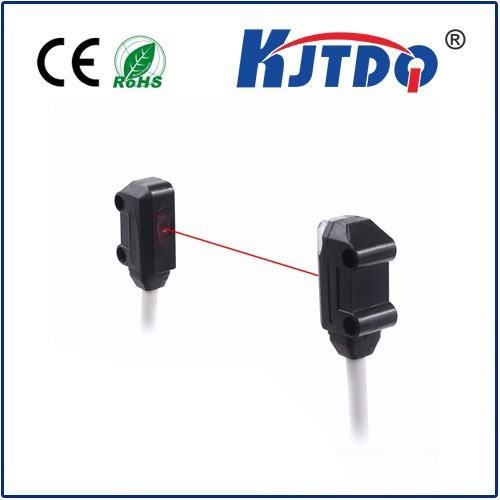
The principle is elegantly simple, yet the implementations are diverse. The three primary types dominate the market, each suited for specific scenarios. The through-beam sensor, also known as the opposed mode sensor, consists of separate emitter and receiver units placed opposite each other. The object is detected when it interrupts the light beam traveling from the emitter to the receiver. This configuration offers the longest sensing range and highest reliability, as it is less affected by the object's color, surface finish, or angle. It is ideal for demanding applications like counting objects on high-speed conveyors or detecting opaque materials at a distance.
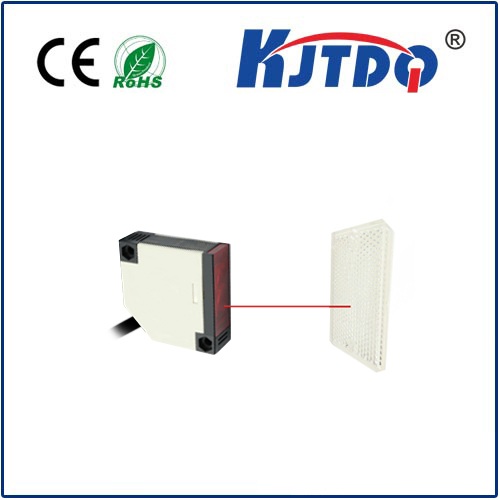
In contrast, the retro-reflective sensor houses both the emitter and receiver in a single housing. It uses a reflector, often a prismatic type, to bounce the light beam back to the receiver. Detection occurs when an object breaks this reflected beam. This type provides a good balance between range and ease of installation, eliminating the need to wire two separate units. However, it can be fooled by highly reflective objects that might mimic the reflector. For such challenging targets, polarized retro-reflective sensors are employed, which only recognize light bounced back from a specific type of reflector.
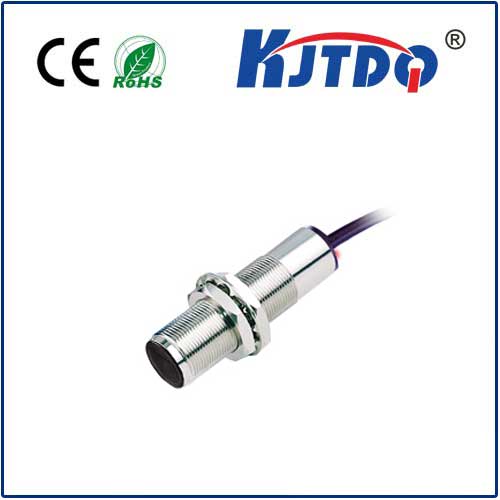
The third major category is the diffuse reflective sensor, or proximity mode sensor. Here, the emitter and receiver are also in one unit, but it detects the light reflected directly off the target object itself. This makes installation extremely convenient, as only one side needs access. However, its performance is highly dependent on the target's color, texture, and reflectivity. Light-colored objects are detected at longer ranges than dark, matte ones. Diffuse sensors are perfect for applications like detecting the presence of a product on a packaging line or sensing a label on a bottle.
Beyond these, specialized variants exist. Background suppression sensors are a sophisticated type of diffuse sensor that can ignore objects beyond a set distance, reliably detecting an object against a busy background. Fiber optic sensors use flexible light guides to bring light to and from hard-to-reach or hazardous areas, with the amplifier unit placed safely away. Color mark sensors are tuned to detect specific color contrasts, crucial in printing and labeling.
The applications of photoelectric sensors are virtually limitless. In manufacturing, they are the eyes of robotic arms, ensuring precise part placement. On assembly lines, they count, inspect, and position components. In logistics, they control automated guided vehicles (AGVs) and manage warehouse inventory. In the food and beverage industry, they detect fill levels, cap presence, and label alignment. They enhance safety by acting as light curtains to protect personnel around dangerous machinery. Even in everyday life, they are present in automatic doors, hand dryers, and paper dispensers.
Selecting the right photoelectric sensor requires careful consideration of several factors. First, define the sensing distance and the required operating range. Through-beam sensors win for long ranges, while diffuse sensors are for shorter, proximity tasks. Next, consider the target properties: its size, material, color, and surface. A shiny metal part may require a polarized or background suppression sensor to avoid false triggers. The operating environment is critical; sensors for washdown areas need high IP ratings (like IP67 or IP69K), while those in dusty conditions might need special coatings. The required output signal (e.g., NPN/PNP digital, analog) must match the control system, and response speed must be fast enough for the application's cycle time.
Modern advancements continue to push the boundaries. Miniaturization allows sensors to fit into tighter spaces. Integrated connectivity via IO-Link provides detailed diagnostic data and parameter setting from a controller, enabling predictive maintenance. Laser-based models offer extremely small, precise spot sizes for detecting tiny objects or edges.
In conclusion, the photoelectric sensor is a silent workhorse of modern industry. Its ability to provide reliable, non-contact detection across countless scenarios makes it indispensable. From the simple diffuse sensor on a vending machine to the complex background suppression sensor guiding a robotic welder, understanding their types, principles, and selection criteria is key to designing efficient, robust, and intelligent automated systems. By choosing the correct sensor for the job, engineers ensure smoother operations, higher quality, and increased productivity.